
Exclusive Interview by K. Gopalakrishnan, Pics by Manikandan
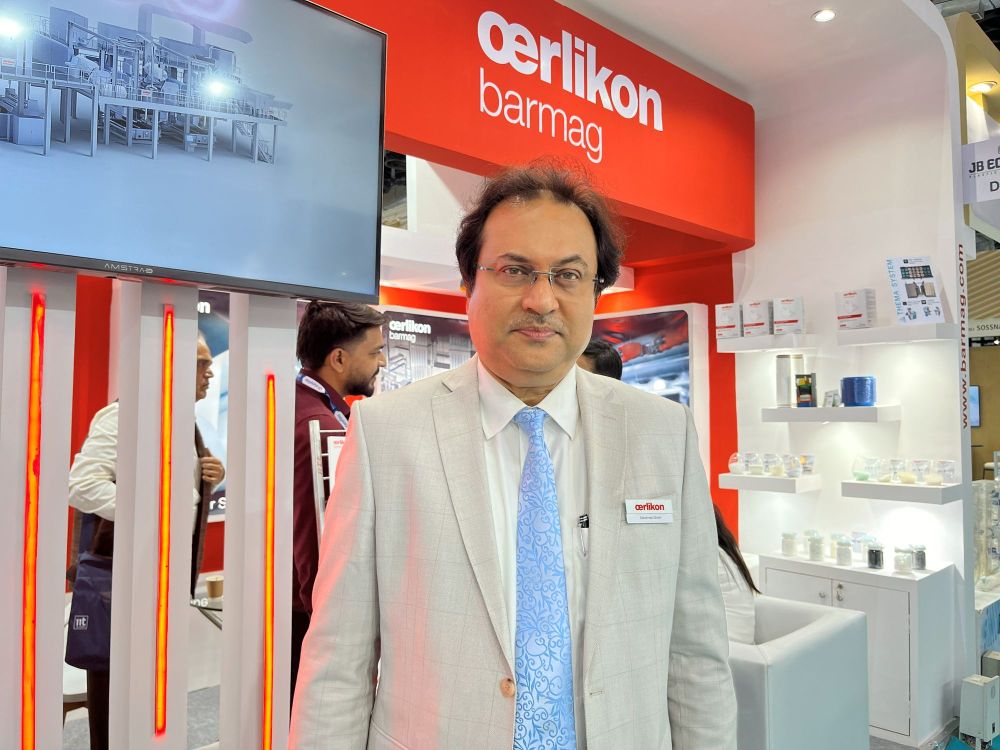
At Techtextil India, Oerlikon Textile reaffirmed its pivotal role in shaping the future of man-made fibers (MMF) and technical textiles. Speaking to The Textile Magazine, Mr. D. Ghosh, Vice President – Sales & Marketing, Oerlikon Textile India Pvt. Ltd., outlined how the company’s end-to-end “melt-to-yarn” expertise, new recycling solutions and deepening India footprint position it to support the country’s fast-growing textile ambitions. Backed by global R&D, local service investments and a clear sustainability mandate, Oerlikon is readying Indian converters and spinners for a next decade of structural growth.
Melt-to-Yarn: A Complete Solution for MMF and Technical Fibres
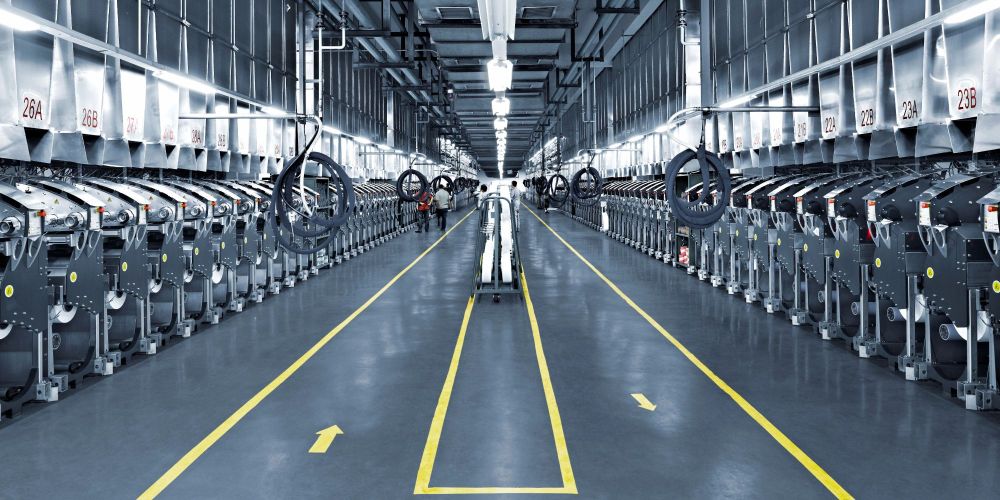
Oerlikon’s core proposition is its integrated value chain: polymerization, spinning, draw texturing, staple fibre, downstream spinning and nonwovens. Mr. Ghosh described the company as “a complete solution provider in the field of man-made fibre,” highlighting the firm’s ability to supply the full spectrum—from raw polymer handling to high-quality yarn for demanding technical applications. This comprehensive capability is particularly relevant as India pivots toward performance fabrics, geotextiles, industrial yarns and defense applications that require consistent, high-specification feedstock.
India’s macro trajectory reinforces this opportunity. The country already produces significant volumes of PFY, PSF and viscose, and ambitious PTA expansions by major private and public players will further strengthen feedstock security. Mr. Ghosh believes India’s MMF industry will expand hand-in-hand with the nation’s GDP growth, predicting that the coming decade will see a step-change in high-performance yarn demand across both domestic and export markets.
Recycling and Sustainability: From Bottles to Textile-to-Textile Solutions
Sustainability is no longer optional—Oerlikon has embedded it into product strategy. The company showcased mechanical recycling solutions that convert PET bottle waste and textile waste into usable fibre, and presented these capabilities at global platforms including K-Show and its open houses in Germany. Mr. Ghosh emphasised that textile-to-textile recycling, the ability to reclaim and respin process and garment waste—is a pivotal development for the industry’s circularity ambitions.
Oerlikon’s focus on recycling complements its melt-to-yarn portfolio by enabling customers to incorporate recycled feedstocks without compromising on yarn performance. In Mr. Ghosh’s words, developing reliable recycling routes is “key for the future” given the global imperative to manage mounting textile waste and reduce lifecycle emissions.
India: A Rapidly Growing and Strategic Market
India’s textile growth is now attracting both capital and technology. Mr. Ghosh observed that while China’s momentum is moderating, India stands out as the fastest-growing large economy with a textile sector expanding alongside infrastructure and rising domestic consumption. He pointed to the Government of India’s supportive policies—capital subsidies and Production-Linked Incentives (PLI), as powerful catalysts that make Indian investments compelling and globally competitive.
Comparatively, while some regional markets face slowdowns, India is strengthening capabilities in synthetics, sportswear and technical segments. Oerlikon sees accelerating demand from segments such as geotextiles for infrastructure, performance outerwear and industrial yarns—areas that require high quality inputs and advanced processing technology.
Local Support, Service Excellence and Strategic Localization
A distinguishing feature of Oerlikon’s approach in India is its emphasis on customer intimacy and local enablement. The company has established a dedicated service station and repair shop in Baroda, stocked critical spare parts locally, and invested in a capable project-engineering and service team. “When a customer buys our machine he becomes our partner,” Mr. Ghosh said, stressing Oerlikon’s commitment to on-site support and rapid response—factors that materially reduce downtime and protect production.
Looking ahead, Oerlikon is examining further localization potential to shorten lead times and empower Indian projects to be executed with local content where possible. This strategy aims to combine global technology with local agility, making advanced solutions more accessible across the subcontinent.
Outlook: Enabling Quality, Scale and Circularity
Oerlikon’s message at Tech Textile India was clear: the coming decade in India will demand higher-specification yarns, deeper vertical integration and scalable sustainability solutions. Equipped with proven melt-to-yarn technology, advanced recycling processes and a strengthened Indian support network, Oerlikon is positioning itself as a partner of choice for companies seeking to upgrade capacity, enter technical-textile segments, or build closed-loop value chains.
Mr. Ghosh concluded with a measured optimism: as India’s GDP grows and policy tailwinds persist, the MMF and technical textile industries are poised for robust expansion—and Oerlikon intends to be at the forefront of that transformation, helping customers deliver quality, reliability and circular value at scale.


