

By K. Gopalakrishnan
With a specialized B2B ecosystem exclusively for Technical Textiles, spanning raw materials, finished products, machinery, technologies and services, TechTextileHub is seeking to transform how the global technical textiles industry discovers, connects and conducts business
Technical textiles is no longer a niche extension of the traditional textile industry. From healthcare and infrastructure to mobility, filtration, defence, agriculture and environmental protection, textiles are increasingly being engineered for performance, functionality and application-specific requirements. Yet, paradoxically, one of the world’s fastest-evolving textile sectors remains highly fragmented when it comes to discovering suppliers, technologies, products and specialized services.

It is this discovery gap that TechTextileHub (www.techtextilehub.com) seeks to address.
Launched in March/April 2026, the India-developed platform has been conceived as a dedicated global B2B digital ecosystem exclusively for technical textiles and nonwovens. In its first few months, it has already onboarded more than 90+ verified suppliers across the value chain and has established an MoU with the Indian Technical Textile Association (ITTA). Webinars, newsletters and knowledge initiatives are also being developed alongside the commercial platform.
The ambition is much larger than creating another online directory.
TechTextileHub aspires to become for technical textiles what Amazon or Alibaba have become for broader commerce and business discovery, a specialized digital destination where a buyer can discover the right material, product, machine, technology, laboratory, testing agency or service provider without having to navigate a fragmented universe of individual websites, trade fairs, directories and personal networks.
As Mr. Karthik Kumar, Promoter & Director, TechTextileHub, puts it, the fundamental objective is to ensure that every serious participant in the technical textiles value chain becomes discoverable within one specialized global ecosystem.
From a Digital Directory to a Global Industry Ecosystem
The fundamental proposition behind TechTextileHub is straightforward, but potentially transformative: bring the fragmented technical textiles ecosystem onto one structured, searchable and specialized digital platform.
Unlike generic B2B marketplaces, where technical textiles may constitute only one category among thousands of unrelated products, TechTextileHub has been designed specifically around the requirements and complexities of this industry.
The platform brings together four principal categories:
- Raw Materials
- Finished Products
- Machinery & Technologies
- Services
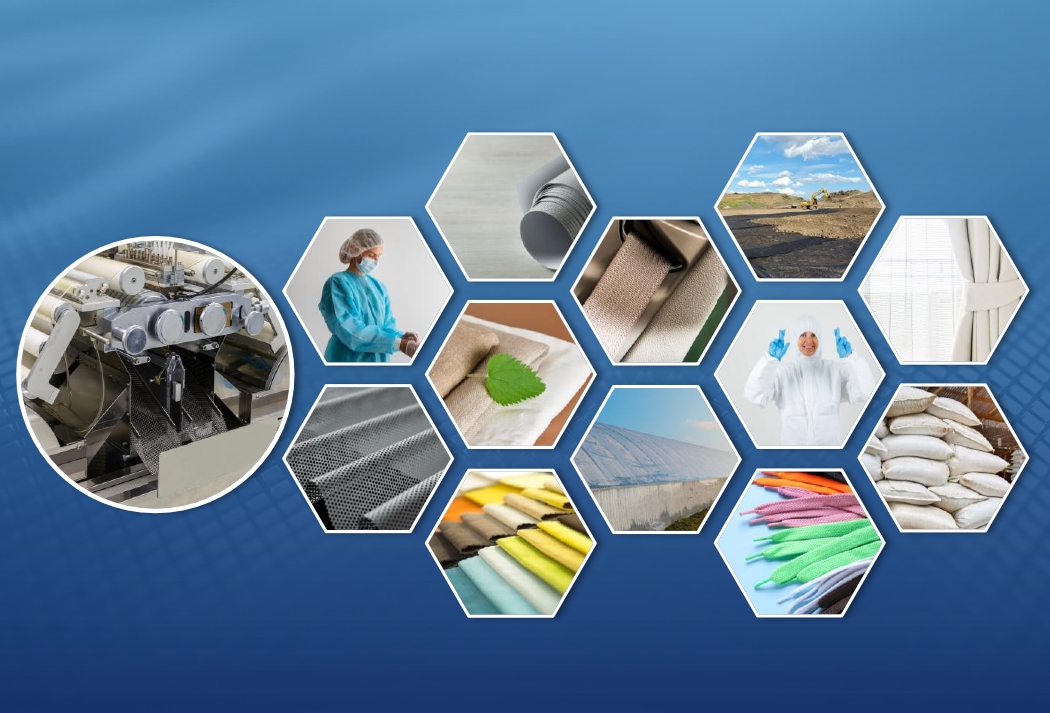
This structure allows fibre and yarn manufacturers, fabric and nonwoven producers, converters, finished-product manufacturers, machinery and technology suppliers, consultants, laboratories, testing organizations, certification agencies and other specialized service providers to establish their presence on a common platform. Companies can create corporate profiles, showcase products and capabilities and become discoverable to relevant stakeholders worldwide.
The business model is equally significant. TechTextileHub operates on an annual subscription basis and does not charge commissions on transactions. The objective is not to become an intermediary that takes a share of every transaction, but to facilitate discovery and allow buyers and suppliers to develop their commercial relationships directly.
That distinction could prove important as the platform scales.
Mapping the Entire Technical Textiles Universe
One of the most challenging aspects of building a digital marketplace for technical textiles is the extraordinary diversity of applications.
A manufacturer serving the medical sector operates within a completely different ecosystem from a supplier of geosynthetics, automotive textiles, filtration media or protective textiles. TechTextileHub has therefore structured its database around the 12 recognized technical textile verticals:
Agrotech, Buildtech, Clothtech, Geotech, Hometech, Indutech, Meditech, Mobiltech, Oekotech, Packtech, Protech and Sportech.
These verticals are interconnected with the four principal product and service categories. The result is a multidimensional structure intended to allow users to search not merely for a finished product, but for the complete ecosystem supporting an application.
For example, a buyer exploring Meditech could potentially discover medical textile products alongside the relevant raw materials, manufacturing technologies, testing capabilities and specialised services.
This approach is central to TechTextileHub‘s long-term differentiation.
The objective is not simply to accumulate the largest number of listings. It is to create a deep, structured and searchable technical textiles database, where the relevance and quality of information are as important as the volume of information.
In that sense, the platform is attempting to build the digital infrastructure of an industry rather than merely another online catalogue.
Closing the Buyer-Supplier Discovery Gap
Technical textiles sourcing can often begin with a highly specific requirement rather than a conventional product name.
A buyer may know the required technical specification, performance characteristics or application but may not know which manufacturer anywhere in the world can provide it. At the other end of the spectrum, highly capable manufacturers — particularly smaller and mid-sized companies — may possess excellent technologies and products but lack the international marketing reach of larger multinational companies.
This creates what TechTextileHub identifies as a discovery gap.
The platform seeks to bridge this gap by allowing companies to showcase not merely their corporate identity, but precisely what they manufacture, supply or specialize in. Buyers can navigate the industry through technical textile verticals and product categories, while the RFQ ecosystem provides a mechanism for communicating specific sourcing requirements.
Verification is another important component.
As the platform expands, TechTextileHub intends to progressively build an ecosystem in which users have greater confidence in the companies they discover. Combined with the no-commission model, the objective is to make the platform a facilitator of business relationships rather than a conventional transactional intermediary.
This could be particularly valuable for international sourcing, where identifying credible suppliers is often the first and most difficult step.
From India to the World
Although TechTextileHub has been developed in India, its ambition is explicitly global.
The very nature of technical textiles makes a global approach essential. Raw materials may originate in one country, technology may come from another, manufacturing or conversion may take place elsewhere and the final application may be located in an entirely different market.
TechTextileHub is therefore seeking participation from all major international technical textile markets, with particular focus on Europe, North America, the GCC, Africa and Asia-Pacific. Its expansion strategy includes direct industry outreach, relationships with industry associations, international expert webinars, participation around major industry events, digital campaigns and strategic ecosystem collaborations.
The long-term proposition is compelling: a buyer anywhere in the world should be able to enter the platform and discover credible suppliers, products and technologies from multiple manufacturing regions.
For an industry that is becoming increasingly globalized, such a platform could eventually become a critical part of the sourcing infrastructure.
Why the Timing is Right for Technical Textiles
The next decade could represent a defining period for technical textiles.
Growth is increasingly being driven not simply by the need for textile materials, but by the need for performance, functionality, durability, safety and specialised applications.
Healthcare is demanding improved barrier and infection-control solutions. Infrastructure is increasing its use of geosynthetics and engineered textile materials. Mobility is seeking lighter, stronger and more functional materials. Filtration requirements are becoming increasingly sophisticated. Defence and protective applications demand higher performance, while sustainability is compelling the industry to reconsider materials, manufacturing processes and end-of-life solutions.
These trends are creating opportunities across areas such as:
High-performance fibres, functional materials, composites, nonwovens, smart textiles, sustainable materials, recycling, advanced manufacturing and application-specific product development.
The next stage, according to Karthik Kumar, is not merely to manufacture more, but to move further towards technology, innovation, specialised products, standards compliance and international market visibility.
That is precisely where a platform such as TechTextileHub could play a catalytic role.
More Than Visibility: Building Digital Market Presence
For companies joining the platform, visibility is only the starting point.
A major advantage of a specialised platform is relevance. A technical textile manufacturer / service provider does not have to compete for attention against millions of unrelated consumer and industrial products. Instead, it operates within an ecosystem designed specifically around its industry.
Depending on the membership tier, companies can access enhanced company and product / service visibility, RFQ participation, stronger positioning within relevant categories and premium visibility features.
But the larger opportunity lies in what Karthik Kumar describes as ecosystem participation.
Webinars connect experts and companies. Newsletters keep stakeholders informed. The expanding company and product database improves sourcing discovery. And the planned technology roadmap is expected to make these connections increasingly intelligent.
There is also a significant first-mover advantage.
Companies that establish comprehensive profiles and product / service portfolios while the ecosystem is still developing have an opportunity to build their digital presence within their respective categories from the formative stage of the platform.
The message from TechTextileHub is therefore not simply to create an account, but to build a complete technical textiles presence.
The Digital Transformation of an Industry
Trade fairs, industry associations, distributors, personal networks and direct company outreach will continue to play an important role in technical textiles. But these channels are inherently periodic or fragmented.
A digital platform can add something fundamentally different — continuous access.
The objective is to create a specialised digital ecosystem that remains available throughout the year, allowing a buyer to identify suppliers, a manufacturer to showcase its capabilities, a machinery company to be discovered through the applications it serves and a testing or certification organization to reach companies requiring its expertise.
This is where the Amazon/Alibaba analogy becomes particularly relevant.
Amazon did not merely put product catalogues online; it created a powerful discovery and transaction ecosystem. Alibaba similarly transformed B2B supplier discovery by bringing a vast manufacturing universe into a searchable digital environment.
TechTextileHub is attempting to apply that underlying principle to a much more specialised industry.
The ambition is to create a digital marketplace where industry knowledge, product discovery, supplier identification, sourcing requirements and business relationships converge.
AI Could Become the Next Major Differentiator
The next stage of TechTextileHub‘s evolution is expected to be increasingly technology-driven.
The company plans progressive integration of Artificial Intelligence to improve search, supplier and product discovery, RFQ matching, recommendations and the overall intelligence of the platform.
This could potentially transform how technical textile sourcing works.
Instead of simply searching for a supplier by product name, future users could potentially describe an application, technical requirement or performance characteristic and receive a curated set of relevant suppliers, materials, technologies and services.
The greater the depth and structure of the database, the more powerful such intelligence can become.
This is why TechTextileHub‘s emphasis on building a structured database is strategically important. AI is only as useful as the quality, structure and relevance of the information on which it operates.
The Five-Year Ambition: From Portal to Digital Business Ecosystem
The immediate priorities are straightforward: increase the number of verified suppliers, enrich product / service listings, expand international participation and increase RFQ activity.
But the longer-term ambition is much larger.
Over the next five years, TechTextileHub aims to evolve from a B2B portal into a global digital business ecosystem for technical textiles, bringing materials, products, machinery, technologies, services, knowledge and business opportunities together within one specialised environment.
That is effectively the roadmap towards becoming the Amazon or Alibaba of technical textiles — not necessarily by replicating their business models, but by replicating the idea of becoming the industry’s first digital destination for discovery, sourcing and connectivity.
The success of such a vision will ultimately depend on scale, credibility, data quality, international participation and the ability to generate meaningful business connections.
TechTextileHub has begun by building the foundation: verified companies, structured product / service information, industry relationships, webinars, newsletters and RFQ capabilities.
The next challenge is to build critical mass.
Building the Digital Highway for Technical Textiles
Technical textiles is entering an era in which technological capability alone may no longer be sufficient. Companies must increasingly be discoverable by the right customers, in the right markets, at the right time.
That is the opportunity TechTextileHub is attempting to capture.
If successful, the platform could become much more than an online directory. It could evolve into the digital highway connecting the global technical textiles ecosystem — linking raw materials with manufacturers, manufacturers with technology providers, buyers with suppliers, companies with laboratories and entire application industries with specialised expertise.
Its India-origin, global-outlook positioning is also significant. India possesses the manufacturing depth, engineering capabilities and entrepreneurial ecosystem to become a much larger force in global technical textiles. A digital platform that improves the international visibility and discoverability of Indian companies could complement that physical manufacturing strength with a powerful digital layer.
TechTextileHub is still at an early stage. But that may be precisely its advantage. It has the opportunity to build the ecosystem alongside the industry rather than retrofit digital capabilities into an established marketplace.
As Karthik Kumar sums up the company’s philosophy: “We are building TechTextileHub with the industry, for the industry — from India, for the world.”
The real test over the next five years will be whether that vision can translate into critical mass, intelligent discovery and measurable business connections. If it does, TechTextileHub could well emerge as the digital destination the global technical textiles industry turns to first — much like Amazon or Alibaba serve their respective ecosystems today.


