
Technical nonwovens have become an essential component in countless industrial applications. Though they may appear to be simple textiles, they actually are highly engineered solutions designed to meet demanding requirements across a wide range of industries.
By carefully selecting and combining different fiber types and polymers, it is possible to tailor the material structure and performance characteristics to specific application requirements. Depending on the intended use, a variety of materials can be incorporated, including polyester, polypropylene, polyamide, polyethylene, recycled PET fibers, natural fibers, and bio-based alternatives.
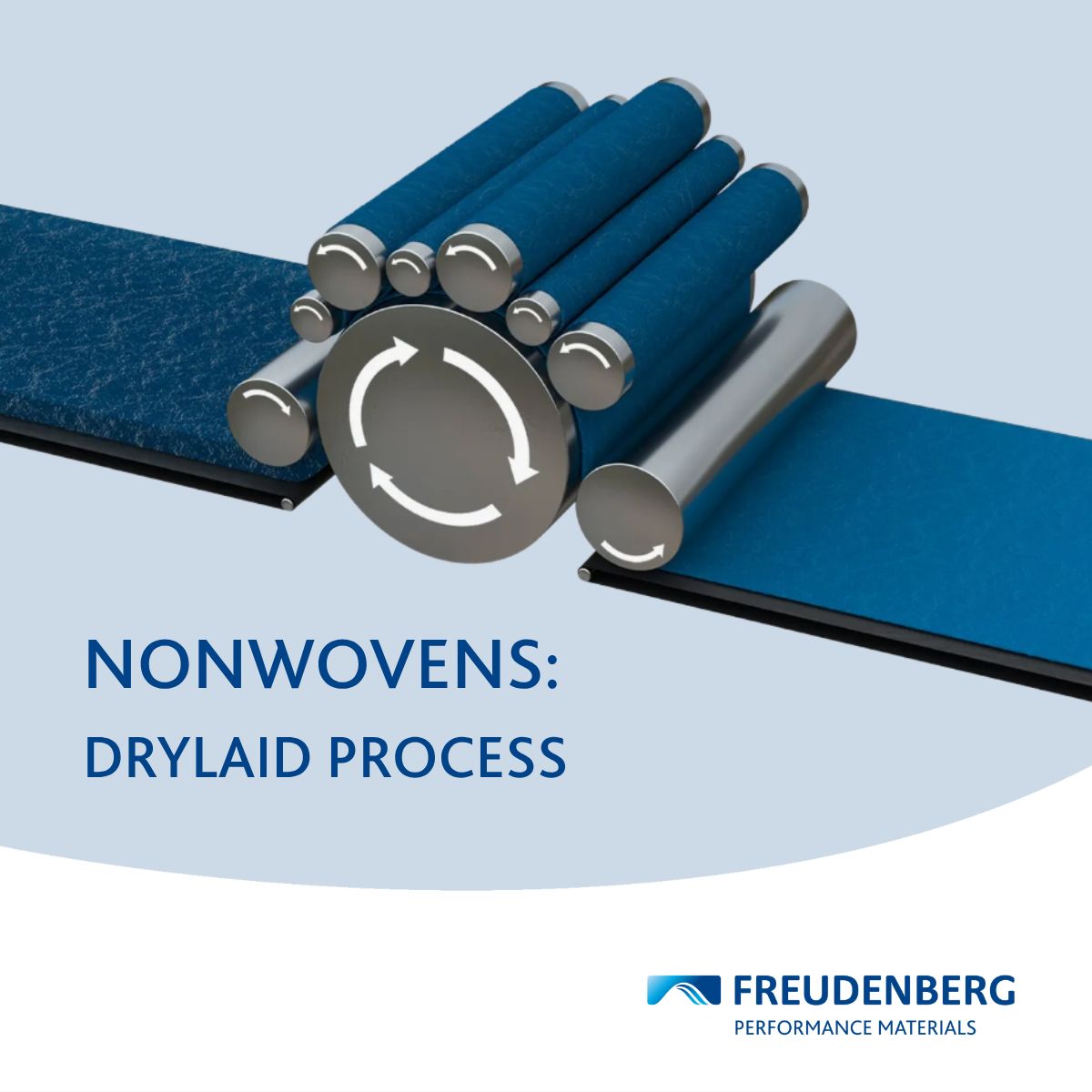
One of the manufacturing technologies used at Freudenberg Performance Materials is the drylaid process. During this process, staple fibers are opened, blended, and distributed before being formed into an even, uniform fiber web. Depending on the requirements, we use a wide range of raw materials, including synthetic fibers, viscose, natural fibers, glass, and carbon fibers.
The drylaid process produces nonwovens with high elasticity, variable grammage, long-term structural stability, mechanical durability, and functional properties such as breathability and insulation.
This versatility allows technical nonwovens to support a diverse range of industries and applications. They can be used in medical products, automotive solutions, construction materials, filtration systems, energy applications, and other technical fields where reliability and consistent performance are essential.
In addition to their technical capabilities, nonwovens contribute to efficient manufacturing processes along the value chain. They can be easily cut, shaped, and integrated into complex product systems while maintaining structural integrity over time.