

By Nithin Kumar
In a market where performance claims are common and inconsistency is costly, Manjushree Spntek has built its relevance on a harder proposition: disciplined manufacturing, integrated capability, and a belief that repeatable quality is the basis of long-term trust.
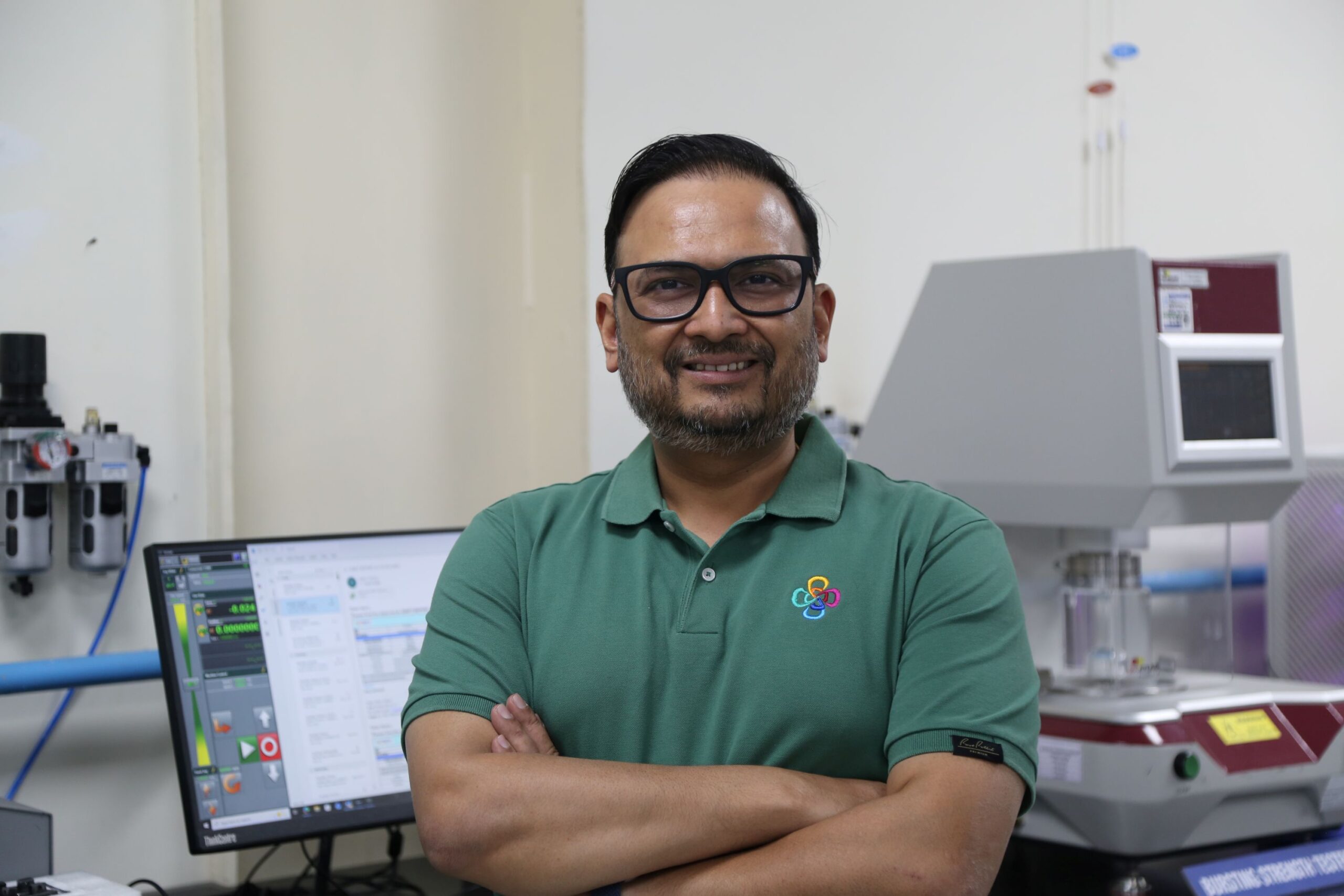
• A health & hygiene – first company with strategic focus built around products where inconsistency is least tolerated.
• An integrated facility with a spunmelt line, offline treatment, printing and coating-lamination platform – designed to reduce handling risk and strengthen quality control.
• A product base that reaches from infection-control and hygiene materials into industrial, construction, agricultural, and home & bedding applications through capability-led diversification.
• A clear emphasis on customer process efficiency – not just fabric specification – helping converters and downstream users reduce variation, waste and disruption.
• An operating culture in which quality, consistency, and long-term credibility are treated as commercial fundamentals rather than marketing language.
In nonwovens, growth can be bought for a while. Credibility cannot. It is built lot by lot, shipment by shipment, in the quiet discipline of a factory that understands how costly variation can be & how difficult trust is to rebuild once it slips. That is what makes Manjushree Spntek worth paying attention to. The company did not enter the sector by trying to look broad from day one. It entered in 2023 with a sharp instinct: if you want to matter in a demanding market, begin where inconsistency is least tolerated. For Mr. Rajat Kedia, MD, Manjushree Spntek, that meant health & hygiene.
That founding choice still explains the business better than any slogan does. Mr. Kedia returns repeatedly to one internal doctrine: i.e. “keeping our customers in the lead”. In lesser hands, that phrase could sound generic. Here, it clarifies the company’s direction. Manjushree Spntek did not set out to play a simple volume game. It set out to build enough manufacturing control, application understanding &product discipline to become relevant in segments where material failure has consequences. From the start, the company’s own market reading pointed to medical disposables and intimate hygiene as growth areas, but the emphasis was clear: not to be just another hygiene supplier. Health & Hygiene were the harder route, and therefore the more formative ones.
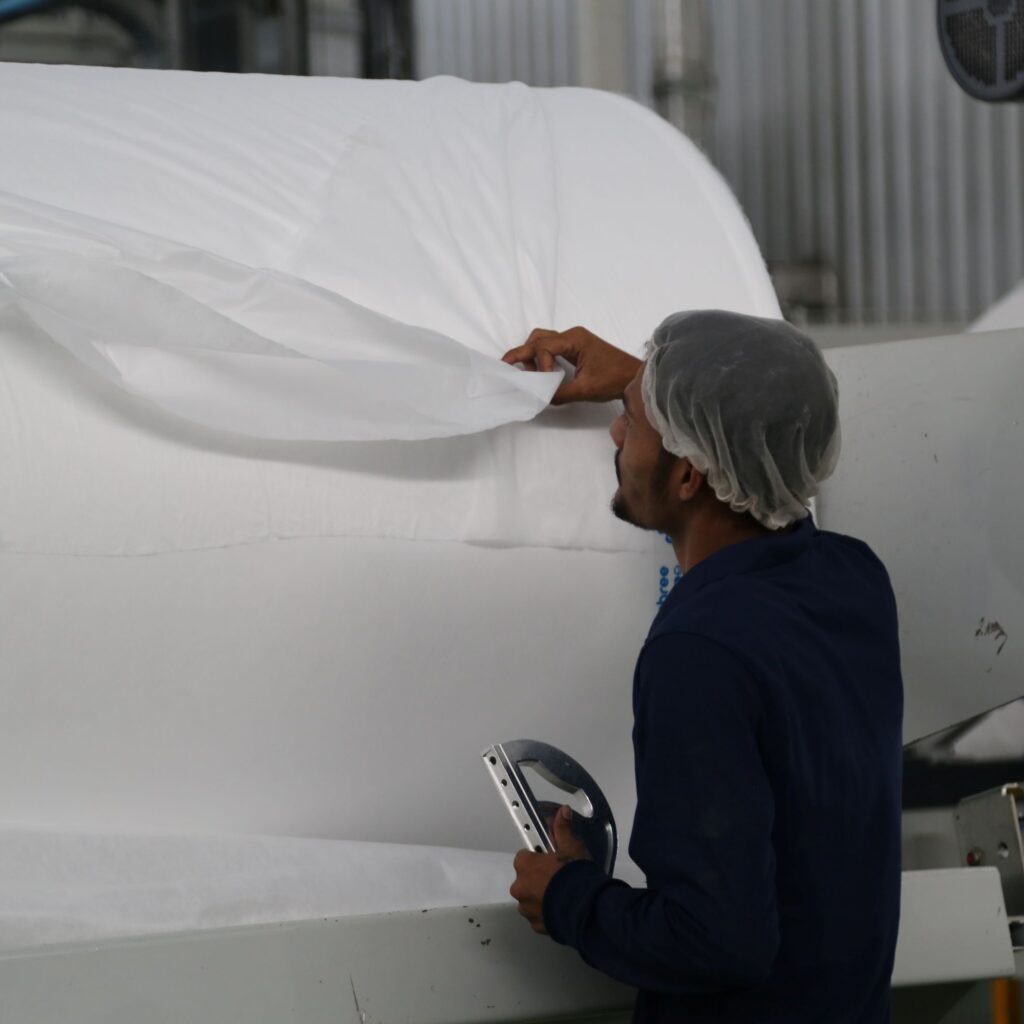
Medical or Hygiene nonwovens impose a different standard of seriousness on a manufacturer. They force attention onto barrier performance, repeatability, process integrity, touch and hand feel, compliance and the ability to translate material into dependable end use. A company can survive for some time by supplying availability. It cannot build a durable position in this market on availability alone. The source material on Manjushree Spntek is strongest precisely where it reflects that reality: in its repeated insistence that quality has to hold, batch after batch, across customer applications and over time.
Integration as a Quality Discipline
That is where Mr. Kedia’s leadership perspective shapes the ethos of the company. He does not speak like an executive trying to decorate a business with fashionable vocabulary. He speaks like someone who understands that, in industrial markets, credibility is built through operating habits. In the interview, quality is treated as non-negotiable. Consistency is not described as an aspiration, but as a customer requirement. Manjushree Spntek sharpens that further, defining high-performance nonwovens through four tests: consistency at scale, application-driven functionality, process efficiency for the customer and reliability under increasingly demanding quality and regulatory expectations. That is a useful industrial definition because it locates value – where customers actually feel it.
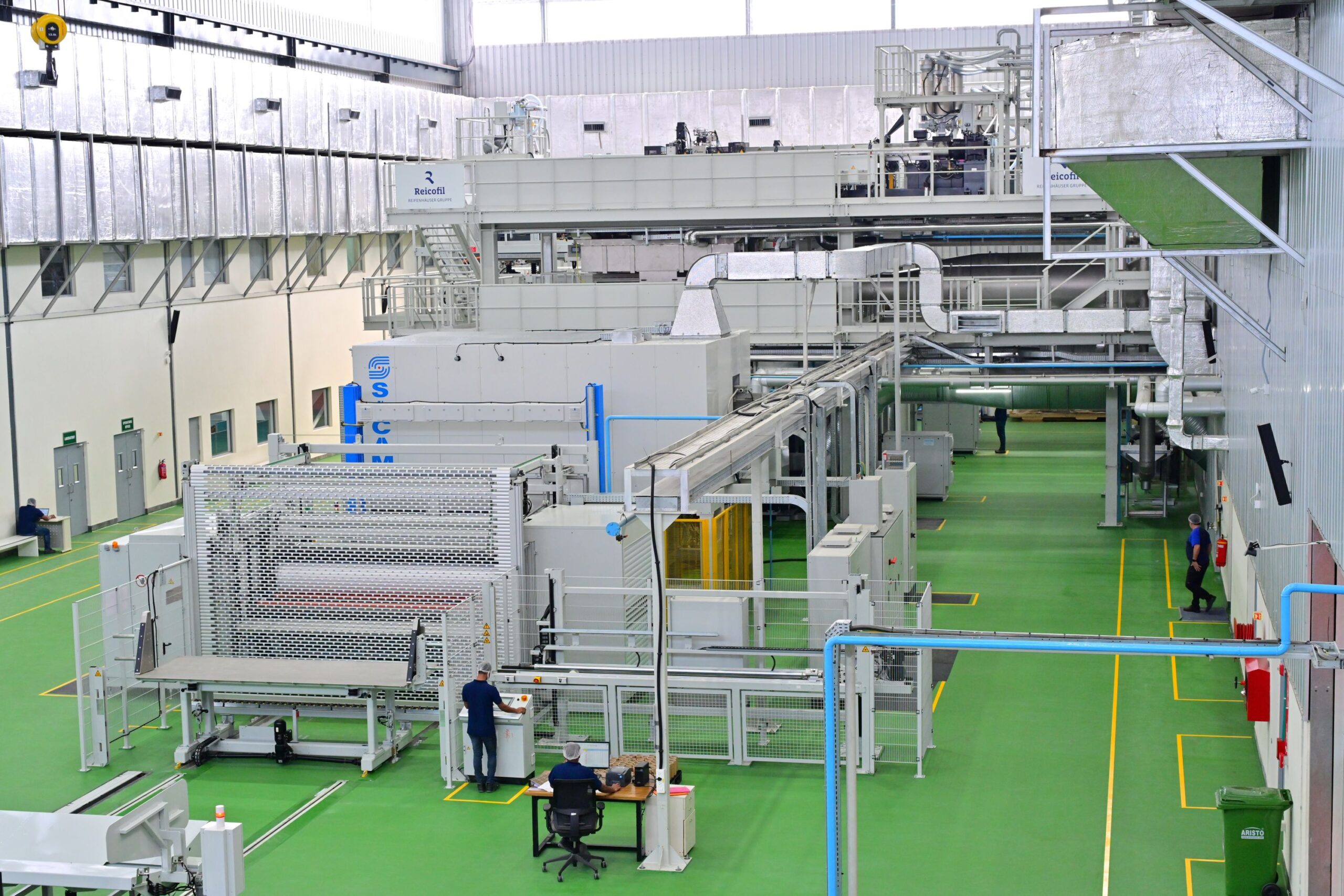
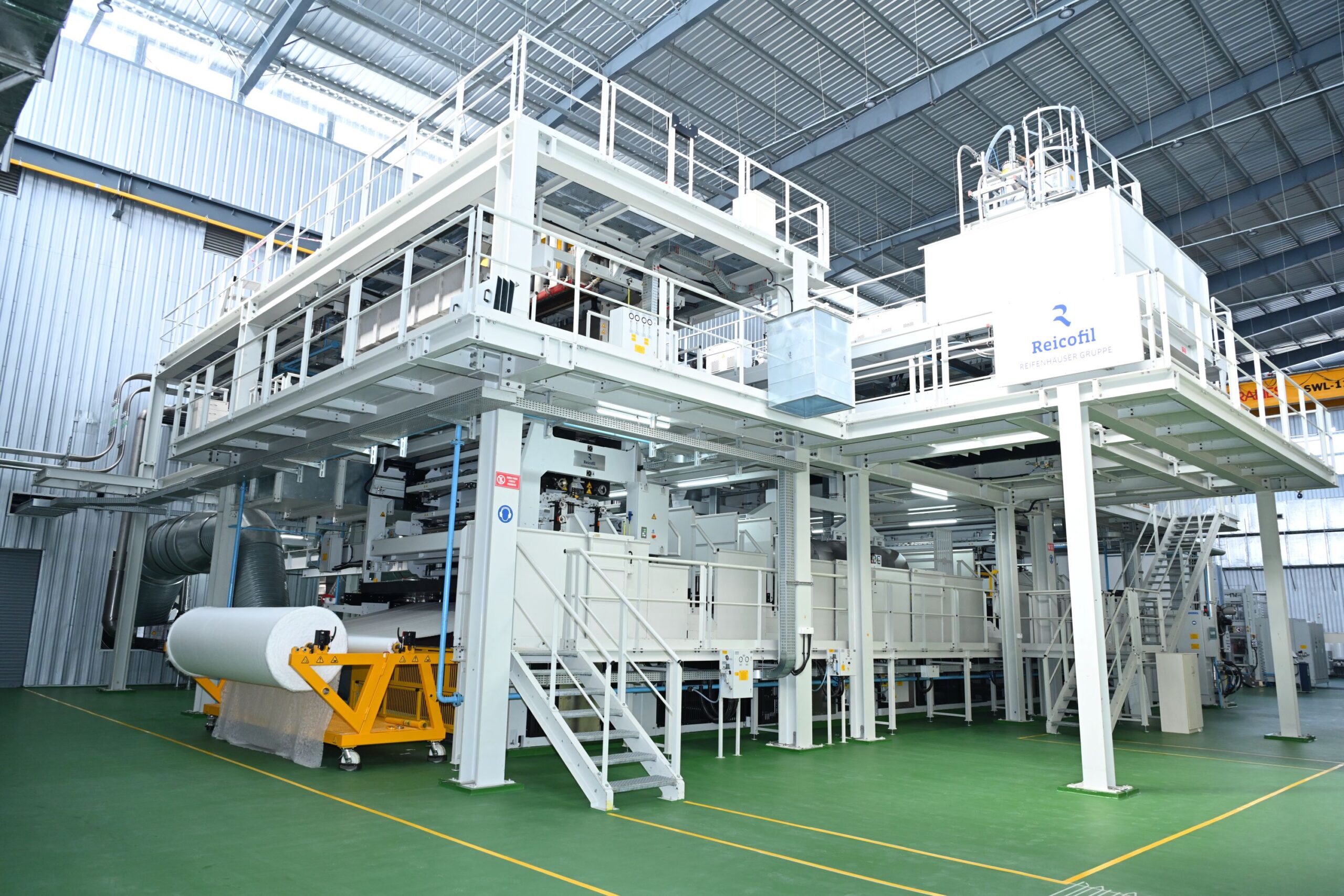
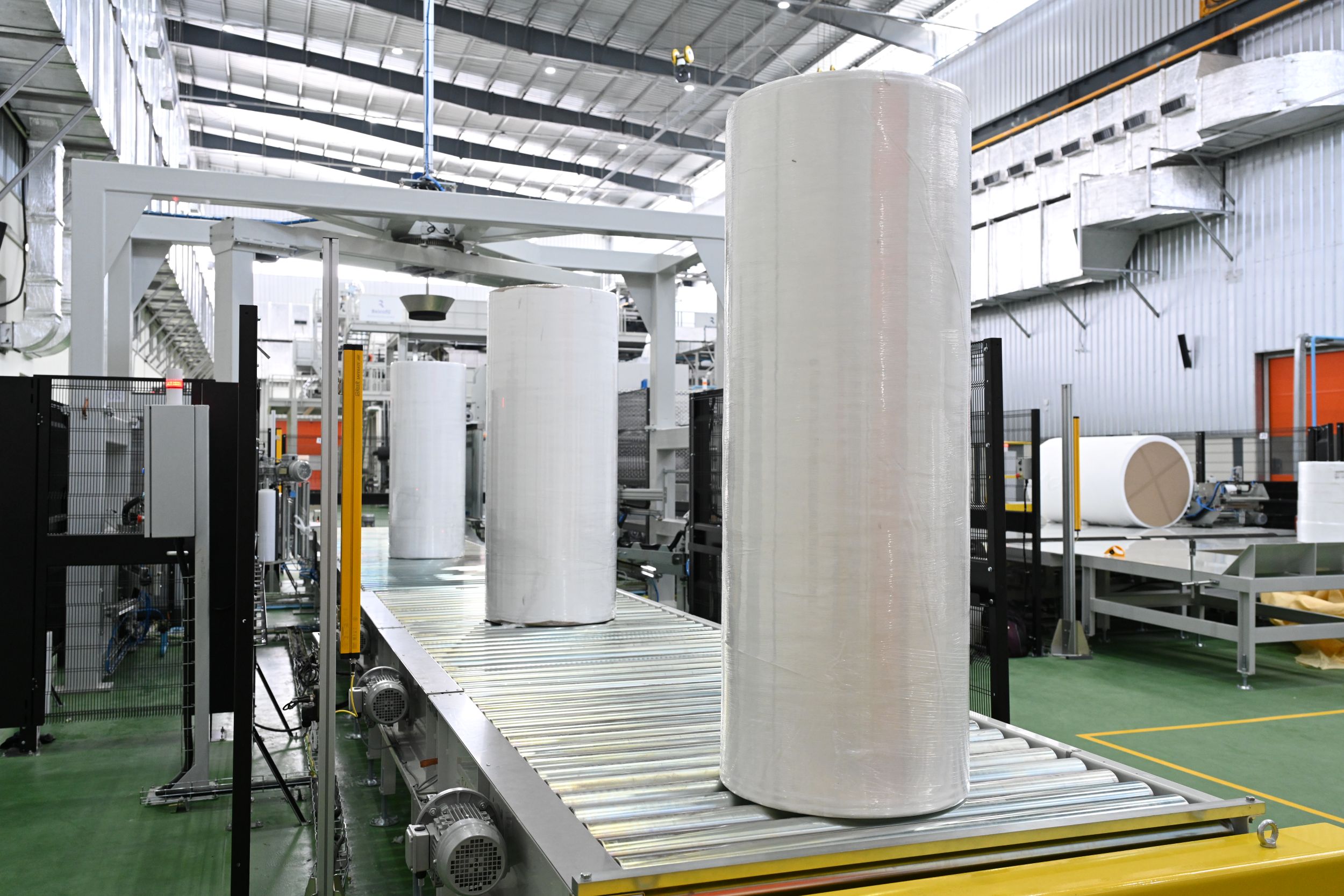
The manufacturing backbone behind that philosophy is an integrated setup built around Reicofil SMMS nonwovens, supported by an offline treatment system for impregnation, multi colour printing, ,extrusion coating and lamination. The company works across a wide spectrum of 10–120 gsm range on its core spunmelt platform while also offering coating and lamination options, including bi- and tri-laminates, and printing in a standard width of 3.2 metres across. The value proposition from Spntek is enhanced with a robotic spinneret inspection, vision inspection system for defect detection, clean factory, and a 360⁰ lab setup and full-scale R&D infrastructure. None of this matters as theatre. It matters only if it reduces variability, shortens feedback loops, and gives the manufacturer tighter control over what the customer finally receives.
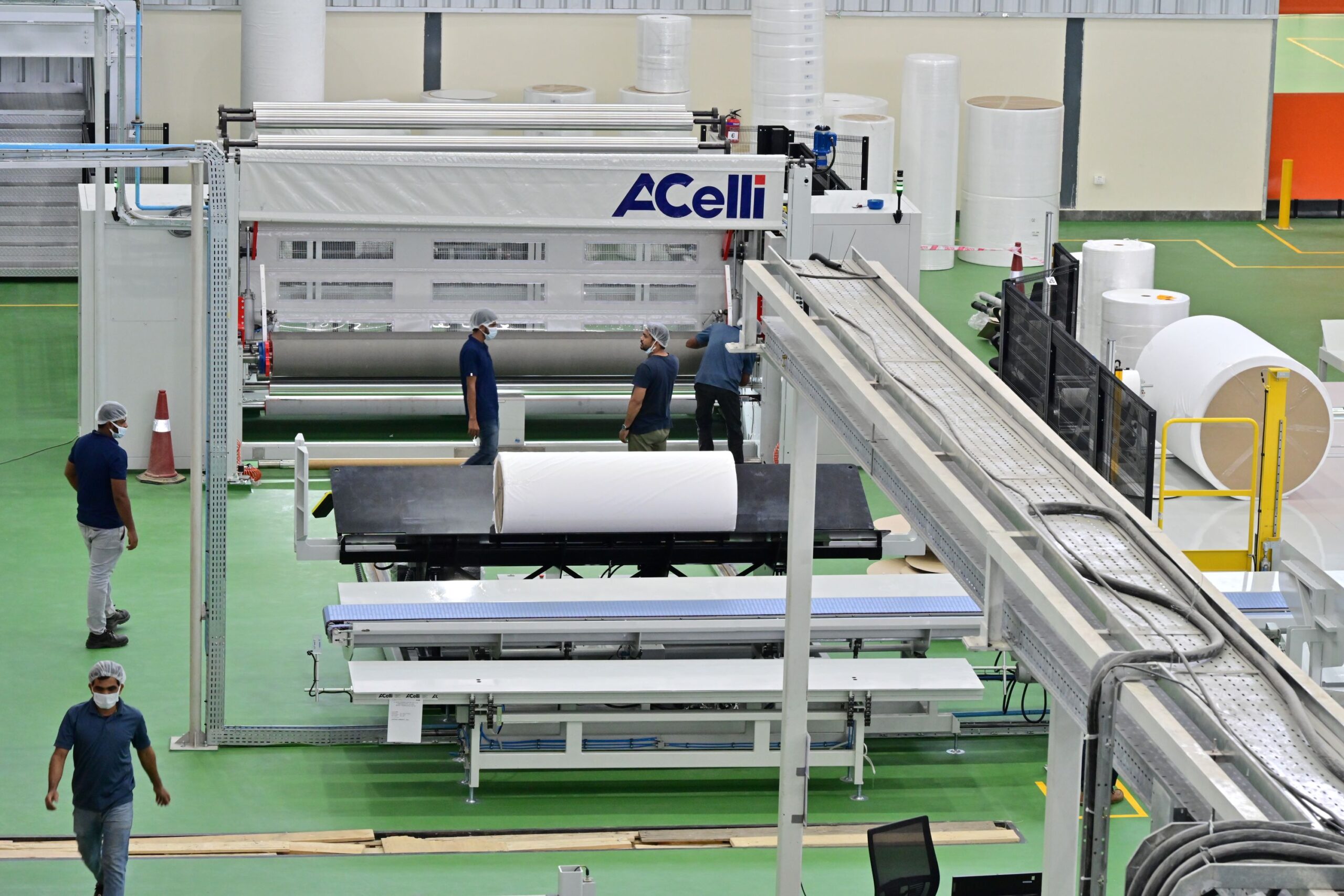
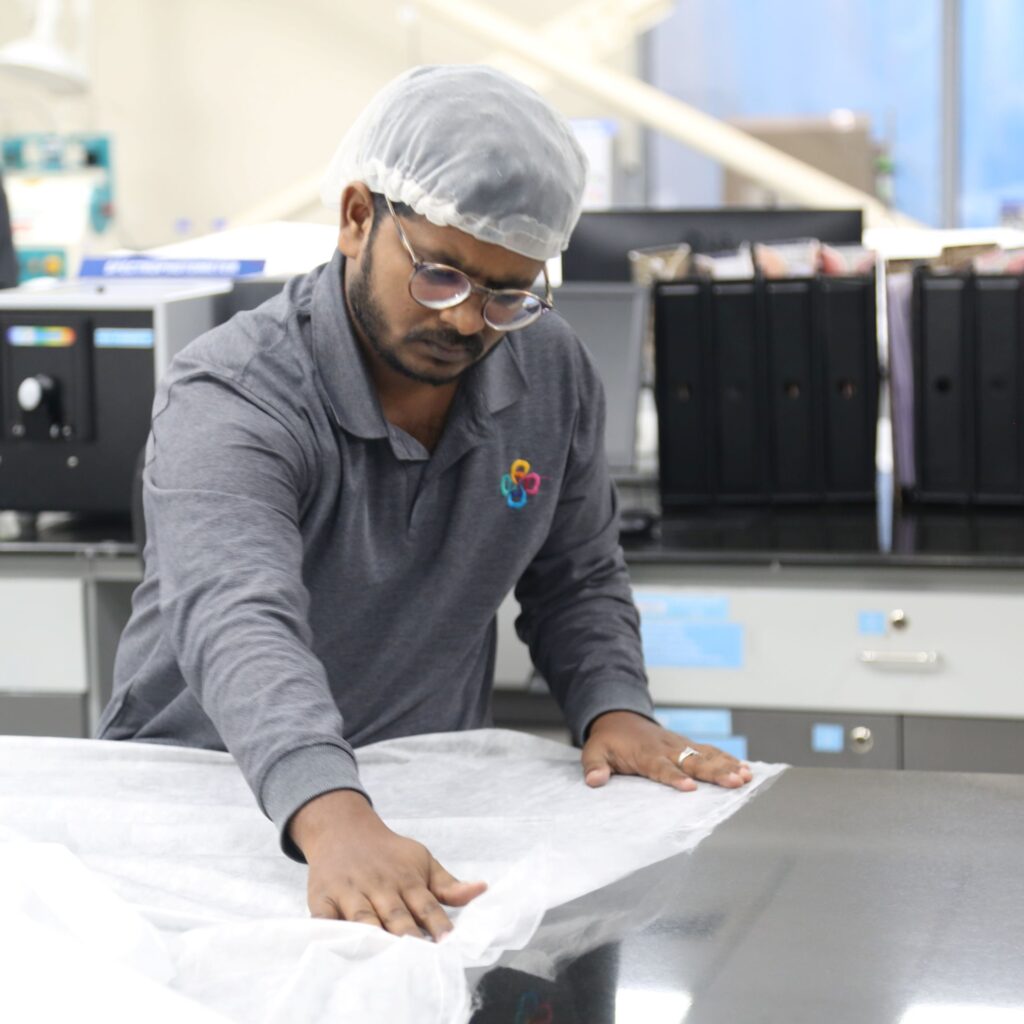
Mr. Kedia makes that point with unusual clarity. When a fabric is subject to multiple processes of coating, treatment or finishing; it has to be done under one roof. That is not just a commercial convenience; it is a way of protecting quality. That is one of the strongest ideas in the entire source set. Too many companies describe integration as if it were merely a scale advantage. Here, its more persuasive value is continuity of the product itself.
“A fabric that performs in the lab but fails on the customer’s line is not high performance.”
People, Process, and Product Reliability
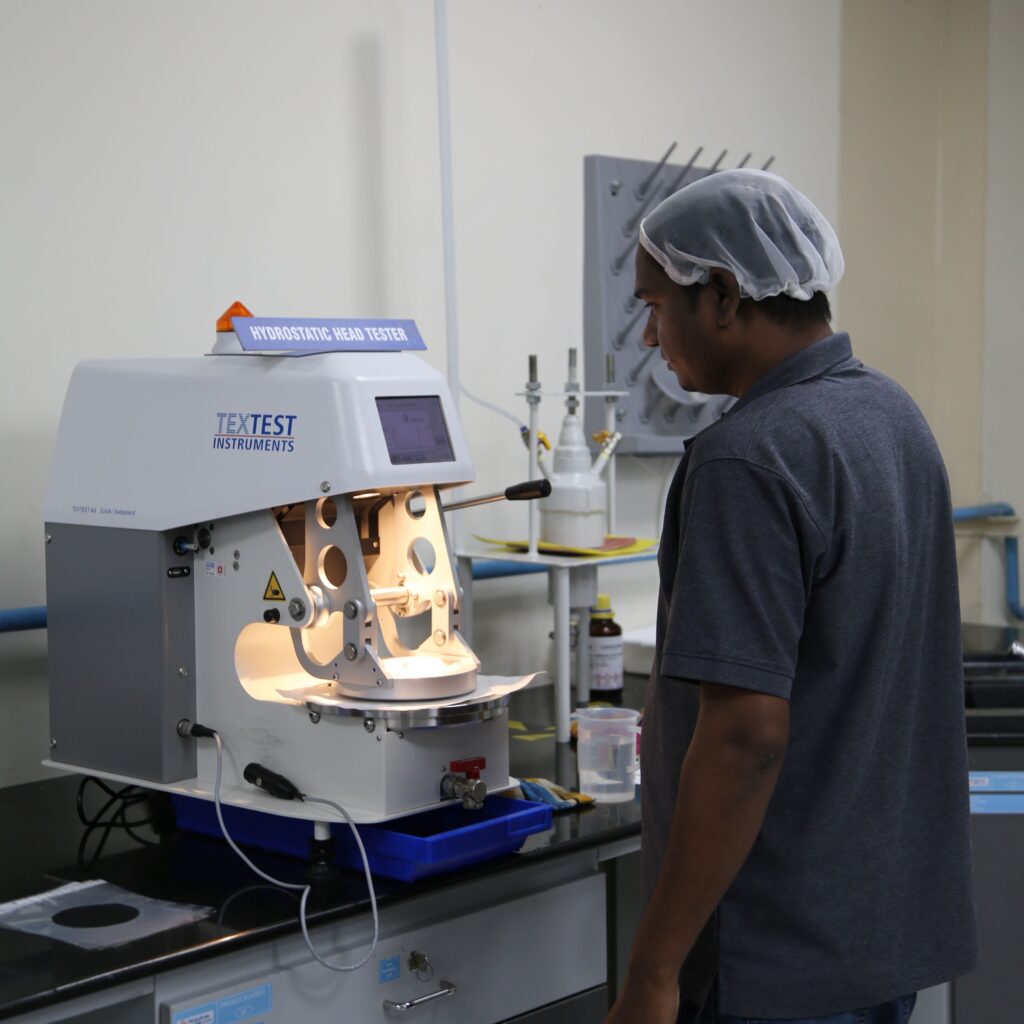
Another strong insight is that machinery alone does not explain performance. Mr. Kedia is careful about that. He draws a direct line between the machine and the people who run it, calmly arguing that the quality of the output depends on both equally. That may sound obvious, but it is often missing from plant-led narratives. Consistency is not produced by equipment in isolation. It is produced by the deep process understanding, operating discipline, expertise, experience, testing routines, and the judgement of teams that know how to tune a platform for different end uses. The Spntek team boasts of over 100 years of combined experience of its personnel with deep-rooted expertise and the knowledge of over 200 trials & experiments conducted each year, alongside testing across physical, mechanical, barrier, and surface-performance parameters.
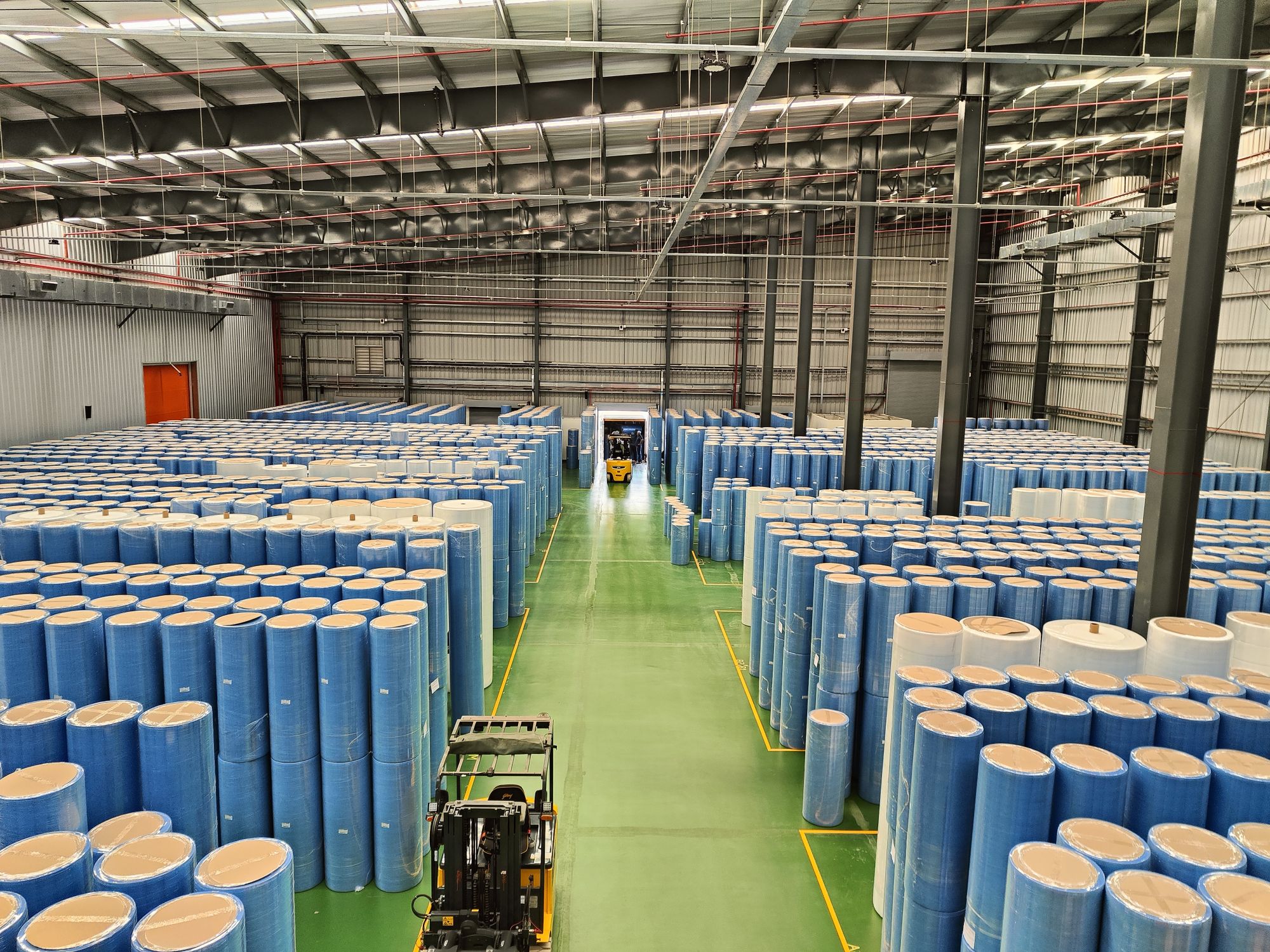
That system is most visible in the medical portfolio, which remains the company’s clearest anchor. Spntek produces high Performance AAMI Level 2 &3 fabrics, ARAS-treated products, a variety of monolithic bi- and tri-laminates for surgical gowns & drapes, chemotherapy-specifc fabrics, CSR wraps, absorbent laminates, printed medical disposables, textured nonwovens and other disposable solutions like patient transfer sheets, absorbent OT mats and disposable hospital curtains. The significance is not simply the number of products. It is that the range reflects a company working across infection-control, barrier, absorbency, comfort, and clinical-use requirements rather than merely supplying a generic base substrate.
Hygiene is the second pillar, but it operates in a different performance language. Here, softness, skin-friendliness, runnability, moisture management, breathability and print aesthetics matter more. The company’s hygiene applications are standard for, printed backsheets, topsheets, leg cuff, core wraps and waistbands across feminine hygiene, adult incontinence and Baby diapers.. Once again, the more important point is not breadth for its own sake. It is the company’s understanding that the customer is not buying fabric in abstraction. The material has to work seamlessly on a high-speed converting line, integrate into the finished product without waste or disruption, and perform as intended in use.
“Credibility in nonwovens is not created by saying more. It is created by failing less.”
From Medical Depth to Market Breadth
From that base, Manjushree Spntek’s move into adjacent sectors becomes easier to understand. Spntek now has a host of products covering a wide application field: industrial coveralls, tarpaulins, lumbar wraps, metal wraps, ISI certified pondliners, , construction membranes & floor-protection products, a variety of agri-tech fabrics including mulch fabrics, crop and fruit covers, bedding solutions for spring pockets, mattress covers, curtain liners, and other home-furnishing uses. On paper, such a variety can look confusing. But in this case, it is more coherent than that. The company is clear that diversification followed capability rather than impulse: build credibility first in high-growth, high-entry-barrier medical and hygiene categories, then extend the platform into adjacent applications where engineered performance, finishing, and consistency still matter.
The conversation added another useful layer. Some of these adjacencies appear to have been reinforced by customer pull, including export-linked conversations. That makes the expansion more convincing. It reads less like – opportunistic range-building and more like – the natural travel of a manufacturing platform into other performance-led markets. The common thread is not the end-use category itself. It is the company’s attempt to convert material capability into application relevance without losing control of quality.
Discipline in a Noisy Market
The broader market context has made that positioning more timely. Across the interview and questionnaire, the company describes a global environment in which freight volatility, geopolitical disruption, and changing trade arrangements are encouraging customers to rethink sourcing concentration. In such a market, India’s opportunity is not merely to offer an alternative on cost. It is to demonstrate consistency, responsiveness, and enough technical depth to be taken seriously as a long-term supply partner. Kedia’s comments are notable here for their restraint. He does not present volatility as a windfall. He treats it as a test of resilience, then returns to familiar ground: planning, inventory discipline, dependable service, and the importance of quality that does not slip when markets become noisy.
The same restraint is visible in how the company talks about sustainability and environment-friendly products. There is ambition in the material, particularly around PFAS-free medical fabricsand 100% true bio-degradable fabrics for the intimate hygiene market, but the more grounded story lies elsewhere: lightweighting, responsible material choices, process optimisation, reduced waste, compliance and transparency. That is the right emphasis. In medical and hygiene nonwovens, sustainability cannot be treated as a slogan detached from function. It has to survive performance, safety and cost.
“In demanding applications, quality is not a finishing touch. It is the operating system.”
What ultimately distinguishes Manjushree Spntek is not that it says – “quality matters”. Every manufacturer says that. It is that the company’s strategy, capability build-out and market language all keep returning to the same underlying discipline. The health and hygiene focus, the integrated manufacturing model, the emphasis on customer process efficiency, the resistance to chasing short-term gains, and the insistence that consistency in product must be matched by consistency in service – are not separate talking points. They are different expressions of the same industrial belief.
As Manjushree Spntek moves deeper into the nonwovens and technical textiles landscape, its significance will not be decided by how many claims it can make, but by how well it protects the discipline that gave it relevance in the first place. That is the harder task. Scale tests culture. Growth tests process. Wider market reach tests whether consistency survives complexity. Yet if Mr. Rajat Kedia’s central premise holds, the company has chosen the right thing to build around. In demanding markets, quality does not sit at the edge of strategy. It is strategy.