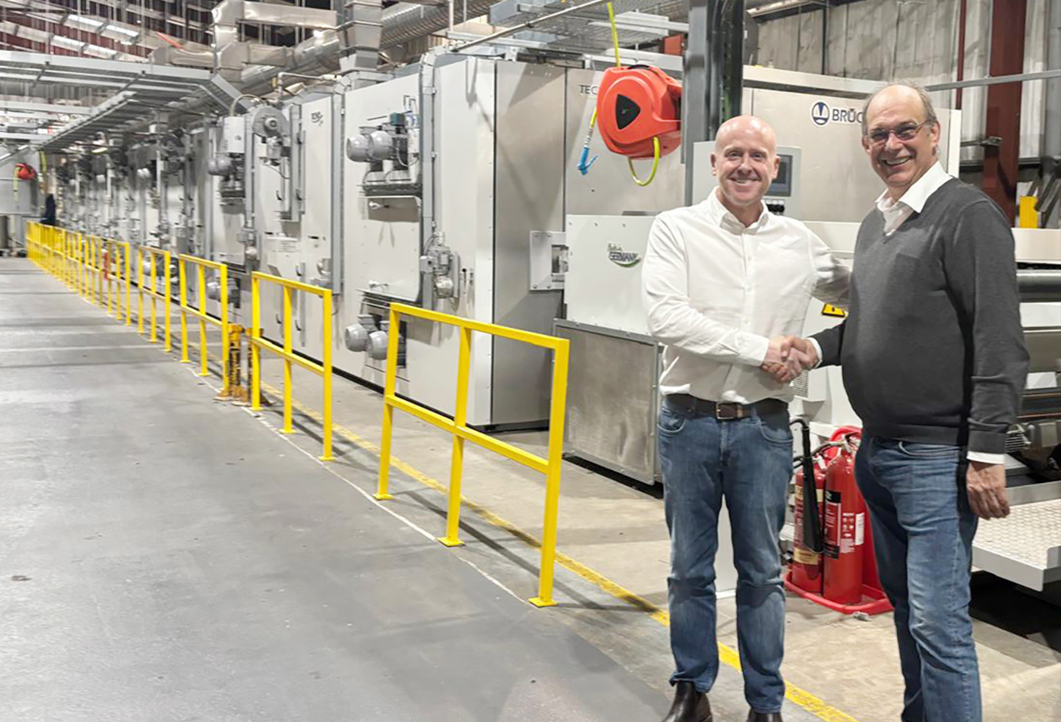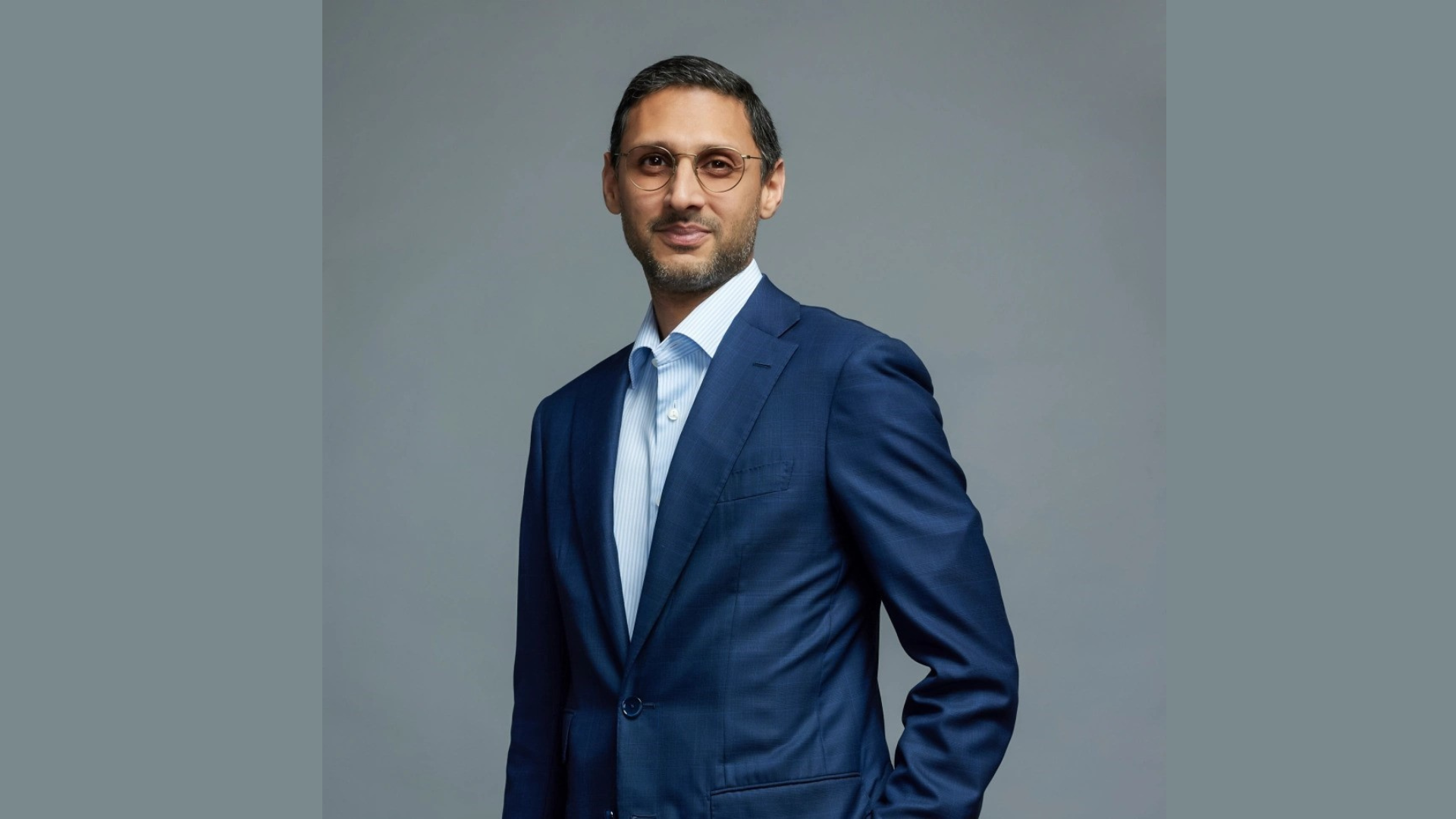

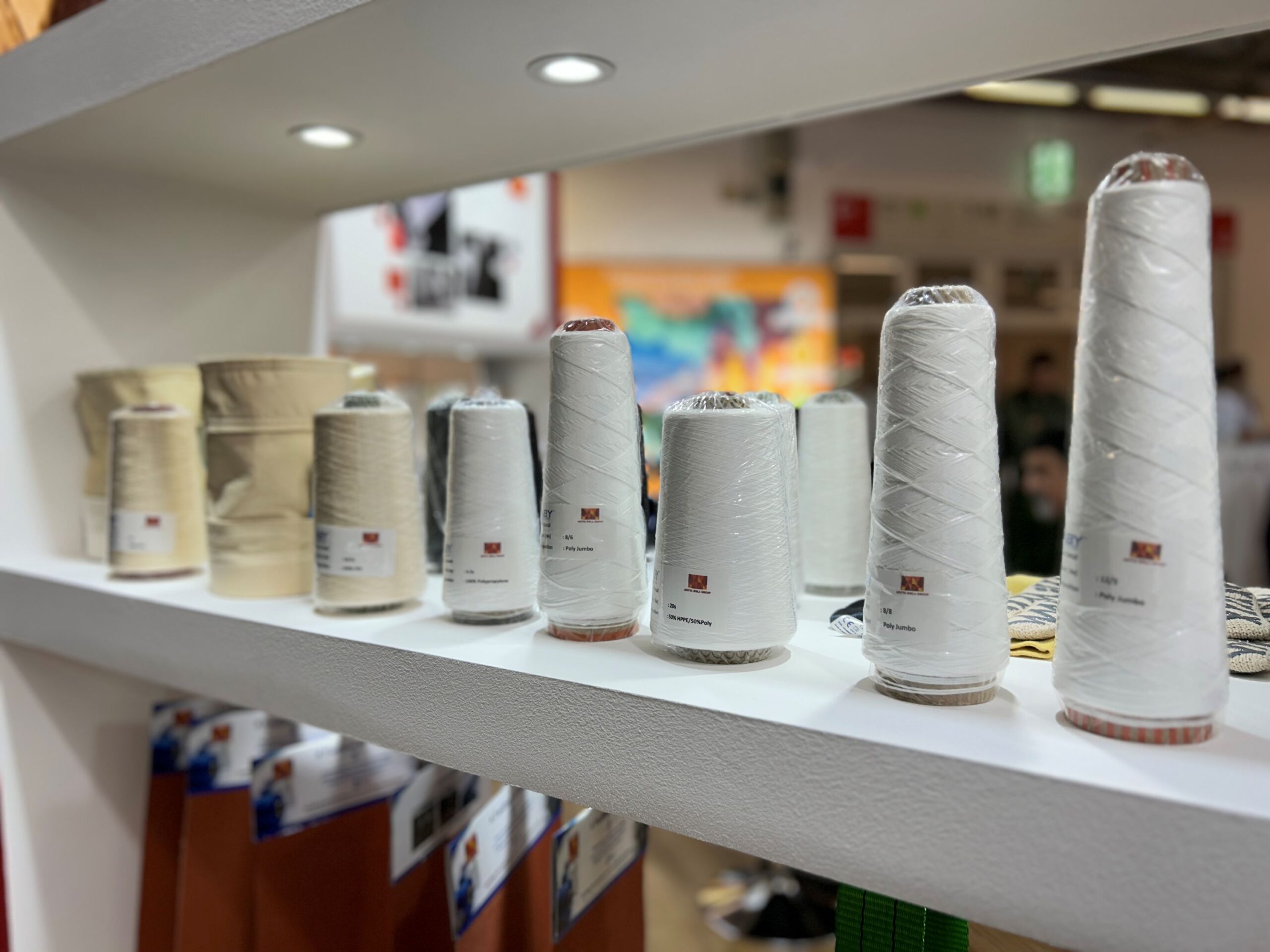
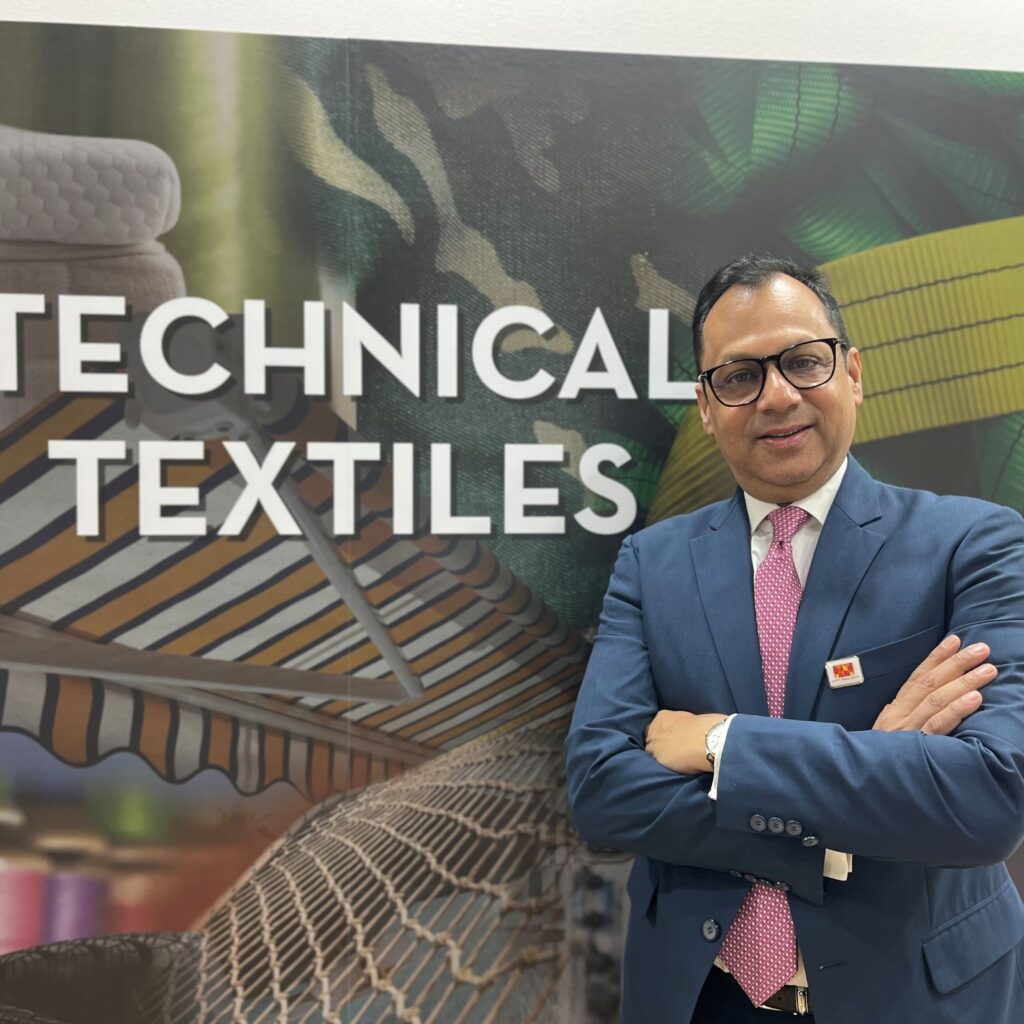
At Techtextil 2026, Kapil Agrawal, Business Head Textiles, Aditya Birla Group, and Suresh Sodani, Managing Director & CEO, Century Enka Limited, explain how the Group is bringing together ProTech, MobilTech, HomeTech, industrial materials and circular innovation under one stronger technical textiles platform.
As technical textiles move deeper into performance-critical applications, the market is beginning to expect more from suppliers. Customers want fewer but stronger partners: companies that can combine material science, manufacturing depth, research capability, compliance, sustainability and application understanding in one integrated proposition.
At Techtextil 2026, the Aditya Birla Group presented precisely that message. Rather than showcasing technical textile capabilities through separate businesses, the Group brought together a more unified platform spanning ProTech, MobilTech, InduTech, HomeTech and allied application areas. The statement was clear: the future of technical textiles will not be built through isolated products, but through connected solutions.
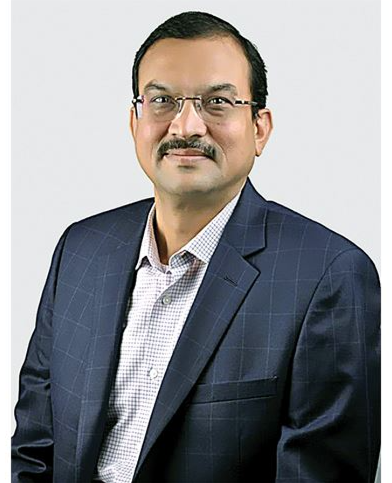
The strength of this approach comes through clearly in the perspectives of two senior leaders. For Kapil Agrawal, Business Head Textiles, Aditya Birla Group, the platform represents a deliberate journey towards integration and customer relevance. For Suresh Sodani, Managing Director & CEO, Century Enka Limited, it reflects the need to address cross-application requirements, especially as MobilTech, ProTech and circular nylon solutions gather momentum.
“The thought was: why don’t we create one forum for technical textiles? What you see today is the result of that two-year journey.”
From Separate Strengths to One Platform
For Agrawal, the idea began two years ago at the same forum, when he observed different Aditya Birla Group businesses participating individually. The opportunity was obvious: instead of presenting fragmented capabilities, the Group could create a single technical textiles platform that would give customers access to a broader, more coherent solution ecosystem.
That approach is especially relevant in technical textiles, where customer requirements rarely sit neatly inside one category. A buyer may begin with a protective textile requirement and later need a mobility, industrial or home textile solution. A global partner may need fibre science, yarn capability, performance validation, sustainability options and scale. A single-window platform helps reduce that complexity.
Sodani reinforces the same point from Century Enka’s perspective. He notes that although the businesses may operate through different legal entities, they are connected by one larger Group identity and a shared technical textiles opportunity. Bringing the portfolio together makes it easier for customers to understand the full breadth of what the Group can offer.
“There are so many cross-requirements from customers. Someone may need a ProTech solution along with a MobilTech solution. Unless we showcase together, customers may not fully realise the range of products we are able to offer.”
The benefit is not only external. A unified platform also encourages stronger collaboration across the Group’s businesses. Agrawal gives the example of a long-standing customer connected with another Group business seeking a partner in Europe. Such internal linkages help widen customer engagement, build trust and create opportunities that may not emerge when businesses operate in silos.
At a larger level, the platform positions Aditya Birla Group as a solutions partner rather than a product supplier. That distinction matters. In technical textiles, customers increasingly want suppliers who understand end-use performance, regulatory expectations, sustainability pressure and the commercial realities of scaling new materials.
Technical Textiles Move Beyond Commodity Thinking
Both leaders make it clear that technical textiles are fundamentally performance textiles. They are not defined by appearance alone, but by what they are expected to do: protect, reinforce, resist, insulate, strengthen, support mobility, improve safety, reduce risk or enable durability in demanding environments.
This is why the market is increasingly looking for partners who can go beyond current product supply and invest in future-ready innovation. Sodani points out that customers and final product users now want companies that can serve present needs while also developing the next generation of solutions. This is where the Group’s R&D capability and application-led approach become important.
“Customers and final product users are looking at companies and partners who can not only supply current products, but also do R&D and create products for the future.” — Suresh Sodani
The shift is significant. In commodity textiles, cost often dominates the conversation. In technical textiles, cost remains important, but it is only one part of the value equation. Performance consistency, reliability, safety, certification, durability and application support often decide whether a product succeeds.
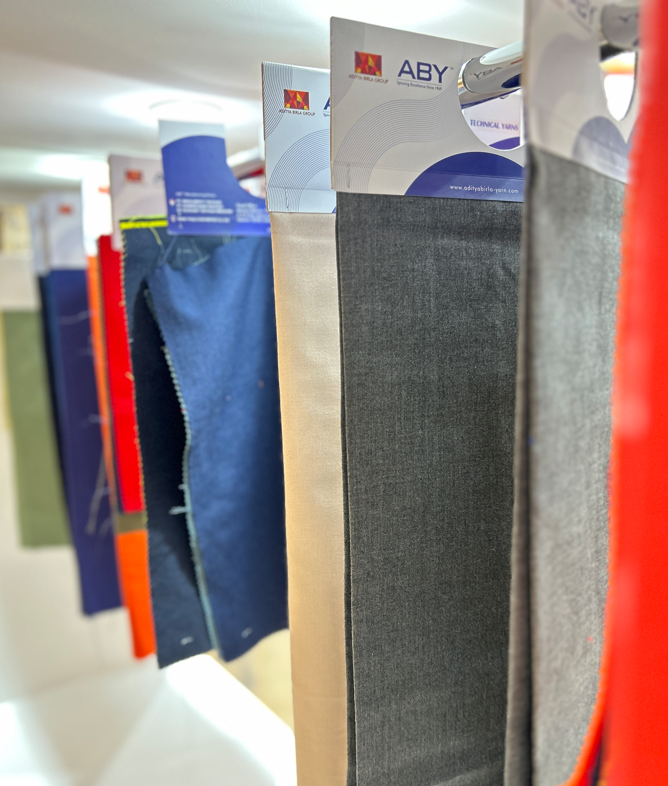
For Aditya Birla Group, the opportunity lies in combining scale with deep material knowledge. Its portfolio connects fibres, yarns, industrial materials, cellulosic innovations, nylon-based solutions and application development. This gives the Group the ability to approach technical textiles not as a single product category, but as a set of performance platforms serving different end-use industries.
ProTech: Safety Without Compromise
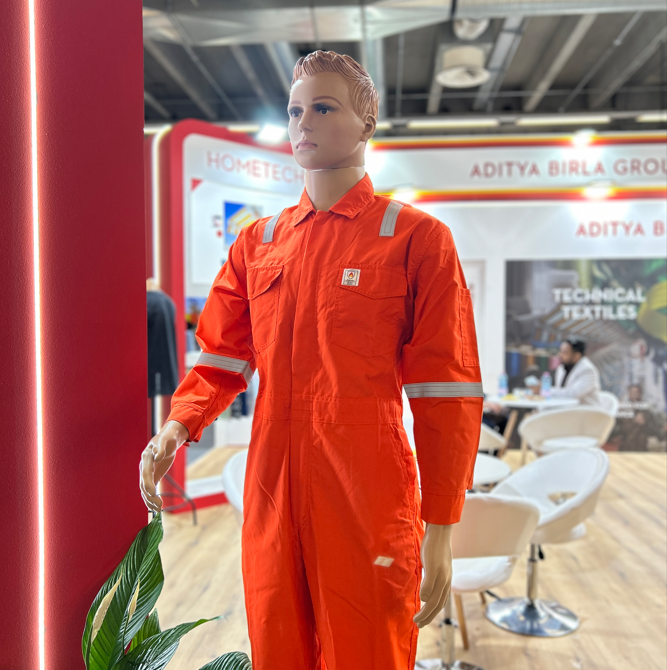
One of the strongest themes in Agrawal’s interview is ProTech, particularly the movement away from surface-treated flame-retardant materials towards inherently flame and heat-resistant fibres. This transition is important because inherent protection is built into the fibre itself, rather than depending primarily on a surface finish.
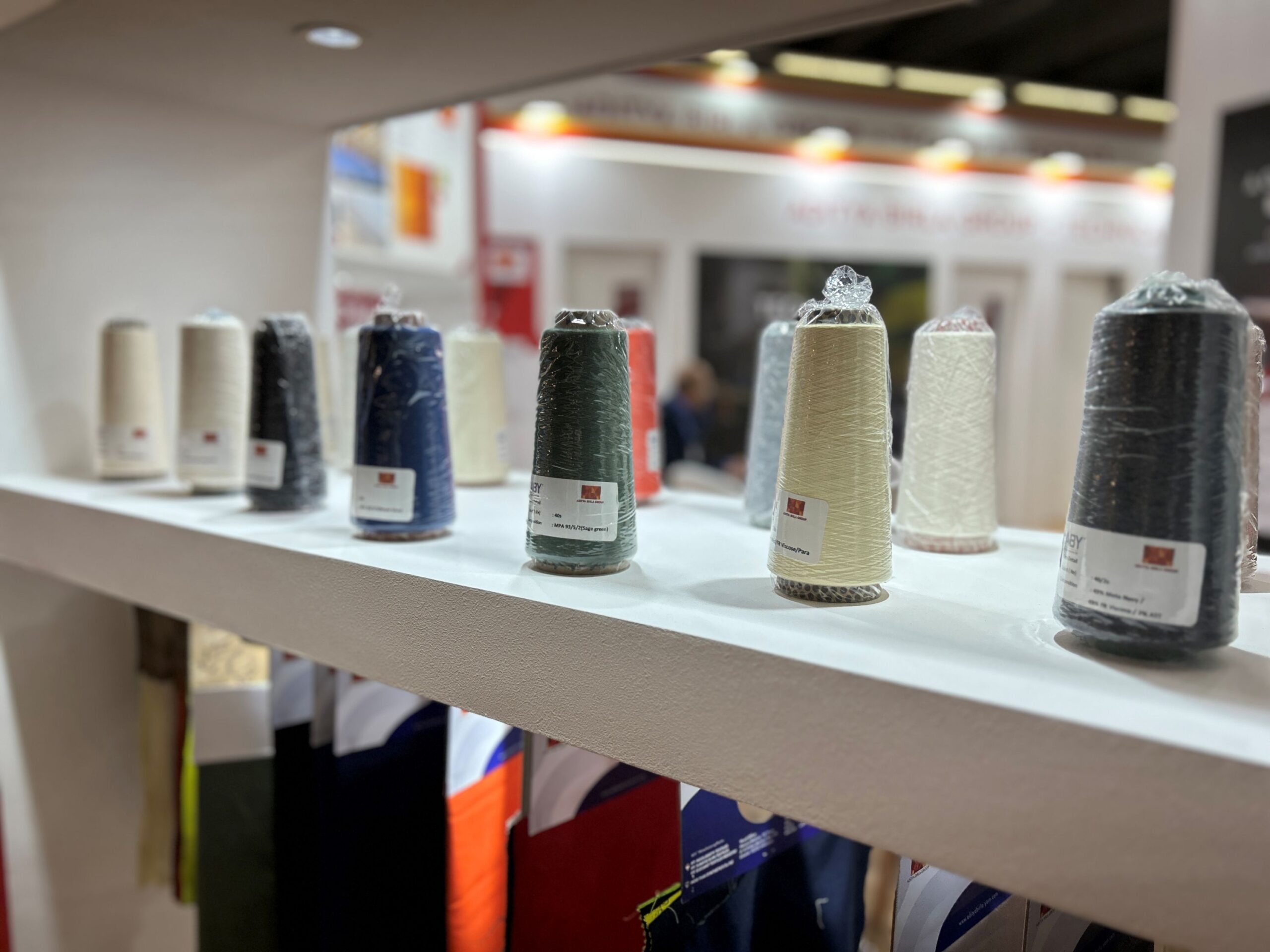
Agrawal says the Group has developed a viscose FR with inherent flame-retardant properties and is focused on promoting it in India as well as global markets. For him, the advantage is durability. An inherently flame-retardant fibre is better positioned to retain protective properties through use and care, making it more reliable for safety-critical applications.
“Inherent fibre is always better than a treated product because it brings much higher durability. Safety is our first priority as a group. If we find that any product is not meeting the standards, we stop that product.” — Kapil Agrawal
That statement captures the seriousness of the category. Protective textiles cannot be treated as ordinary materials. Whether used in industrial safety, public spaces, transport interiors or protective apparel, they must perform when performance matters most. In these applications, trust becomes as important as price.
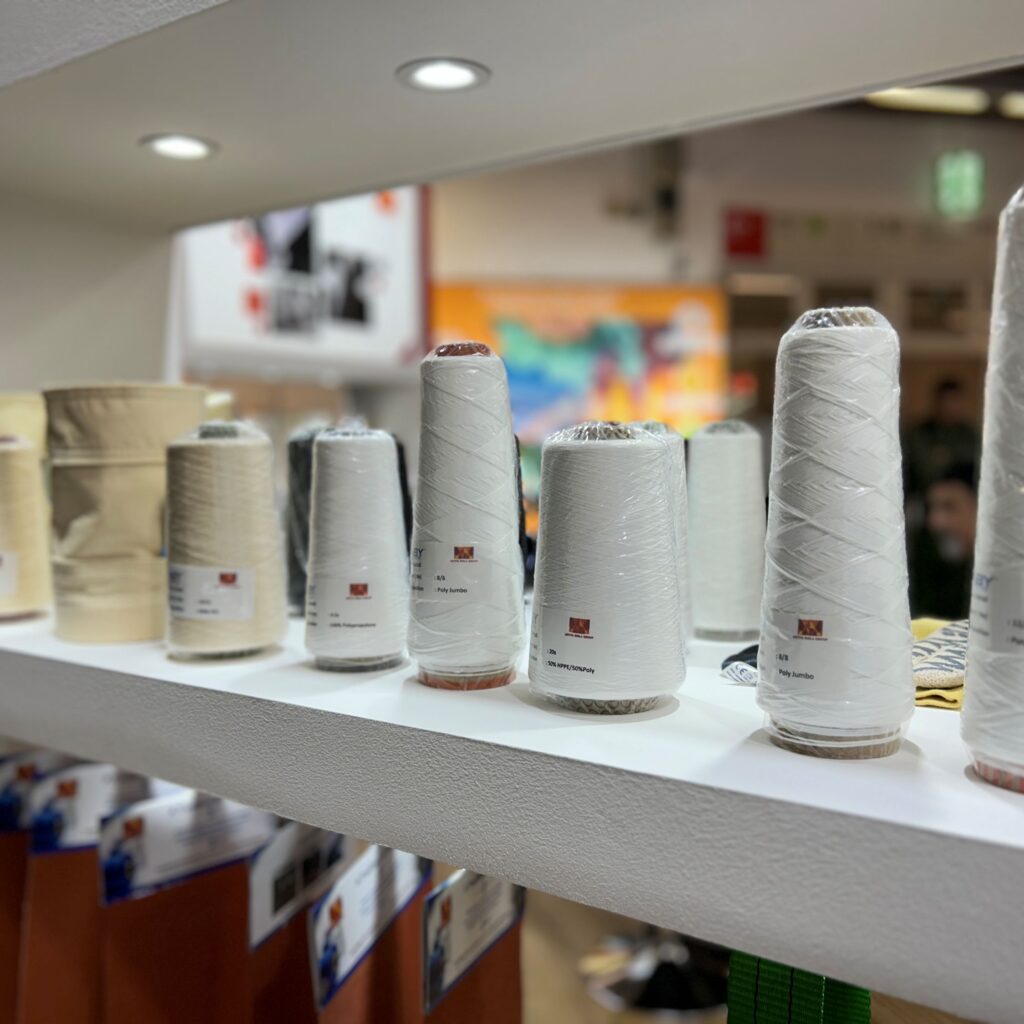
Agrawal emphasises that a cheaper product is not necessarily the right product if safety is compromised. In protective apparel, the customer must trust the material, the supplier and the consistency of performance. Once that trust is established, scalability becomes possible.
This creates a strong opportunity for inherent FR solutions in India. As safety awareness improves and public-space requirements become more demanding, flame-retardant upholstery, curtains, protective garments and transport-related interiors could gain much wider relevance. The Group’s platform allows it to address this opportunity through both material innovation and application understanding.
MobilTech: Growth Driven by India’s Automotive Ecosystem
While ProTech is being driven by safety, regulation and trust, MobilTech is being strengthened by India’s growing automotive ecosystem. Sodani identifies MobilTech and ProTech as two of the strongest growth areas, with MobilTech drawing particular momentum from the Indian market.
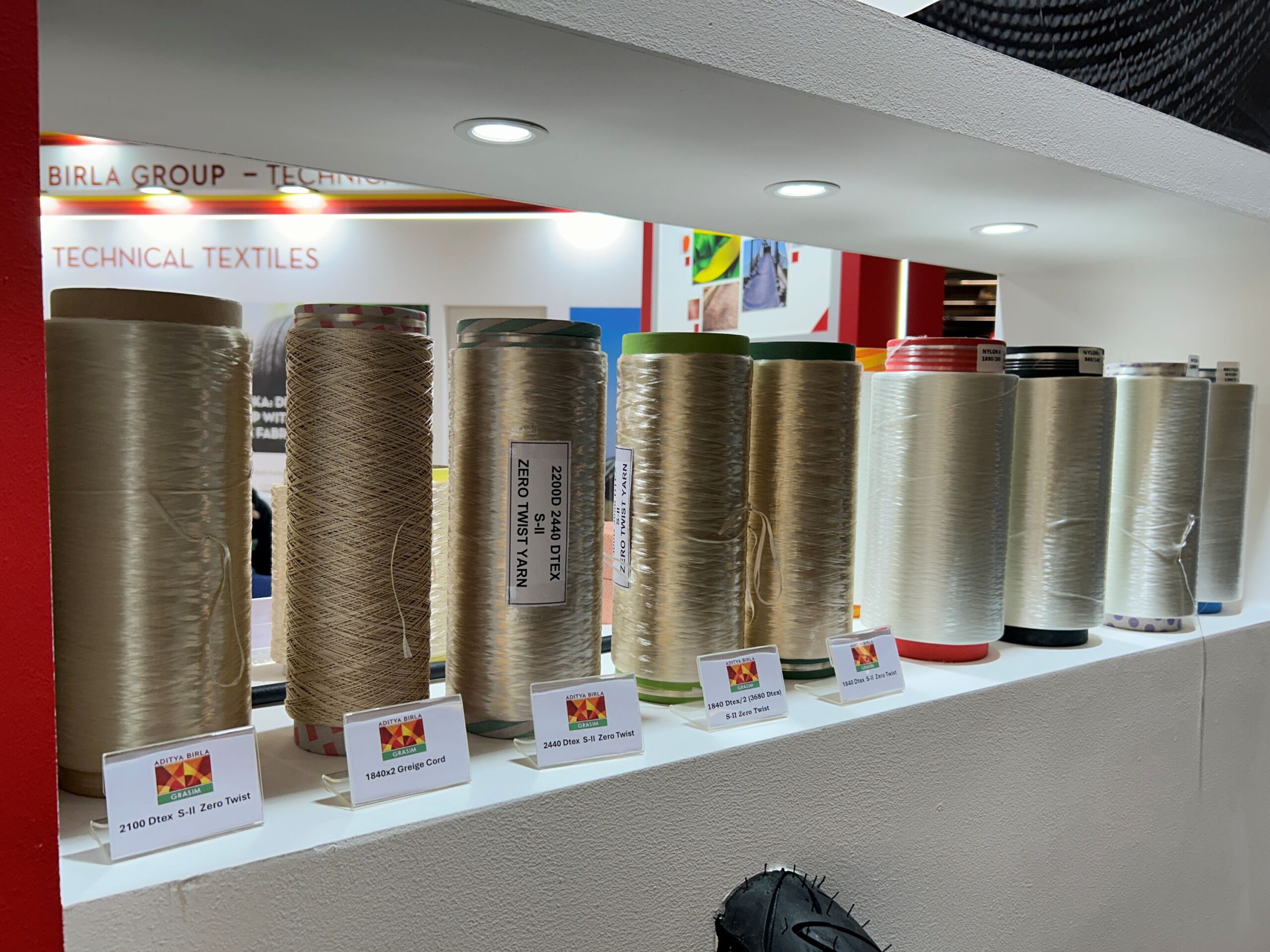
The reasons are clear. India’s auto sector continues to expand, domestic suppliers are building stronger capabilities, and the China-plus-one strategy is creating new opportunities for Indian manufacturers. As mobility supply chains seek reliable alternatives and deeper localisation, technical textile materials used in tyres, reinforcements, belts, fabrics and other mobility-related applications are gaining strategic importance.
“MobilTech is showing strong growth requirements, particularly from the Indian market, because the auto segment is picking up. The dependence on India and the China-plus-one story give us a lot of opportunity.” — Suresh Sodani
Century Enka’s presence gives the Group a particularly strong base in this area. With its expertise in nylon and polyester industrial yarns, tyre cord fabric and conveyor belting fabric, the company is closely linked to the performance requirements of mobility and industrial applications. This makes Sodani’s perspective especially important to the larger ABG technical textiles story.
MobilTech is not merely a volume opportunity. It is a performance opportunity. Materials in mobility applications must deliver strength, consistency, fatigue resistance, dimensional stability and reliability under demanding conditions. As India’s automotive value chain becomes more sophisticated, suppliers with proven technical capability and circular innovation will be better positioned to create long-term value.
Circularity That Must Perform
One of the most valuable additions from Sodani’s interview is the circularity dimension. For him, circularity is not a separate sustainability claim added after the product is developed. It must be embedded into innovation, manufacturing and customer value.
He gives the example of nylon recycling. Century Enka, he says, is the only company in India doing chemical reprocessing of nylon waste from both pre-consumer and post-consumer sources. The objective is to create an alternate circular route for customers, reduce carbon footprint and contribute to lowering climate impact.
“The first requirement is that product performance has to be similar to virgin product. Customers value the lower carbon footprint and are willing to pay a premium in the interim. With scale, that difference will also go away.” — Suresh Sodani
This is a critical point. Circular products cannot succeed in technical textiles simply because they are recycled. They must perform. A recycled nylon material used in mobility, industrial or other technical applications must deliver the required strength, consistency and durability. Sustainability cannot come at the expense of reliability.
Sodani is also realistic about the commercial transition. Circular materials may not yet match virgin materials on cost, but customers increasingly understand the value of reducing carbon footprint. As scale improves, the cost gap is expected to narrow. This is how circularity moves from a sustainability concept to a viable industrial pathway.
For Aditya Birla Group, this circular nylon capability adds a strong sustainability layer to its technical textiles platform. It allows the Group to address one of the industry’s most pressing questions: how can performance materials become more responsible without losing their performance character?
HomeTech: Where Comfort, Safety and Regulation Meet
The Group’s integrated platform is also relevant to HomeTech, where the market is gradually moving from decorative value to functional value. Upholstery, curtains, mattresses, carpets, flooring and institutional interiors are increasingly expected to combine comfort with durability, safety and compliance.
Agrawal points to the growing relevance of flame-retardant materials in public spaces and transport-related interiors. As India develops, he believes awareness around fire-safe materials in upholstery, curtains and other public-use textiles will increase. This could create significant growth for inherent FR materials in both HomeTech and ProTech applications.
The strength of the ABG platform lies in its ability to connect these requirements. Cellulosic fibre innovation, yarn engineering, nylon expertise, performance testing and application development can come together to serve customers who need safety without compromising comfort or design flexibility.
India’s Technical Textile Opportunity
Both interviews point to a larger national opportunity. India’s technical textile market is still developing, but the ecosystem is becoming stronger. Sodani believes the country is moving towards a more complete value chain, from raw materials and intermediates to finished products and end-use applications.
This is essential because India cannot build a globally competitive technical textiles sector through conversion alone. It needs strength at every stage: raw material availability, yarn and fibre capability, processing, application development, testing, certification, finished product manufacturing and customer confidence.
“In India, we are seeing a good revolution in technical textiles, from raw materials to intermediate products to finished goods. That gives us confidence that we can participate in the value chain on both quality and cost.” — Suresh Sodani
This evolution is also linked to import substitution and global competitiveness. When Sodani compares India’s ecosystem with imports, especially from China, the challenge is clear: Indian products must compete not only on cost, but also on quality, consistency and performance. That is where integrated players with scale, technology and application insight can play a defining role.
Agrawal’s view complements this. He stresses that the Group will continue to focus on customer requirements and invest in research and development. The objective is not simply to manufacture more technical textiles, but to develop solutions that are relevant to real end-use needs.
Scaling With Relevance and Technology Leadership
Looking ahead, both leaders see technical textiles becoming a larger and more strategic part of the Aditya Birla Group portfolio. But the ambition is not limited to scale. The Group wants to build relevance, influence and technology leadership.
Agrawal frames the future around innovation anchored in customer need. The Group, he says, will continue to study end-use requirements and invest in developing products around those needs. That customer-backward approach is essential in technical textiles, where every application has its own performance logic.
“As a group, we believe in innovation. We look at the requirements of our end-use customers and then work towards developing those solutions.” — Kapil Agrawal
Sodani adds a complementary vision. He wants technical textiles to become a sizeable segment within the Group’s portfolio, while also ensuring that ABG is technologically at par with, or ahead of, competitors in the space. He also sees the Group expanding within its current focus areas and potentially entering new technical textile sub-segments.
“We want to scale up this segment within the Aditya Birla Group portfolio. We also want to be technologically at par with, or even better than, competitors in this space.” — Suresh Sodani
A More Complete Proposition for the Next Phase
At Techtextil 2026, Aditya Birla Group’s unified platform reflected a clear understanding of where the industry is heading. Technical textile customers want partners who can do more than supply material. They want performance, safety, sustainability, scale, R&D support and application knowledge brought together in one credible ecosystem.
Agrawal’s message gives the platform its strategic shape: one Group forum that connects businesses, applications and customers, backed by innovation and a non-negotiable commitment to safety. His emphasis on inherent FR materials, customer-led R&D and trust in protective applications positions the Group strongly in ProTech and HomeTech.
Sodani’s perspective adds industrial depth. Through Century Enka, the Group brings strong relevance in MobilTech, nylon-based industrial applications and circular innovation. His emphasis on chemical reprocessing of nylon waste, performance parity and India’s evolving technical textile value chain gives the platform a powerful sustainability and manufacturing dimension.
Together, the two perspectives create a more complete story. Aditya Birla Group is not presenting technical textiles as an extension of existing businesses. It is positioning them as a serious growth platform where fibre science, industrial materials, customer trust, circularity and application-led innovation come together.
In a market moving steadily towards performance, protection and responsibility, that integrated approach could become one of the Group’s strongest advantages. At Techtextil 2026, Aditya Birla Group was not merely showcasing technical textiles. It was presenting a vision for how they can be developed, scaled and made more relevant for the future.