
By Nithin Kumar H
At Techtextil 2026, Director Nitin Poddar speaks about sustainability, emerging fibres, regional expansion and the growing role of engineered nonwovens across industries.
As technical textiles move from niche applications to mainstream industrial relevance, companies that can combine fibre knowledge, process flexibility and application development are beginning to stand apart. For Ginni Spectra Pvt. Ltd., this has become a defining strength.
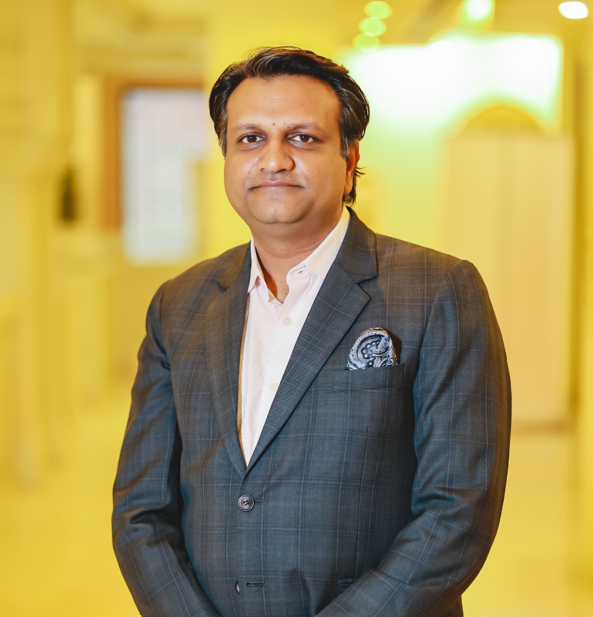
At Techtextil 2026, Mr. Nitin Poddar, Director, Ginni Spectra Pvt. Ltd., outlined the company’s evolving proposition with clarity: nonwovens are no longer limited to conventional applications. They are becoming an increasingly important platform for sustainability, performance and innovation across home textiles, bedding, seating, geotextiles, filtration, thermal insulation and acoustic solutions.
“Our message is that fibres today are available not only in conventional forms, but also in natural and recycled categories,” says Mr. Poddar. “Many of these materials can have a second or even third life. Through nonwoven technology, they can be converted into useful products across several applications — from garments and home textiles to geotextiles, filtration and insulation.”
This ability to give fibres a new purpose lies at the heart of Ginni Spectra’s approach. The company is not simply manufacturing nonwovens; it is working to expand what nonwoven technology can achieve when paired with the right fibre, the right blend and the right end-use understanding.
A Broader Platform for Technical Textiles
Ginni Spectra has built its presence across a wide range of nonwoven applications, with established strengths in home textiles, bedding, seating and related comfort segments. These traditional areas continue to generate strong momentum for the company, particularly as customers seek reliable, consistent and customised material solutions.
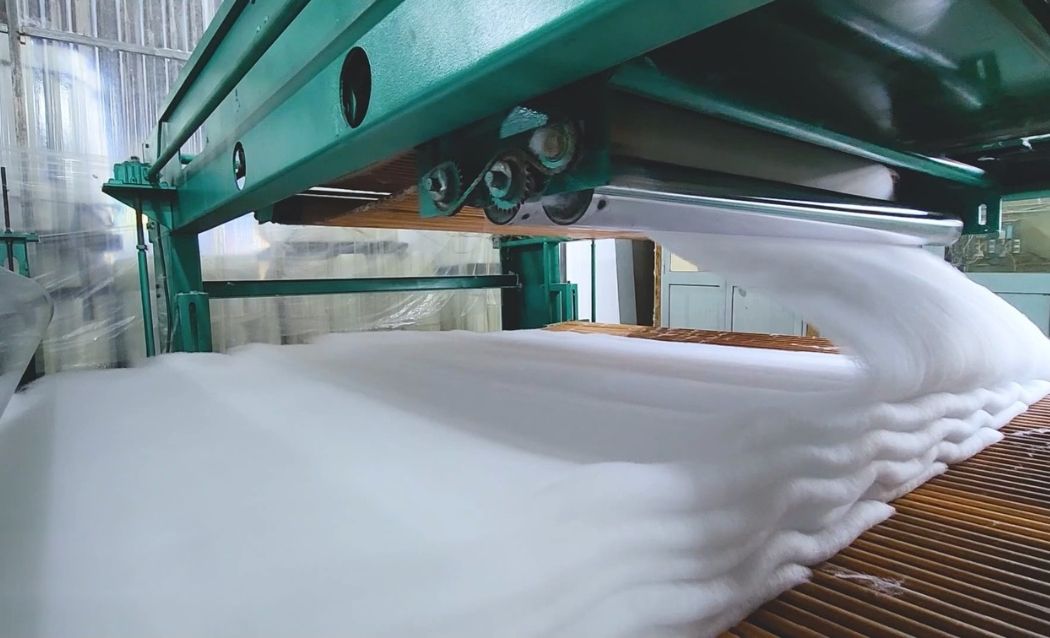
However, Mr. Poddar sees newer technical textile segments gathering pace. Geotextiles, for instance, are becoming increasingly relevant as India continues to invest in infrastructure development. In roads, drainage, separation, filtration and reinforcement applications, engineered nonwovens are gaining greater importance because of their ability to improve performance, durability and efficiency.
Another important growth area is insulation. As buildings become greener and users become more conscious of comfort, energy efficiency and indoor environments, thermal and acoustic insulation are emerging as strong opportunity areas for nonwoven materials.
“Earlier, sound insulation was not discussed as seriously,” Mr. Poddar explains. “Today, people want quieter, calmer spaces. They want better comfort, better acoustics and better living environments. Both acoustic and thermal insulation are building strong momentum.”
This shift reflects a larger change in the market. Customers are no longer looking only for material supply. They are looking for solutions that solve specific problems — whether in comfort, sustainability, performance, safety or long-term durability.
Consistency, Certification and Customer Confidence
In an industry where many products may appear similar at first glance, Ginni Spectra’s differentiation lies in its depth of experience and its commitment to quality assurance. The company has been active in the field for nearly three decades, building trust across a wide customer base and multiple application segments.
Mr. Poddar stresses that customers today expect much more than a product. They want consistency, traceability, certification and confidence in the manufacturing process.
To support this, Ginni Spectra works with important third-party certifications such as GRS, GOTS and OEKO-TEX. These standards help reinforce the company’s commitment to recycled content, organic textile requirements, responsible material use and product safety. Beyond certification, the company also focuses on traceability — giving customers clarity on raw material sources, manufacturing processes and fibre blends.
“We are able to provide complete traceability of the product — where the material comes from, how it is manufactured, and what blends are used,” says Mr. Poddar. “That gives customers confidence. And because we have been doing this for almost 30 years, there is a strong level of trust and credibility already built.”
For technical textiles, this credibility is critical. The performance of a nonwoven material is often linked directly to the success of the final application. Whether the product is used in a mattress, a filter, a vehicle interior, an insulation panel or a geotextile structure, consistency matters.
Fibre Flexibility as a Competitive Advantage
One of Ginni Spectra’s strongest advantages is its ability to process a wide variety of fibres. The company works with natural, synthetic, virgin, recycled, short-staple and long-staple fibres, allowing it to develop products that go beyond standard polyester or cotton-based solutions.
This flexibility gives the company a strong position in application development. When customers want to explore an unconventional fibre or create a specialised blend, Ginni Spectra is able to support that journey with technical know-how and manufacturing experience.
“If someone wants to work with a fibre beyond regular polyester or cotton, they look to Ginni Spectra,” says Mr. Poddar. “They come to us for development. We have been doing a lot of R&D across home textiles, mattresses and even geotextile applications.”
This is where Ginni Spectra’s proposition becomes especially relevant. As brands and manufacturers search for more sustainable, differentiated and performance-oriented materials, the ability to work with diverse fibre platforms becomes a major advantage. It allows the company to move from being a supplier to becoming a development partner.
Exploring New-Age Fibres
Looking ahead, Ginni Spectra is paying close attention to emerging fibres that can bring new value to nonwoven applications. Mr. Poddar points to fibres such as milkweed, flax, hemp, banana and pineapple as examples of materials that could play an important role in the future.
These fibres are attracting growing interest because they combine sustainability potential with useful performance properties. For the nonwovens industry, the challenge is to take such fibres beyond experimentation and convert them into commercially viable products.
Ginni Spectra’s role, as Mr. Poddar sees it, is to use nonwoven technology to make these fibres more practical, affordable and technically sound.
“Polyester is widely used, but the industry also needs to look at fibres that are better aligned with sustainability,” he says. “There are many new-age fibres with strong properties, and we are working in that direction.”
This focus is significant. The future of sustainable nonwovens will not depend on one fibre alone. It will depend on the intelligent combination of fibres, processes and applications. Companies that can understand this complexity and translate it into dependable products will be better positioned for long-term growth.
Moving Closer to the Market
Alongside product development, Ginni Spectra is also strengthening its market reach. Mr. Poddar notes that the company has opened a South India unit and is also developing a Maharashtra unit near Pune. This regional expansion reflects the company’s intent to serve customers more efficiently across India.
For a country as large and diverse as India, proximity matters. Technical textile customers often need shorter lead times, faster development cycles and more responsive service. By moving closer to key markets, Ginni Spectra aims to become more competitive while improving customer support.
This strategy also reflects the broader direction of the Indian technical textiles industry. As demand expands across infrastructure, automotive, construction, home textiles, filtration and industrial applications, suppliers will need to combine scale with agility. Regional presence can make that possible.
A Company Built on Trust and Development
Ginni Spectra operates in a competitive space, but its differentiation is clear. The company brings together long-standing experience, fibre versatility, certification, traceability, regional expansion and a strong focus on product development.
For Mr. Poddar, the company’s three-decade journey has created a foundation of trust that cannot be built overnight. Customers know the company, understand its capabilities and rely on its ability to deliver consistent solutions.
At the same time, Ginni Spectra is not resting on its legacy. It is actively looking at the next generation of fibres, the next wave of applications and the next level of customer expectations.
This balance of experience and forward movement gives the company a strong position in the evolving nonwovens landscape.
Engineering the Next Chapter
As technical textiles continue to gain importance in India and globally, nonwovens are set to play a larger role across industries. Their versatility, adaptability and ability to work with different fibre systems make them highly relevant to the future of sustainable materials.
Ginni Spectra’s direction is aligned with this future. The company is working to bring more affordable, sustainable and technically capable fibre solutions into the market. It is expanding into newer applications, strengthening regional access and investing in development-led customer partnerships.
At Techtextil 2026, the company’s message was clear: the future of nonwovens will be broader, more sustainable and more application-driven. And with its fibre-flexible approach, long industry experience and growing technical focus, Ginni Spectra is positioning itself to play an important role in shaping that future.
For customers looking beyond conventional materials, Ginni Spectra offers more than a product range. It offers the ability to turn fibre possibilities into engineered nonwoven solutions — practical, reliable and ready for the next phase of technical textile growth.