

At Techtextil 2026, Kuldeep Sangani, Director, Alliance Fibres, outlined how the company is strengthening its recycled fibre platform, expanding value-added development and preparing for the next frontier: textile waste as a future feedstock.
For Alliance Fibres, sustainability is not a recent market response. It is the foundation on which the company has built its business for nearly two decades. As global textile and technical textile markets place greater emphasis on circularity, traceability and responsible sourcing, the company is positioning itself as an early mover with the experience to serve both domestic and international customers with recycled polyester-based solutions.
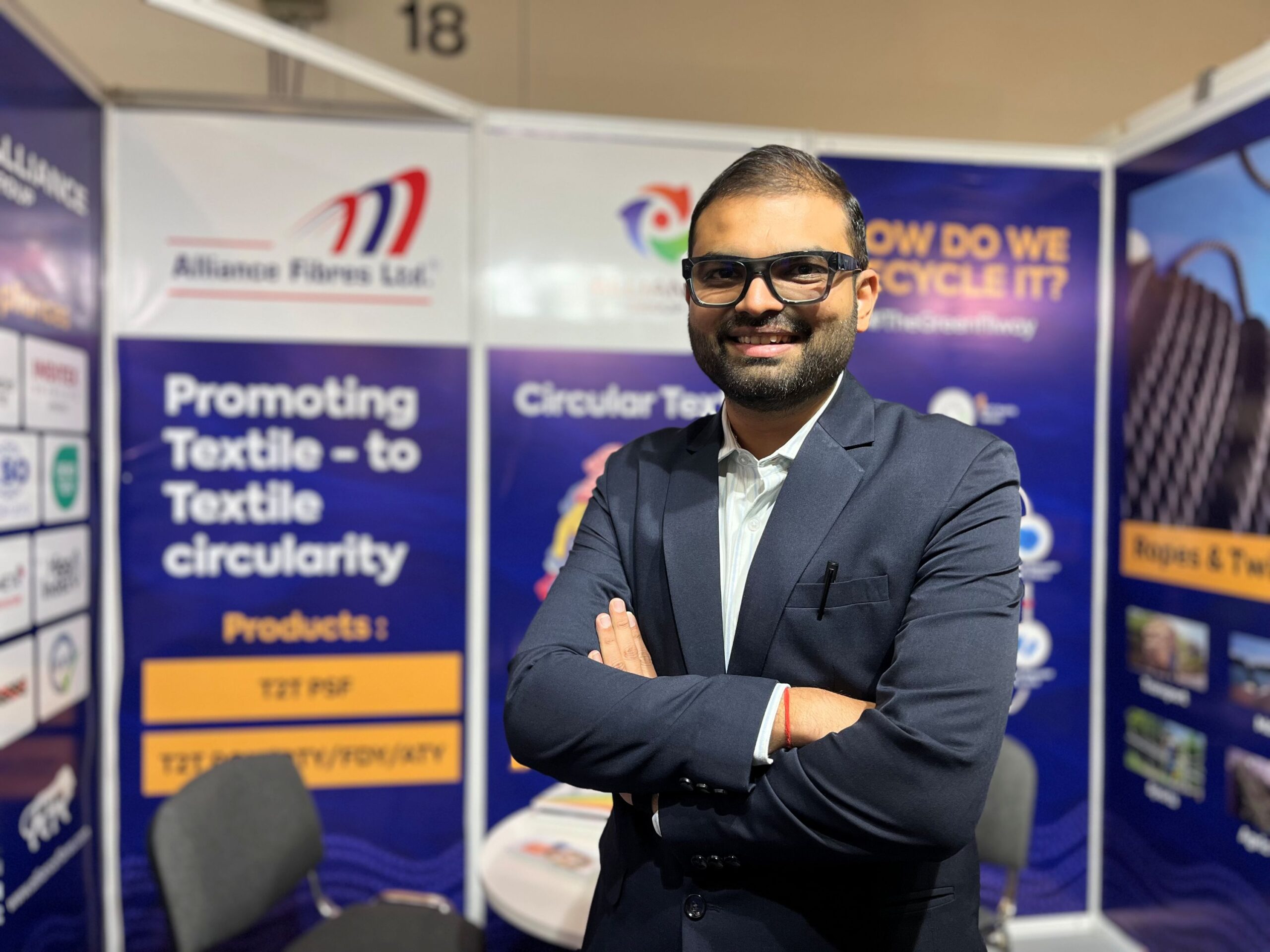
At Techtextil 2026, Kuldeep Sangani, Director, Alliance Fibres, described the company’s journey with clarity. Alliance Fibres, part of the Alliance Group, has been manufacturing recycled polyester staple fibres and filament yarns from PET bottles since 2006. That early entry into PET recycling has allowed the company to develop a broad understanding of recycled raw materials, fibre performance and customer-specific product development.
“We have been manufacturing staple fibres and filament yarns from PET bottles since 2006,” says Sangani. “We are early movers in the PET recycling industry, and over the years we have developed many different types of fibres and yarns for the domestic market as well as exports. We make them based on customer requirements.”
That last point is important. The recycled fibre business is no longer only about converting waste into raw material. It is increasingly about creating consistent, application-ready fibres that can work in real industrial processes and meet the expectations of manufacturers in textiles, nonwovens and technical applications.
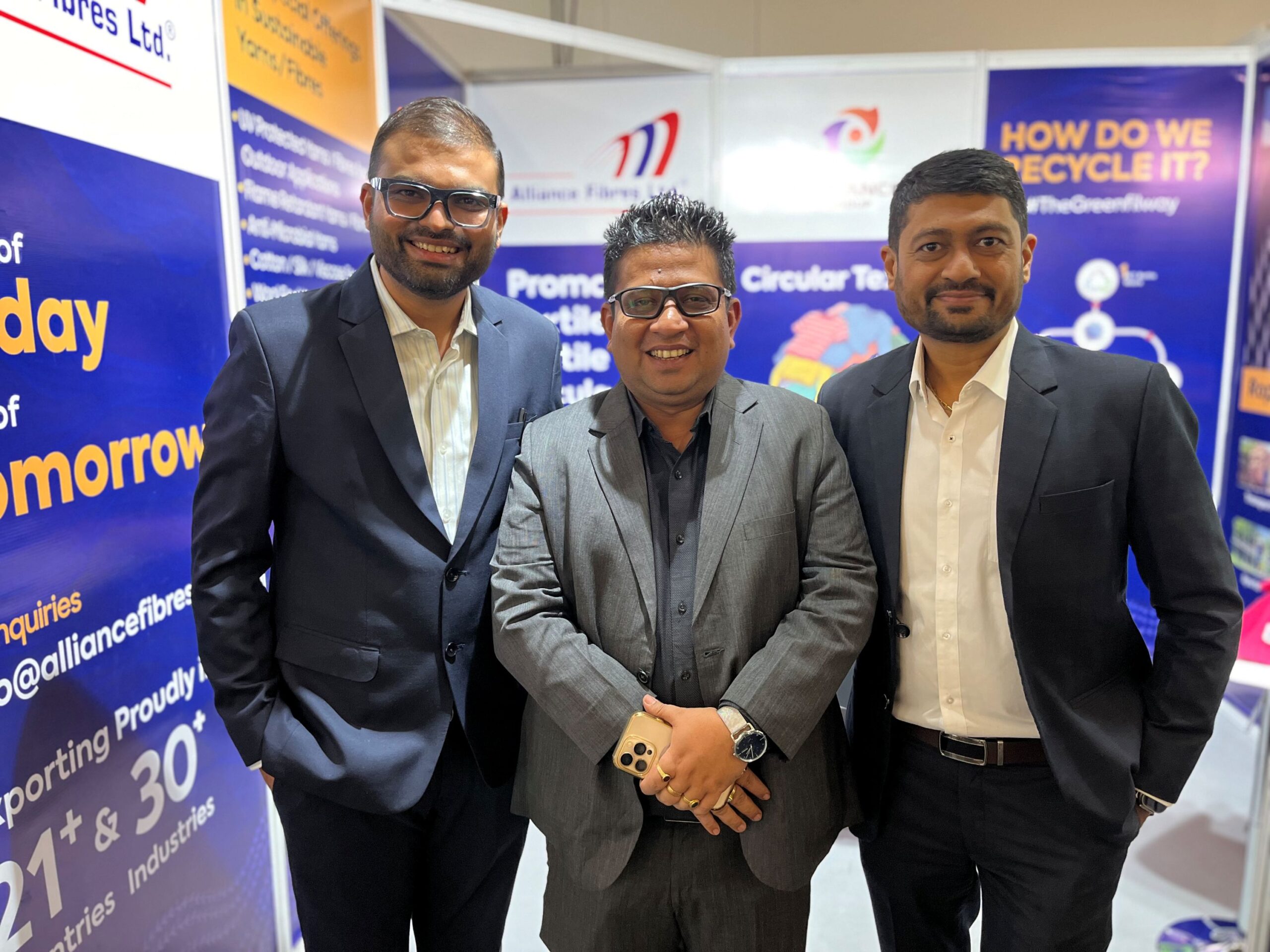
From PET Bottles to Performance Materials
Alliance Fibres’ core proposition is built around giving post-consumer PET bottles a second life as useful textile raw materials. In a market where brands, converters and manufacturers are under pressure to reduce dependence on virgin resources, recycled polyester has become an important route to more responsible production.
However, the market has also become more demanding. Buyers are no longer satisfied with recycled content alone. They expect fibre that can offer consistency, processability, traceability and performance. For downstream manufacturers, especially in nonwovens and technical textiles, the fibre must run reliably, support the desired product characteristics and meet quality expectations batch after batch.
This is where Alliance’s long experience becomes valuable. The company’s message is not merely that it recycles PET bottles. It is that it can develop different fibres and yarns for different needs, allowing customers to work with recycled inputs without treating sustainability and performance as separate choices.
Sangani’s emphasis on customer-led development gives the company a more mature positioning. It suggests a movement away from commodity recycled fibre and towards tailored materials for specific applications. That is particularly relevant as recycled polyester finds wider use in filling, wadding, insulation, nonwovens, yarns, filtration, automotive interiors and other engineered textile products.
Global Presence and the Importance of Trust
For Alliance Fibres, participation in global exhibitions such as Techtextil is a strategic part of building international confidence. In recycled materials, trust is essential. Customers want assurance that the supplier can deliver not only on price, but on quality, continuity, documentation and technical reliability.
“It is about presence in the global market,” Sangani explains. “When customers see us more, they rely on us and trust us. From our experience, we get good clientele, good business and the opportunity to explore new industries every time we participate in such global expos.”
This is especially important for Indian companies working in sustainability-led supply chains. International buyers are actively looking for credible suppliers who can support circularity goals, but visibility and repeated engagement matter. A company’s presence at a platform like Techtextil helps customers see the people behind the product, understand the capabilities and build confidence in long-term supply.
For Alliance, the show also serves as a window into new applications. As recycled polyester moves into more specialised areas, direct conversations with customers can reveal emerging requirements that may not be visible through conventional sales channels. In this sense, Techtextil becomes not only a marketplace, but also a product development platform.
Resilience in a Disrupted Market
Sangani also acknowledges the uncertainty affecting global trade. Geopolitical disruptions have had an impact on business sentiment, demand cycles and customer pipelines. Yet his outlook remains optimistic. He believes that once uncertainty eases, the market will regain momentum, much like the rebound many industries experienced after the disruption of the pandemic.
His observation is practical: when pipelines remain empty for too long, customers eventually need to restock. Expansion decisions that are paused during uncertainty can return when visibility improves. For companies prepared with the right products, relationships and capacity, such a recovery can create significant opportunities.
This is where Alliance’s ongoing work in product development becomes important. Slower market periods can be used to sharpen capabilities, strengthen customer relationships and prepare new value-added offerings. Sangani notes that the company’s R&D team is actively working on new products in textiles and fibres, pointing to a clear intention to move up the value chain rather than remain only a volume recycler.
The Next Frontier: Textile Waste
The most forward-looking part of Alliance Fibres’ story is its interest in moving beyond PET bottles as the main feedstock. PET bottle recycling has played a major role in establishing the recycled polyester industry. But the next phase of circularity will require the textile industry to deal more seriously with its own waste.
“Currently, we are relying on PET bottles,” says Sangani. “In the future, we will have a different feedstock for the same product, which is textile waste. We are doing good research on that.”
This is a significant direction. Textile waste is more complex than PET bottle waste because it may contain blends, dyes, finishes, contamination and varying material compositions. Converting it into reliable new fibre requires deeper technical capability in sorting, processing and quality control. But if achieved at scale, it can help close the loop within the textile value chain itself.
For a company with established recycling experience, textile waste represents both a challenge and an opportunity. It is a challenge because the feedstock is technically more difficult. It is an opportunity because textile-to-textile recycling is becoming one of the most important long-term goals for the industry.
Circularity With Commercial Relevance
Alliance Fibres’ Techtextil 2026 message is therefore not limited to sustainability. It is about commercial circularity: recycled materials that can be developed, customised and supplied in ways that make sense for real manufacturers.
That distinction matters. Circularity will not scale through intent alone. It will scale when customers can trust recycled materials to perform, when supply chains can document recycled content, and when manufacturers can use such materials without compromising their own production quality.
Alliance’s journey from PET bottle recycling to value-added fibre development, and now towards research on textile waste, reflects the direction in which the market is moving. Sustainability is becoming deeper, more technical and more application-specific.
For India’s nonwovens and technical textiles ecosystem, Alliance Fibres plays an important enabling role. Its recycled fibre platform can support downstream sectors that want to reduce virgin resource dependence while building products for comfort, insulation, filtration, interiors, industrial applications and other engineered uses.
At Techtextil 2026, Sangani’s message carried both confidence and realism. The company has already built a strong base in PET recycling. It is now preparing for the next stage of circular materials – one where recycled polyester is expected not only to be sustainable, but also consistent, value-added and future-ready.