
Jasmine Knitting Industries Pvt. Ltd., based in Gurugram, Haryana, is a vertically integrated warp knitting specialist with expertise spanning knitting, dyeing and lamination. Backed by over three decades of industry experience and a manufacturing facility spread across more than three lakh square feet, the company serves a wide spectrum of national and international brands across footwear, sportswear, upholstery and automotive textile segments.
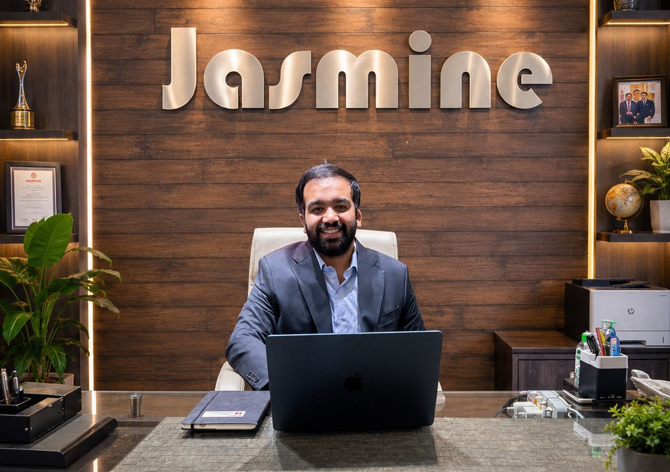
Known for its market‑driven approach to fabric development, Jasmine Knitting has steadily evolved its portfolio with a strong focus on performance, consistency and innovation—particularly in advanced spacer fabrics, where expectations continue to rise. Reflecting on this journey, Mr Vipul Behl, Director, Jasmine Knitting Industries, shares insights into the company’s growth and its long‑standing collaboration with A.T.E. Enterprises Private Limited, which has supported Jasmine Knitting across warp knitting as well as dyeing and finishing processes through timely technical guidance and partnership
Question: Jasmine Knitting has been a trusted name in warp knitting for decades. As customer expectations evolve, especially in segments like footwear and athleisure, what key market signals made you feel the need to rethink design capabilities in spacer fabrics?
Vipul Behl: Over the past few years, we have seen a clear shift in the footwear and athleisure markets. Spacer fabrics are no longer considered purely functional components; they are increasingly visible and design‑led. Brands are looking for materials that combine comfort, breathability, structural performance and aesthetics. Expectations around lightweight construction, airflow management and visual differentiation have risen significantly. These evolving requirements signalled the need for us to elevate our design and engineering capabilities in spacer fabrics.
Q. Before bringing in new technology, what specific limitations did you face—either in design complexity, production flexibility, or turnaround times—that constrained your ability to deliver unique spacer fabrics?
VB: Conventional spacer fabric solutions served the industry well for a long time, but they naturally had limitations when it came to design complexity, structural variation and development speed. As customer briefs became more detailed and time‑sensitive, it became increasingly difficult to deliver highly customised solutions within shorter lead times. As market expectations evolved, we identified the need for a technology upgrade that could deliver flexibility without compromising reliability. In this context, KARL MAYER proved to be a dependable technology partner aligned with our long‑term vision.
Q. Spacer fabrics have become a strong differentiator for footwear brands. What were the design or performance attributes you wanted to achieve to stand out in a highly competitive market?
VB: Our objective was to move beyond basic spacer constructions and engineer fabrics that contribute directly to footwear performance and manufacturing efficiency. This included enhanced breathability, improved cushioning and support, and structures that could potentially reduce the need for additional reinforcements during shoe assembly. At the same time, we wanted the freedom to integrate design elements and textures that help brands stand out in a highly competitive market.
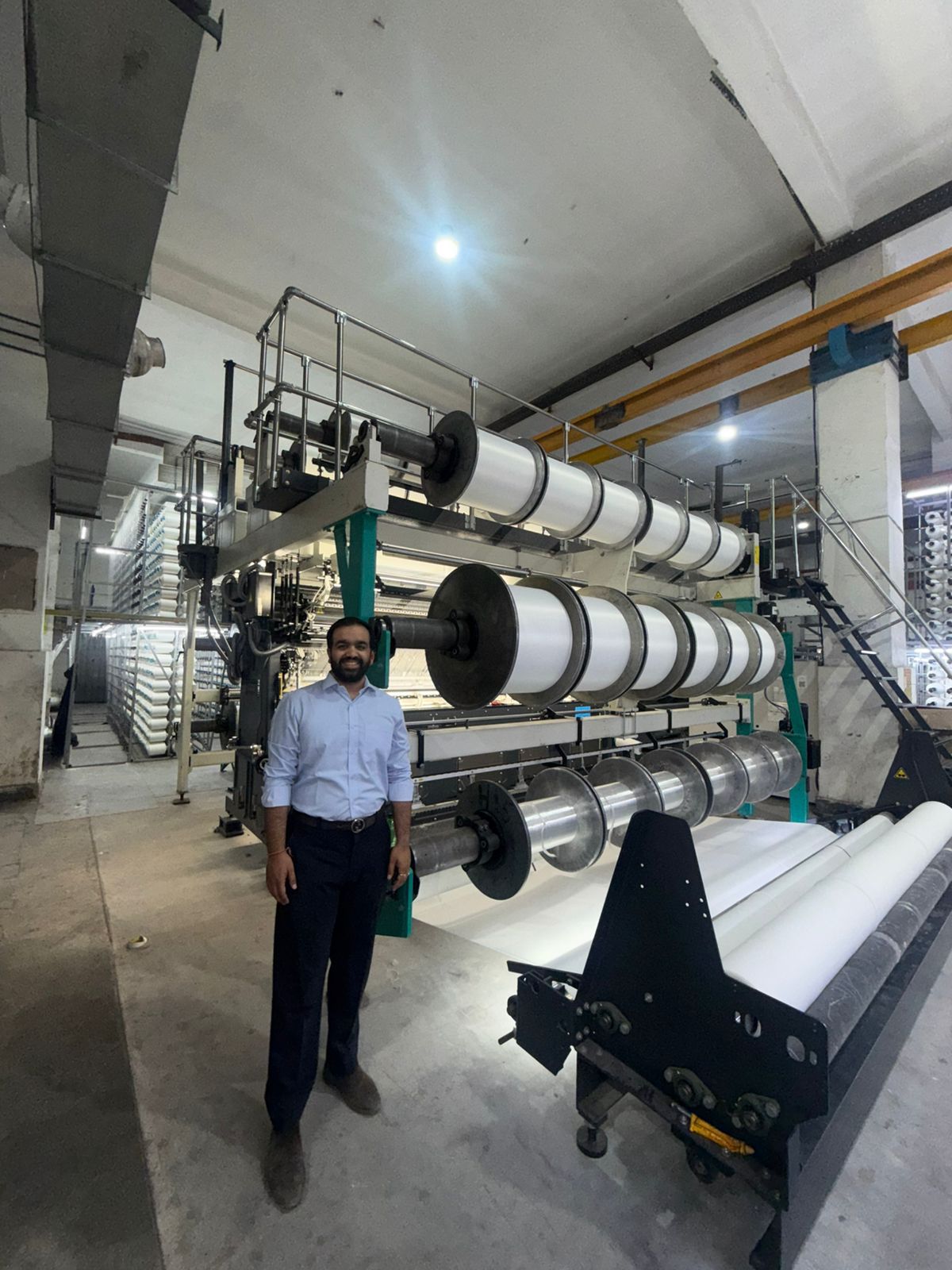
Q. During your evaluation of new machinery, what critical parameters were you analysing?
VB: Design freedom was a key criterion, but it had to be complemented by machine stability and repeatability. We carefully evaluated parameters such as jacquard flexibility, counter‑lapping capability, mesh variation, multi‑colour effects and overall machine reliability at production scale. The solution needed to transform complex design ideas into commercially viable fabrics with consistent quality.
Q. At what stage did A.T.E. get involved, and how did their technical inputs support your decision‑making process?
VB: A.T.E. joined us at a crucial phase of our technology evaluation. Their role went far beyond that of a supplier. They worked closely with us to align our design and production objectives with the right KARL MAYER solutions. Their consultative approach—supported by detailed technical discussions, sample references and practical insights—helped us navigate the available options with clarity and confidence.
Q. A.T.E. recommended the KARL MAYER RDJ 6/2 EN double needle bar jacquard machine. What was the turning point that convinced you this was the right fit for your ambitions in spacer fabrics?
(Feel free to highlight any feature that immediately resonated with your design or customer requirements.)
VB: The KARL MAYER RDJ 6/2 EN stood out because of its versatility. The ability to produce complex jacquard patterns on a double needle bar platform opened an entirely new design space for us. It aligned perfectly with our ambition to develop premium, design‑driven spacer fabrics that meet the evolving expectations of global footwear and sportswear brands.
Q. Now that the machine is successfully operational at your plant, what new types of designs, motifs, textures, or structural variations have become possible things that were either difficult or impossible earlier?
VB: The KARL MAYER technology impact has been significant. We can now create multi‑colour jacquard spacers, intricate textures and engineered structures that were previously difficult or not feasible. This flexibility encourages experimentation and enables us to respond more creatively to customer briefs, helping us deliver truly differentiated products.
Q. How have your shoe‑upper or sportswear customers responded to the newly expanded design portfolio? Have you seen interest from new categories or brands?
VB: Customer response has been extremely encouraging. Existing footwear and sportswear clients have appreciated both the enhanced aesthetics and the functional benefits of the new fabrics. Additionally, we are seeing interest from new brands and application segments that are keen to explore advanced spacer jacquard possibilities.
Q. From a business perspective, how has this technology impacted productivity, responsiveness to customer orders, or your ability to accept more complex design requests?
VB: This investment has significantly strengthened our ability to handle design‑intensive and technically demanding projects. It has improved our responsiveness to customer development cycles and positioned us more strongly as a solution‑oriented partner rather than just a fabric supplier. Strategically, it has helped us set new benchmarks in the footwear textile segment.
Q. Beyond the machine itself, how has A.T.E. supported you—whether through technology updates, insights into global warp‑knitting trends along with the textile finishing, or guidance on scaling your capabilities further?
VB: A.T.E.’s support extends well beyond equipment supply. Their continuous engagement—through technical guidance, updates on global trends and forward-looking discussions—has helped us plan our growth more strategically. This kind of knowledge partnership is extremely valuable in a rapidly evolving textile landscape. We are also blessed with proper support in selecting right technologies for the finished of our specialised fabrics.
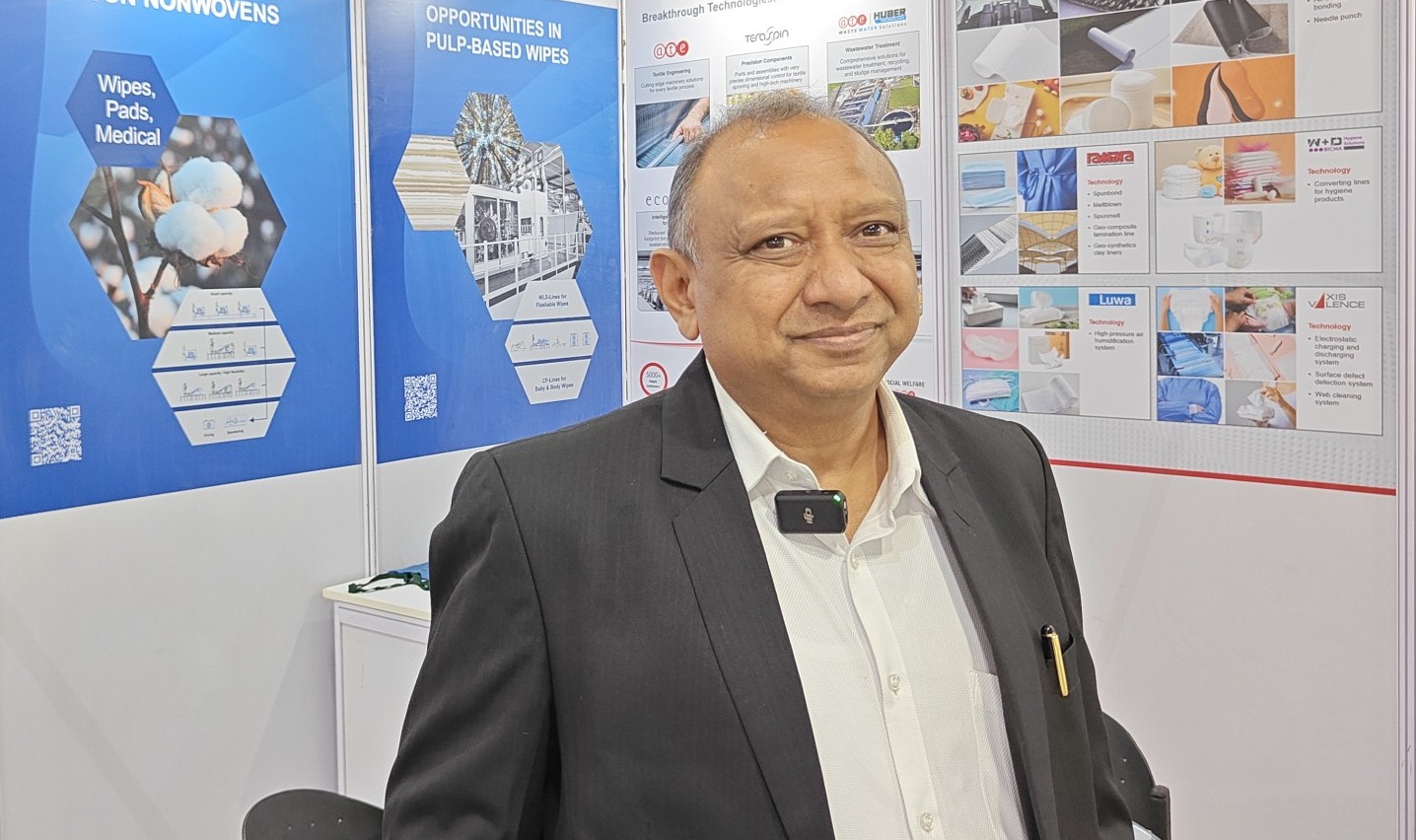
Navin Agrawal – Senior Vice President, Fabric forming, A.T.E.
We take great pride in our enduring partnership with Jasmine Knitting. Engaging with Mr Sandeep Behl and Mr Vipul Behl has been a continuous journey of shared learnings, driven by their commendable knowledge of the shoe fabrics and market. Their steadfast support and enthusiastic reception of the new concepts and technologies offered by KARL MAYER and our other principals make them an invaluable partner.