
By Nithin Kumar H
At Techtextil 2026, Kanav Arora, Director, Credence EcoFibre, explained why recycled polyester staple fibre is moving beyond sustainability claims and into performance-led applications across nonwovens, hygiene, automotive interiors and technical textiles.
Recycled polyester staple fibre is entering a more demanding phase of its development. For years, its strongest argument was sustainability: reducing dependence on virgin polyester, lowering pressure on crude oil-based resources and giving post-consumer plastic a second life. That argument remains important, but it is no longer enough.

Today, buyers want recycled fibre that can perform. They expect consistency, tenacity, workability and quality parameters close to virgin fibre. In other words, recycled polyester must be both responsible and reliable.
This is where Credence EcoFibre is positioning itself.
At Techtextil 2026, Kanav Arora, Director, Credence EcoFibre, highlighted the company’s recycled polyester staple fibre capabilities and its focus on building a circular material platform that can support demanding textile and technical textile applications.
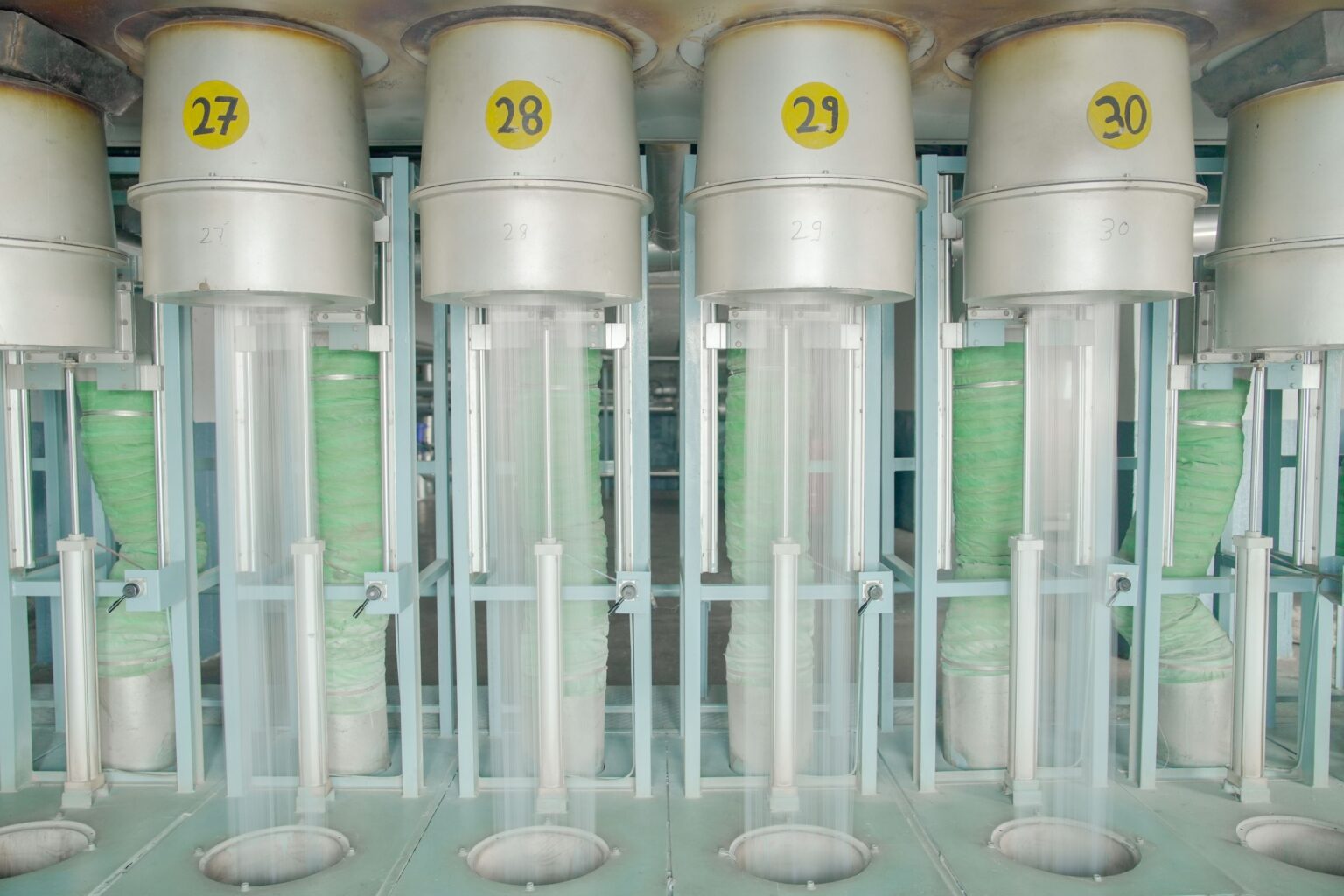
“At Credence EcoFibre, we produce recycled polyester staple fibre,” says Arora. “It is an eco-friendly and sustainable business and part of the circular economy. It helps reduce our dependence on crude oil and natural resources, while offering properties that are almost the same as virgin fibre.”
That statement captures the central direction of the recycled polyester market. Sustainability must now be supported by performance.
Moving Beyond the Sustainability Claim
For recycled fibre producers, the market has changed significantly. A recycled claim may open the conversation, but it does not close the order. Customers want to know whether the fibre can replace virgin material in real production conditions. They want to understand whether it can run smoothly, deliver strength, maintain uniformity and support the finished product’s performance.
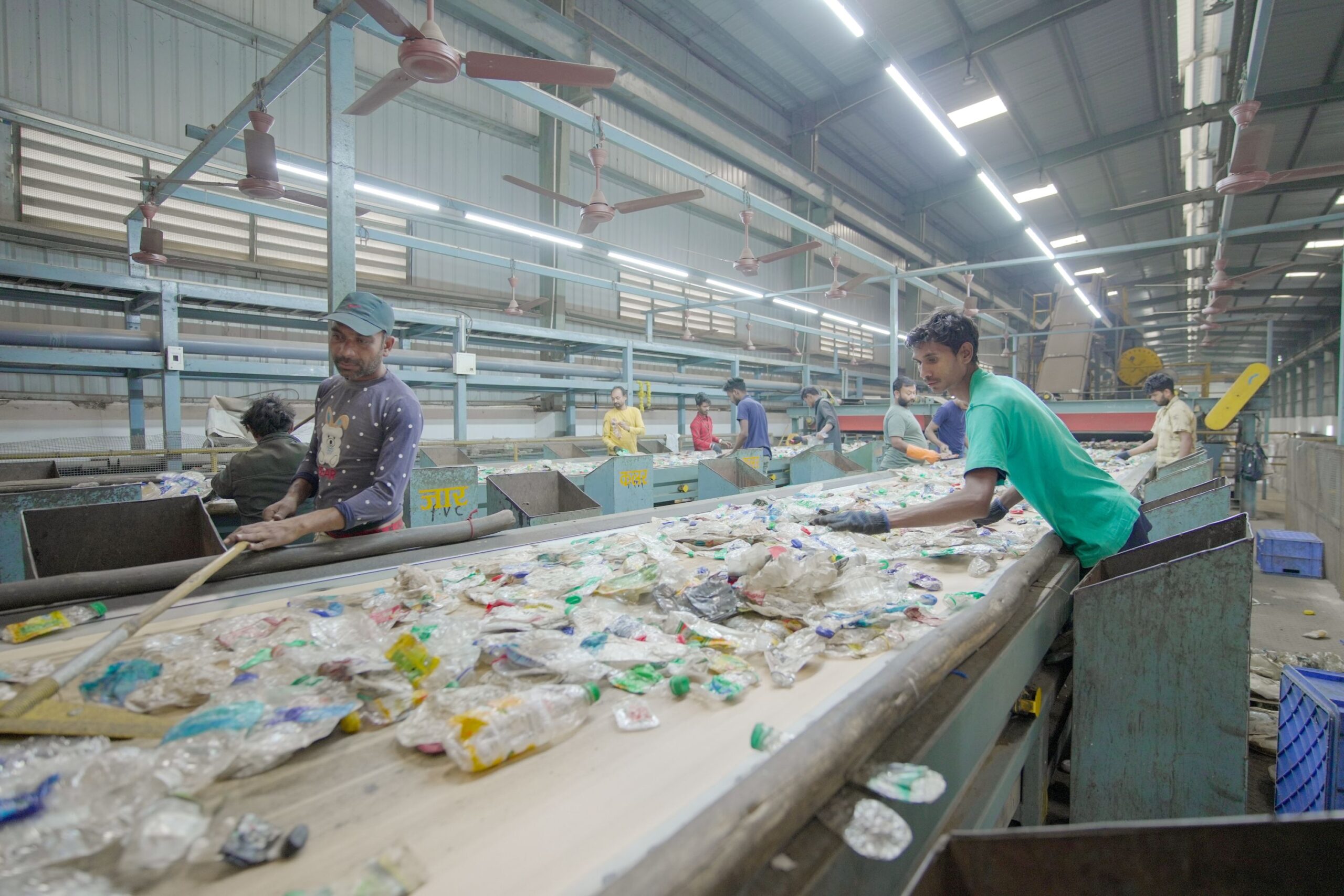
Arora is clear on this point. “If you have to replace virgin fibre, the performance also has to be good,” he explains. “Technology has evolved in recycled fibre. The parameters are now very near to virgin. There may be some colour difference, but in terms of quality, it is comparable.”
This is an important shift. Recycled polyester is no longer positioned only as an environmental alternative. It is increasingly being evaluated as an industrial raw material. For manufacturers in nonwovens, hygiene, carpets, automotive interiors, filling, filtration and other technical textile applications, the key question is not only whether the fibre is recycled. The key question is whether it works.
Credence’s proposition is built around narrowing that gap between recycled and virgin polyester. If recycled fibre can offer dependable performance, it becomes far more attractive to customers who need to meet sustainability goals without increasing risk in production.
The Importance of High Tenacity
One of the most important performance markers in recycled polyester staple fibre is tenacity. High tenacity improves downstream workability and broadens the range of applications where recycled fibre can be used with confidence.
Arora notes that technology has advanced significantly in this area. Recycled fibre, he says, is now much closer to virgin performance benchmarks, with very limited variation in tenacity.
“High tenacity is important because when the fibre tenacity is good, the workability is also good,” he says. “The technology has evolved, and recycled fibre is now very much comparable to virgin.”
For downstream users, this matters because fibre quality directly affects processing efficiency and product reliability. Weak or inconsistent fibre can cause difficulties in carding, web formation, bonding, spinning or fabric performance. Stronger, more uniform recycled fibre allows manufacturers to use recycled content with greater confidence.
In this sense, high-tenacity recycled polyester is not only a better fibre. It is an enabler of wider recycled content adoption.
Nonwovens, Spunlace and Hygiene: The Next Growth Areas
Among the downstream sectors showing strong interest, Arora identifies nonwovens, spunlace and hygiene as key opportunities. This makes Credence especially relevant to the evolving nonwovens ecosystem.
“Technical textiles are the next step,” he says. “Nonwovens, spunlace and hygiene are sectors we are looking at. Products like wipes, wet wipes, baby wipes and diapers are disposable, and using recycled fibre can reduce the load on the environment.”
This is a powerful direction, but it also requires careful execution. Hygiene applications are highly sensitive and must meet strict requirements for safety, cleanliness, consistency and performance. Not every component or product can be treated in the same way, and recyclability depends on design, collection and processing systems. However, increasing the use of reliable recycled content where technically and commercially appropriate can help reduce dependence on virgin raw materials.
For nonwovens more broadly, recycled polyester staple fibre has strong potential. It can support applications in wipes, industrial nonwovens, automotive headliners, carpets, wadding, insulation, filtration media, geotextiles and other technical formats. The versatility of polyester, combined with improving recycled fibre quality, gives companies like Credence a significant opportunity.
Circularity With Performance Discipline
Credence’s story is compelling because it does not treat circularity as a soft claim. The company is framing recycled fibre as a material that must compete on measurable performance.
This is exactly what the market needs. Brands, converters and manufacturers are all under pressure to reduce environmental impact, but they cannot compromise the quality of their products. A carpet must still perform. A headliner must still meet automotive requirements. A nonwoven must still process efficiently. A hygiene component must still be safe and consistent.
For recycled polyester to scale, suppliers must therefore deliver fibre that is technically dependable. That means better control over raw material quality, contamination, colour, fibre denier, length, tenacity, uniformity and batch-to-batch consistency.
Arora’s confidence reflects the progress being made in this direction. He sees recycled fibre becoming relevant in carpets, car headliners, hygiene products and several other applications because the performance gap with virgin fibre is narrowing.
This is the point at which circularity becomes commercially meaningful. When recycled fibre can perform close to virgin fibre, customers no longer need to view sustainability as a compromise. They can see it as part of a smarter raw material strategy.
Reducing Dependence on Virgin Resources
A major part of Credence EcoFibre’s value proposition is its ability to reduce dependence on crude oil-based virgin polyester. Polyester remains one of the world’s most widely used fibres, and its scale makes it central to conversations around sustainability. Recycled polyester does not eliminate all environmental challenges, but it can reduce the need for virgin inputs and support more responsible material use.
For technical textiles, this is especially important. Many technical applications require durability, stability and strength. If recycled polyester can meet those requirements, it can help reduce the environmental load across sectors that traditionally depend heavily on virgin synthetic materials.
Arora’s vision is clear: more products should begin using recycled fibre where it can perform effectively. In his view, the opportunity lies not only in apparel or basic filling applications, but also in performance-led sectors such as nonwovens, hygiene, carpets and automotive interiors.
A Stronger Future for Recycled PSF
Credence EcoFibre’s Techtextil 2026 message reflects the future direction of the recycled polyester industry. The first phase was about proving that plastic waste could be converted into usable fibre. The next phase is about proving that recycled fibre can meet the performance expectations of modern manufacturers.
This is where Credence wants to play a stronger role. Its focus on recycled polyester staple fibre, high-tenacity development and application-led sectors such as nonwovens and hygiene gives the company a clear position in the market.
The opportunity is significant. As technical textiles grow and sustainability expectations rise, demand will increase for materials that can combine circularity with reliable performance. Recycled polyester staple fibre can serve this need if it continues to improve in consistency, quality and processing behaviour.
At Techtextil 2026, Arora’s message was direct and timely. Recycled polyester should not be viewed only as a greener alternative. It should be viewed as a serious material that is steadily closing the gap with virgin polyester and opening new possibilities for nonwovens, hygiene and technical textile applications.
For Credence EcoFibre, that is the larger ambition: to help make recycled polyester not just acceptable, but dependable, scalable and performance-ready for the next generation of textile applications.