


Exclusive Interview by K. Gopalakrishnan, Pics by Manikandan
Techtextil India has emerged as one of the most influential platforms for the country’s fast-growing technical textiles sector. Under the leadership of Messe Frankfurt, the exhibition has evolved from a modest showcase to a world-class event that mirrors the aspirations and progress of India’s textile ecosystem. Speaking at the latest edition, Mr. Raj Manek, Executive Director & Member of the Board, Messe Frankfurt Asia Holdings, reflected on the show’s remarkable growth, the energy and innovation shaping the Indian market and Messe Frankfurt’s strong commitment to supporting India’s rise as a global technical textiles hub.
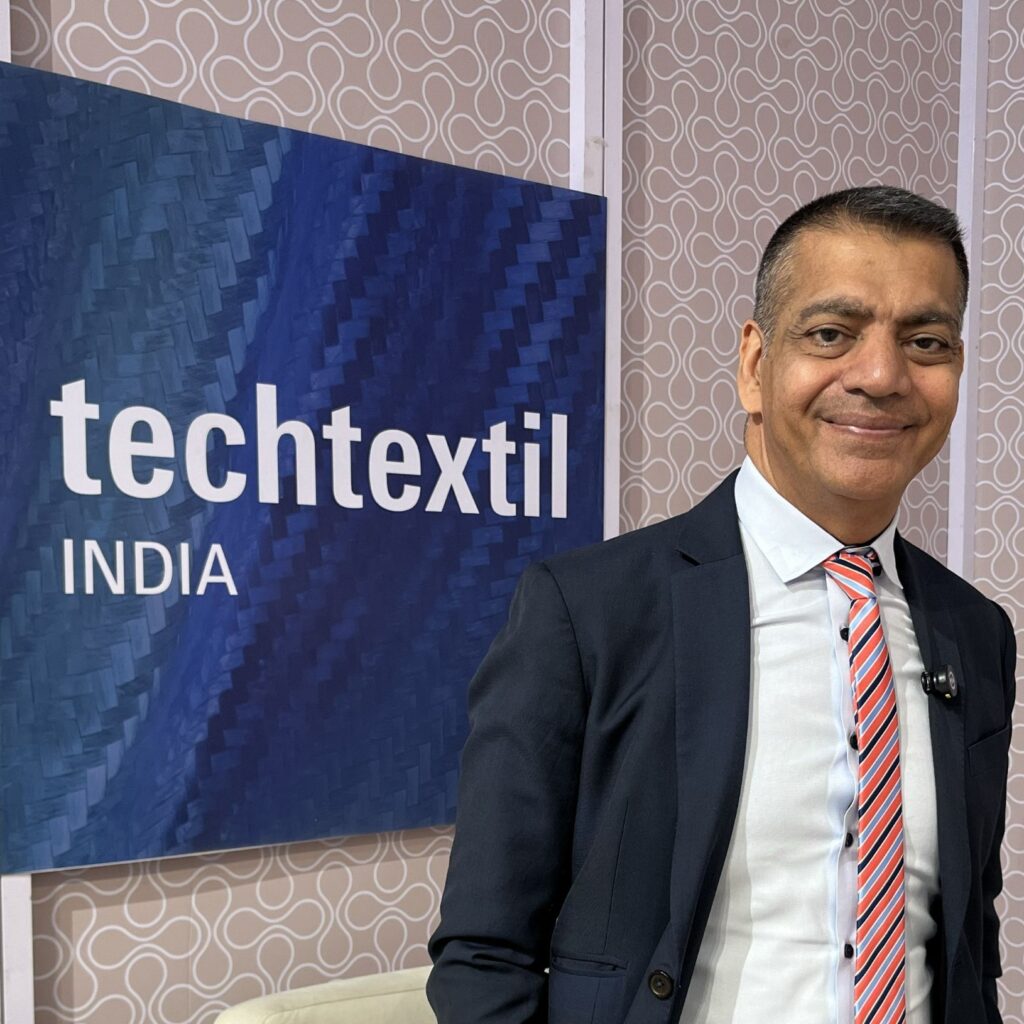
A Transformational Journey for Techtextil India
Raj Manek’s association with Techtextil India dates back to its inception. He recalled starting with a very small square meter show at a time when technical textiles were still at a nascent stage in India. Today, the show has grown by more than 70 percent, drawing over 200 exhibitors and re-establishing itself as an international meeting point for the industry.
“This is exactly what India represents today,” he said. “Vibrancy, enthusiasm and an unmistakable drive to develop the technical textiles segment.” Despite global uncertainties, the show delivered a strong start, reflecting both industry confidence and the government’s active push through initiatives such as the PLI and PLR schemes. These interventions have accelerated diversification among traditional textile players, increased R&D participation and brought new startups into the space.
Innovation, Sustainability and New Business Models Take Center Stage
One of the defining features of this edition of Techtextil India is the visible shift toward innovation-driven and sustainability-led product development. Companies across segments showcased solutions built around recycled materials, water and energy reduction and environmentally responsible processes.
“Sustainability is not merely a buzzword anymore,” Raj emphasized. “Companies are actively incorporating sustainable practices across the value chain, from raw materials to processing and finishing.” This transition is especially significant for technical textiles, which hold enormous potential across mobility, geotextiles, filtration, healthcare, defense and protective applications.
The growing presence of startups at the show underscored another emerging trend. India’s young entrepreneurs are increasingly entering the technical textiles arena, developing new product ideas, investing in R&D and benefiting from the innovation-oriented policies shaping the ecosystem.
Knowledge Transfer: A Critical Component of Industry Growth
Recognizing that exhibitions must go beyond being trading platforms, Messe Frankfurt has placed strong emphasis on knowledge exchange. This year’s standout initiative was the Global Fiber Congress, organized in partnership with the Austrian Institute.
The conference received overwhelming participation, offering deep insights into fiber innovation, sustainability, process advancements and global market trends. “The desire to learn is tremendous,” Raj noted. “Every seminar has been full, and the feedback clearly tells us that such knowledge platforms will play a major role in shaping India’s technical textiles future.”
Plans are already underway to expand the conference into a two-day format in the next edition, giving delegates greater access to expert-led sessions and international best practices.
Meaningful Business Outcomes: The Organiser’s Biggest Reward
As Raj explained, Messe Frankfurt’s primary role is to bring the right buyers, sellers and service providers together. The impact of this was visible on the show floor, where several exhibitors reported strong inquiries and even on-the-spot business closures.
“When business happens on the stands, that is the biggest compliment an organizer can receive,” he said. Exhibitors have invested significantly in their presence at Techtextil India, and Messe Frankfurt sees its success in ensuring that these investments translate into real commercial value.
Raj also highlighted that the show must always evolve in alignment with market needs. Unlike Techtextil Frankfurt, Techtextil India reflects the unique stage of India’s textile industry, requiring tailored formats, curated content and locally relevant segments.
India: A Global Priority Market for Messe Frankfurt
With decades of experience working in India, Raj shared a dual perspective — one shaped by the energy and rapid growth he witnesses on the ground in India, and the other by how Europe now perceives the country. “There has been a sea change,” he said. “India is seen as the place to go. The next decade belongs to India.”
He pointed to India’s strong infrastructure growth, expanding industrial base, thriving startup ecosystem and global positioning as signals of a nation preparing itself to be a manufacturing powerhouse.
For Messe Frankfurt, India has consistently been one of its top priority markets. The company has already built a strong presence in textiles and continues to expand into new segments such as sportstech and other verticals connected to technical textiles. More new projects are in the pipeline, reflecting Messe Frankfurt’s confidence in the country’s long-term growth trajectory.
Techtextil India 2024 stands as a testament to the momentum, ambition and innovation shaping the country’s technical textiles industry. Under the stewardship of Messe Frankfurt, the platform has grown into one of Asia’s most important showcases for advanced materials, sustainable solutions and technology-driven transformation. With a rapidly modernizing ecosystem, strong government support and rising global interest, India is poised to become a leading force in technical textiles.
As Raj Manek affirmed, “What India does in the next five to ten years will shape its future as a global powerhouse.” With Messe Frankfurt deeply committed to enabling this journey, Techtextil India will continue to play a pivotal role in empowering the industry, accelerating innovation and driving meaningful collaboration across the value chain.


