

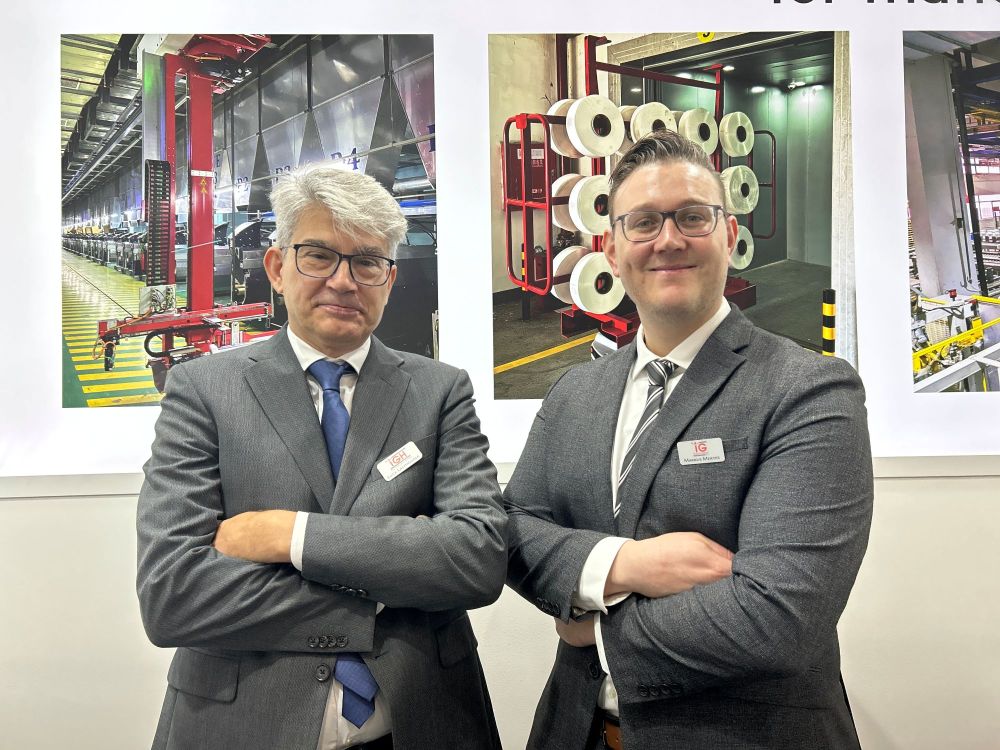
At ITMA ASIA 2025 in Singapore, IGH and IG Automation drew strong global interest with their technological advancements in automated handling systems for filament yarn production. With visitors from India, China, Turkey, the United States, and other key textile hubs, the company reaffirmed its position as a leading solutions provider for Man made fibers and filament, mainly for POY, FDY, DTY, HTI, BCF, carbon fiber and glass fiber plants. In a discussion with Mr. Luca Lacitignola, Sales Director of IGH, and Mr. Markus Mertes, Sales & Project Manager at IG Automation, the leadership team highlighted their latest innovations, expanding market presence, and the strategic importance of India as one of the fastest-growing textile economies in the world.
Comprehensive Automation Across Filament Yarn Production
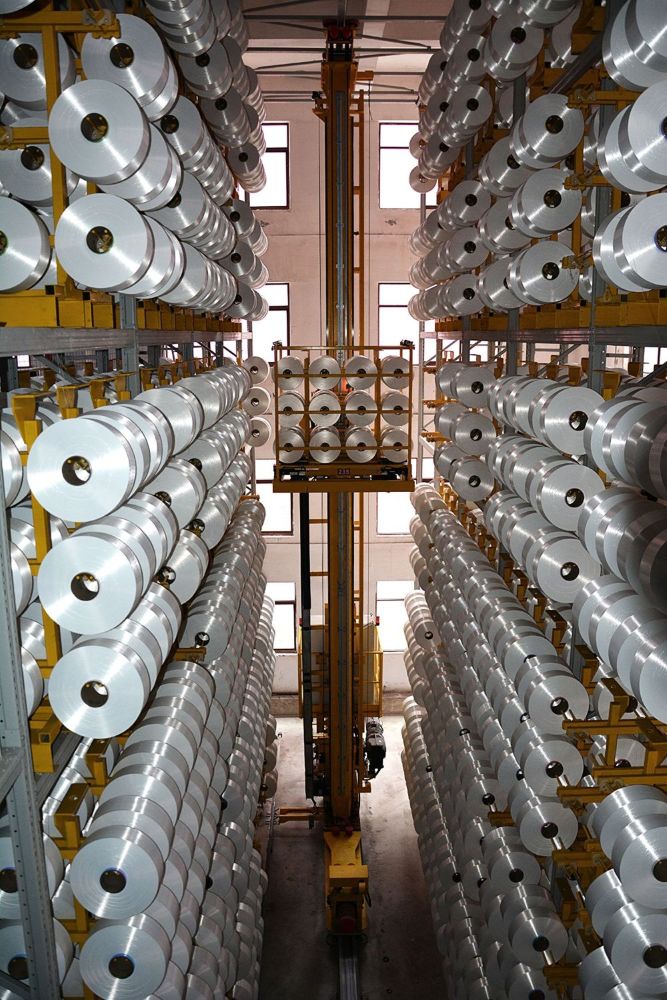
IGH and IG Automation offer a wide range of automated handling solutions that cover the complete journey from filament spinning to warehousing and palletizing, thanks to over 50 years of experiences done by both companies. The systems are designed to manage all the man made filament types in different environments — not only Greenfield and also Brownfield environments— ensuring seamless transition through each downstream process.
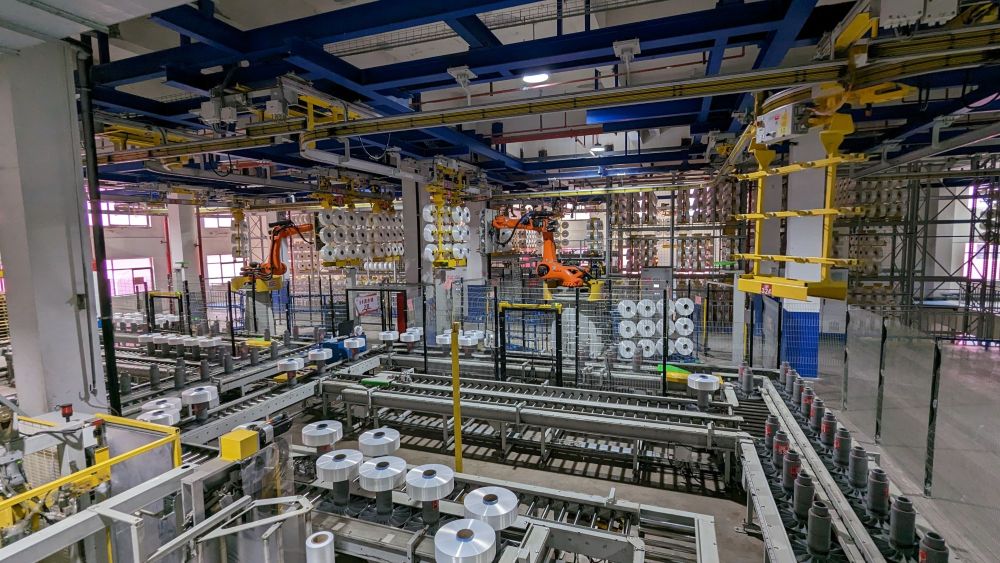
“Usually, we start in the spinning area with the automated handling of the individual products,” explained Mr. Lacitignola. “From the spinning area to the downstream process, up to warehousing and final palletizing, all the individual automatic handling processes are managed by our automation system.”
This ability to automate each stage of handling not only minimizes human intervention but also enhances consistency, data tracking, and operational efficiency—a key requirement for high-volume producers seeking to remain competitive.
Global Reach with a Strategic Focus on Emerging Textile Clusters
IGH’s footprint spans across all regions where filament production is prominent. The company maintains leading positions in China and Turkey and collaborates with major industry players in the United States. India, however, stands out as a strategic market that offers vast potential for expansion.
“We are in all the countries where there is textile production in fiber,” said Mr. Lacitignola. “India is surely an opportunity for us. We also are pursuing in all the Indian sub-continent where we recently had very promising discussions.”
India’s rapid economic development and its status as one of the world’s fastest-growing textile markets further elevate its significance. Mr. Mertes emphasized that India’s growth trajectory is impossible to overlook. “It is clearly known that India is the most growing economy in the last couple of years. This is a really good opportunity for us to enter again into the market with various automatic handling solutions.”
IGH’s commitment to India is already visible. The company has initiated a major automation project in Surat, currently in the engineering phase. Beyond greenfield investments, IGH is also focusing on modernizing brownfield plants, bringing existing systems up to state-of-the-art standards without requiring complete replacement. This flexibility enables customers to benefit from automation without undertaking expensive reconstruction.
Tailor-Made Solutions Backed by Combined German–Italian Expertise
A key element of IGH’s strength lies in its ability to design tailor-made automation solutions. According to Mr. Lacitignola, this capability stems from the company’s extensive experience across multiple filament sectors and its integration with the former Barmag Automation Division in Germany.
“With the connection to our German colleagues—what used to be the Barmag Automation Division—we now have the combined expertise of two companies that were once competitors,” he said. “This merging of strengths allows us to give customers the best possible solutions thank to our joint wider product portfolio.”
The company in Germany enhances design capability and engineering precision, enabling IGH to deliver highly customized project layouts that match the exact requirements of each spinning plant. Manufacturing is still done in Germany as well as in the IGH sister company Thema System in Italy.
Innovations that Reduce Manual Operations and Labor Costs
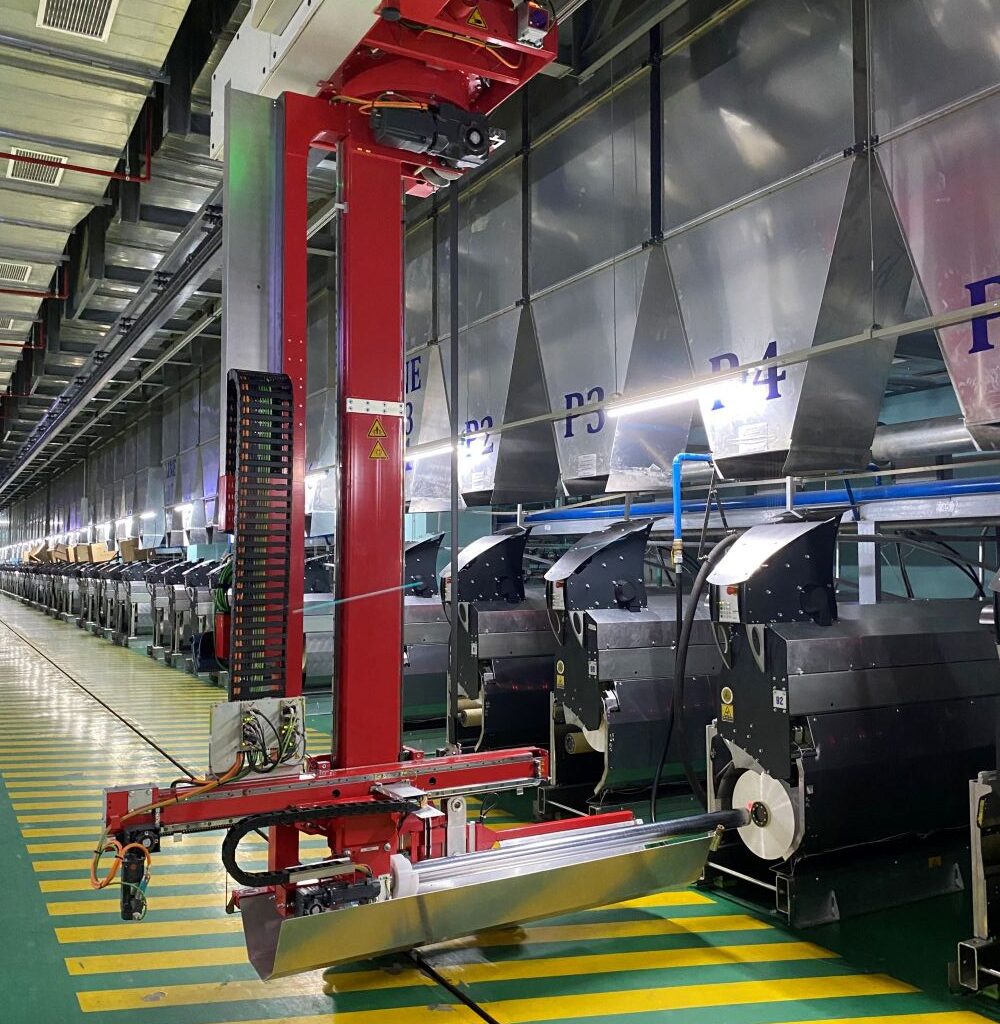
At ITMA ASIA 2025, IGH and IG Automation also introduced several new automation solutions designed to reduce manual workloads on the shop floor. One such innovation is an automated doffing system for the DTY area, which eliminates labor-intensive intervention.
Another key innovation is the company’s modern internal transport system based on flat AMR (autonomous mobile robot) technology. These flexible mobile robots reduce reliance on expensive, rigid conveying systems and make plant layout changes quicker and more cost-effective.
Mr. Mertes highlighted the company’s continuous R&D efforts: “With our large workshop in Germany, we are constantly testing and developing various machines to support customers in minimizing manual handling and reducing labor costs.”
Strong Customer Support and Local Service Presence
Both leaders emphasized that IGH’s commitment to customers extends far beyond installation. “One of our key values is that we do not finish the project when we put it into operation,” said Mr. Mertes. “We continue with after-sales support and do not leave customers alone with their system.”
The company has established strong local service networks in India and other major markets to ensure quick response times and ongoing support—an essential differentiator in a sector where uptime is critical.
With its strong global presence, innovative automation solutions, and a commitment to tailored engineering, IGH and IG Automation are well-positioned to meet the evolving needs of the global filament yarn industry. Their participation at ITMA ASIA 2025 reinforced their technological leadership and opened new opportunities across India and the surrounding countries, and other fast-growing textile economies. Backed by combined German–Italian engineering expertise and a deep understanding of customer needs, the company continues to deliver next-generation handling systems that improve efficiency, reduce labor dependency, and support long-term competitiveness for filament producers worldwide.