


When six of Taiwan’s most forward-thinking textile technology firms converged at the Taiwan Expo in Delhi, they didn’t just display machines — they demonstrated a unified vision. The so-called “Taiwan Textiles A-Team” — comprising Logic Art Automation, Hsing Cheng Machinery, Tong Geng Enterprise, JINTEX Corporation, Yu Bung Enterprise Co., Ltd., and Tung Yang Machine Industry (Tymico) — delivered a clear and collective message to Indian manufacturers: Automate. Integrate. Go green.
With India’s textile sector accelerating its shift from traditional cotton dominance to synthetic, performance and blended fabrics, these Taiwanese pioneers showcased not just equipment, but ecosystems — a seamless fusion of automation, chemistry, and sustainability.
Logic Art Automation – Transforming Dyehouses into Smart Digital Ecosystems
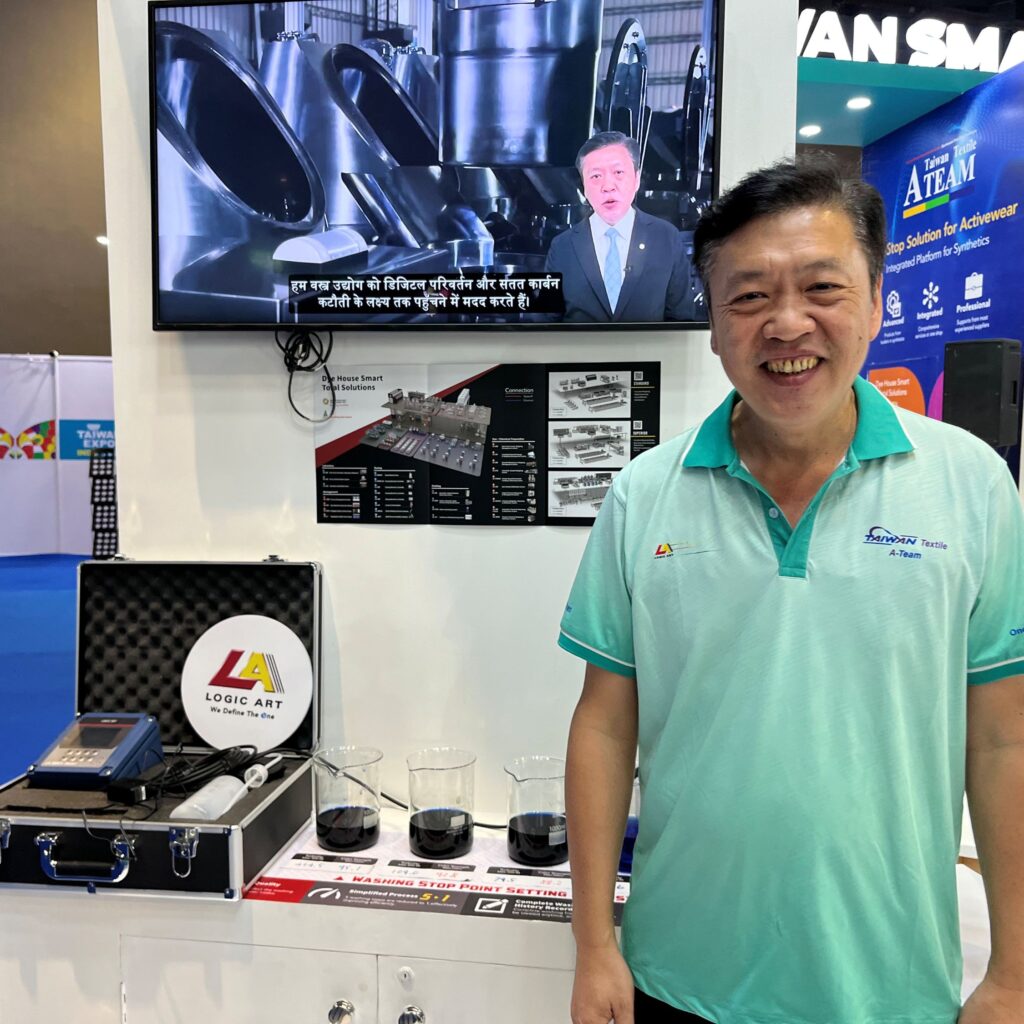
“We provide the integration system to connect our whole A-Team machinery, which is collecting all data, information and analysis,” said Steven Shen, Managing Director of Logic Art Automation, with calm confidence that comes from knowing his company stands at the cutting edge of textile automation.
Founded in 1993, Logic Art has built a global reputation for its “Dyehouse Smart Total Solution”, which merges laboratory automation, centralized chemical dispensing, and its proprietary LA-IDCC (Intelligent Data Control Centre) — the digital brain of a modern dyehouse.
The company’s systems are already deployed across 50+ countries and are trusted by major global apparel supply chains. By connecting lab data with production parameters in real time, Logic Art helps mills reduce re-dyes, save energy, and minimize human error — vital capabilities as Indian mills handle diverse fibre types and colour demands.
As Shen puts it, Logic Art’s goal is simple yet ambitious: “To make every dyehouse an intelligent ecosystem — one that learns, adapts, and perfects itself every single day.”
Hsing Cheng Machinery – Smarter Pre-Treatment, Greater Energy Efficiency
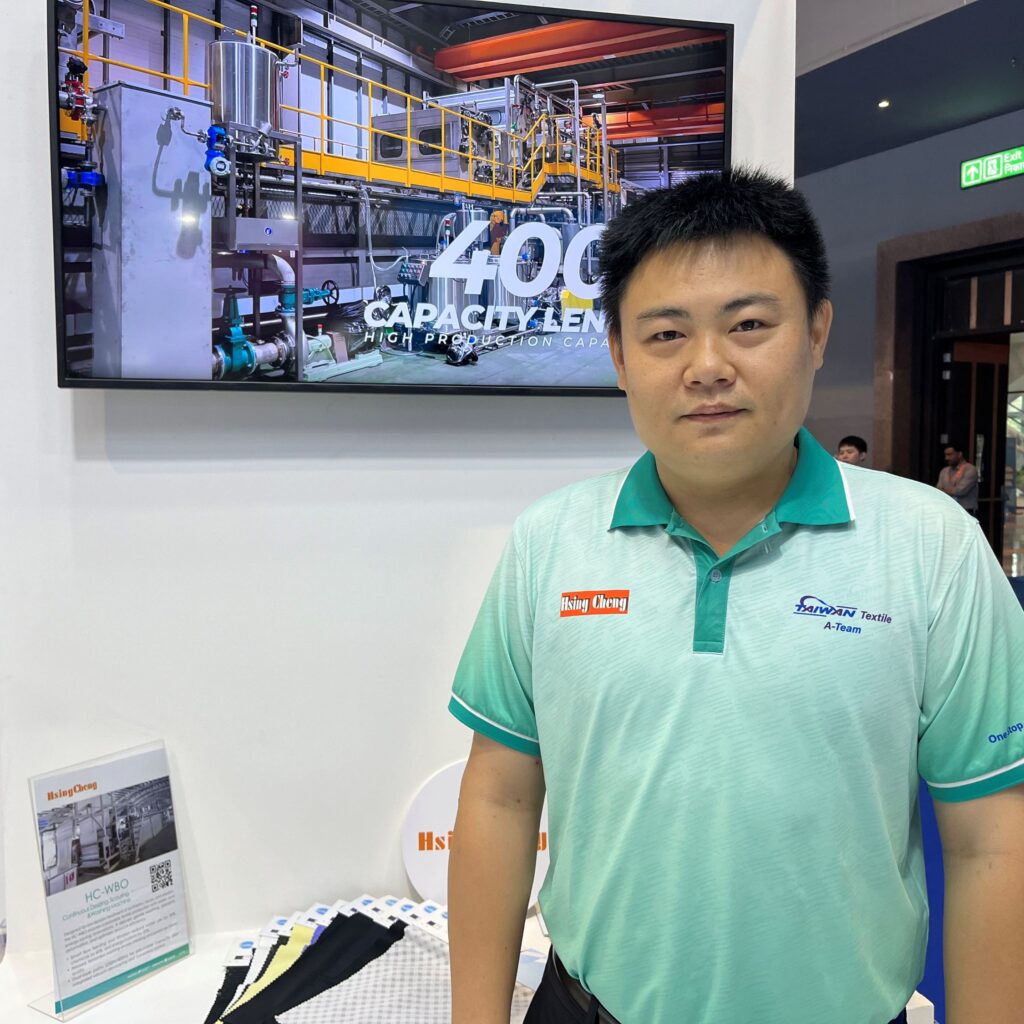
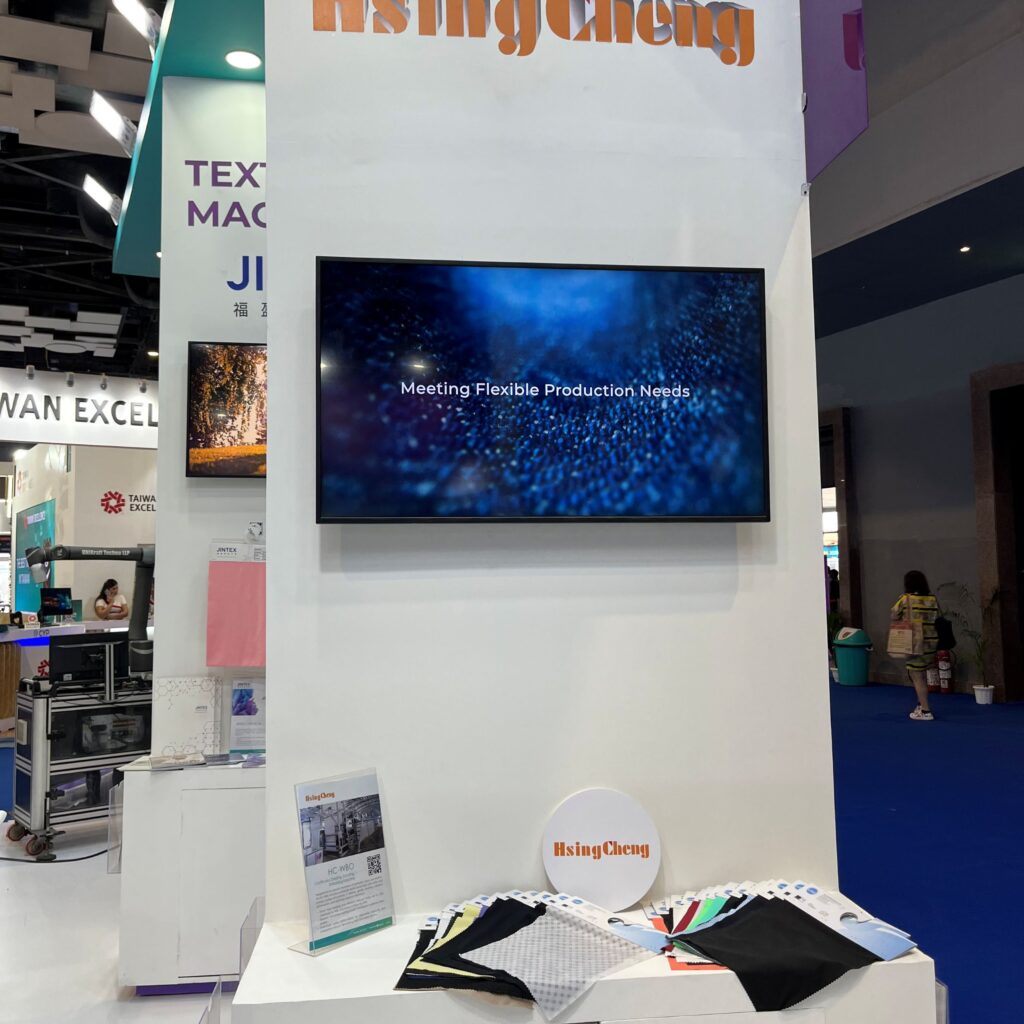
At first glance, Hsing Cheng Machinery’s equipment might look like standard pre-treatment systems. But a closer look reveals a company that has spent four decades perfecting the unseen — the art and science of fabric readiness.
“This machine can do double engine and double order… our capacity can get double. But the energy consumption is the same,” explained Steven Yeh, Deputy General Manager.
That succinctly captures Hsing Cheng’s philosophy: more output, same energy.
Founded in 1984, Hsing Cheng manufactures high-efficiency boil-off, desizing and washing lines engineered for both woven and knitted fabrics. Its signature WBO (Boil-Off) series emphasizes low-tension handling and high water recovery — a boon for sustainability-conscious mills.
The company’s presence across Thailand, Vietnam, and China ensures quick service support, a strength Indian mills will appreciate. As Yeh points out, “Selecting the right pre-treatment machine is like laying the foundation of a building — if you get this wrong, everything above it costs more.”
Hsing Cheng’s offering stands as a reminder that efficiency doesn’t always start at dyeing — it starts with preparation.
Tong Geng Enterprise – Low-Liquor Dyeing and Precision for the Synthetic Era
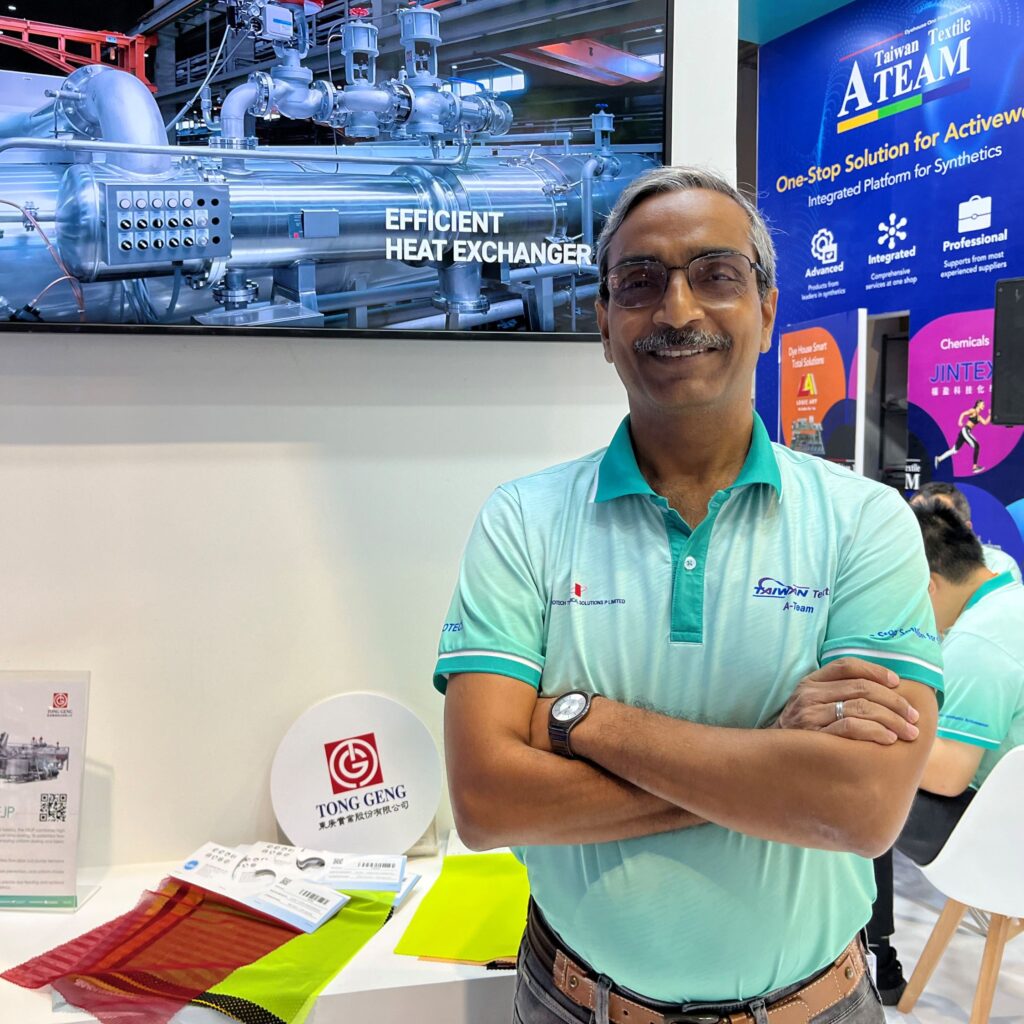
Represented in India by U.S. Gupta, Director of Eurotech Solutions, Tong Geng Enterprise Co., Ltd. is the quiet titan of dyeing machinery that has quietly redefined industry standards.
“The focus is on accuracy of dyeing and also the less consumption of resources like water,” Gupta noted. “They run on low liquor ratio… mainly low liquor ratio.”
For a country like India, where dyehouses still consume enormous volumes of water and energy, Tong Geng’s low-liquor (1:5) dyeing systems mark a step-change. The company, established in 1967, has over 85 patents and six decades of experience in high-pressure and high-temperature dyeing machinery for both natural and synthetic fibres.
Its advanced RUV and ROR series machines ensure consistent colour reproducibility while drastically reducing steam and effluent loads. The result? Lower operating costs, higher dye accuracy, and measurable sustainability gains.
With synthetic textiles and man-made fibre exports rising fast from India, Tong Geng’s machines could soon become the benchmark for modern dyeing infrastructure — not just for efficiency, but for responsibility.
JINTEX Corporation – The Chemistry of Sustainability
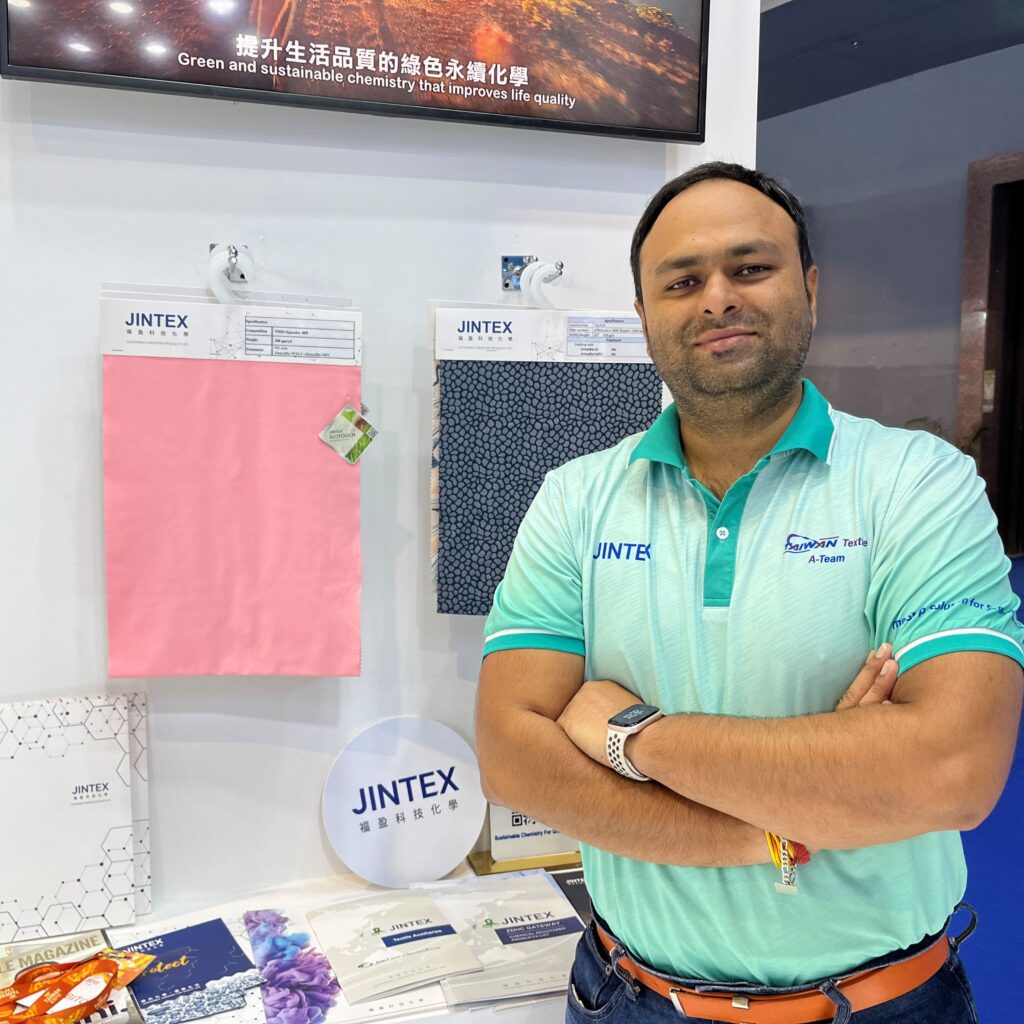
If the A-Team were a symphony of machinery, JINTEX Corporation would be the melody that ties it together. The company represents the chemical conscience of modern textiles — one that combines innovation, performance, and green chemistry.
“Jintex is working in sustainable green chemistry for more than 45 years… providing certified green chemistry from bio-waste,” shared Varun Sharma, Assistant Zonal Manager (North) and Brand Marketing Manager, India.
Founded in 1978, JINTEX has grown into a global name synonymous with sustainable specialty chemicals. The company boasts 270+ bluesign-approved products, is an active member of the ZDHC (Zero Discharge of Hazardous Chemicals) program, and continues to pioneer bio-based, water-free finishing technologies.
Its local Indian R&D presence allows the company to co-create formulations suited to Indian water, fabric and process conditions — shortening lead times while maintaining world-class compliance.
From eco-friendly auxiliaries to functional finishes, JINTEX is rewriting the role of chemistry in textiles: not as a pollutant, but as a partner in sustainability.
Yu Bung Enterprise Co., Ltd. – Calendering Smarter, Finishing Cleaner
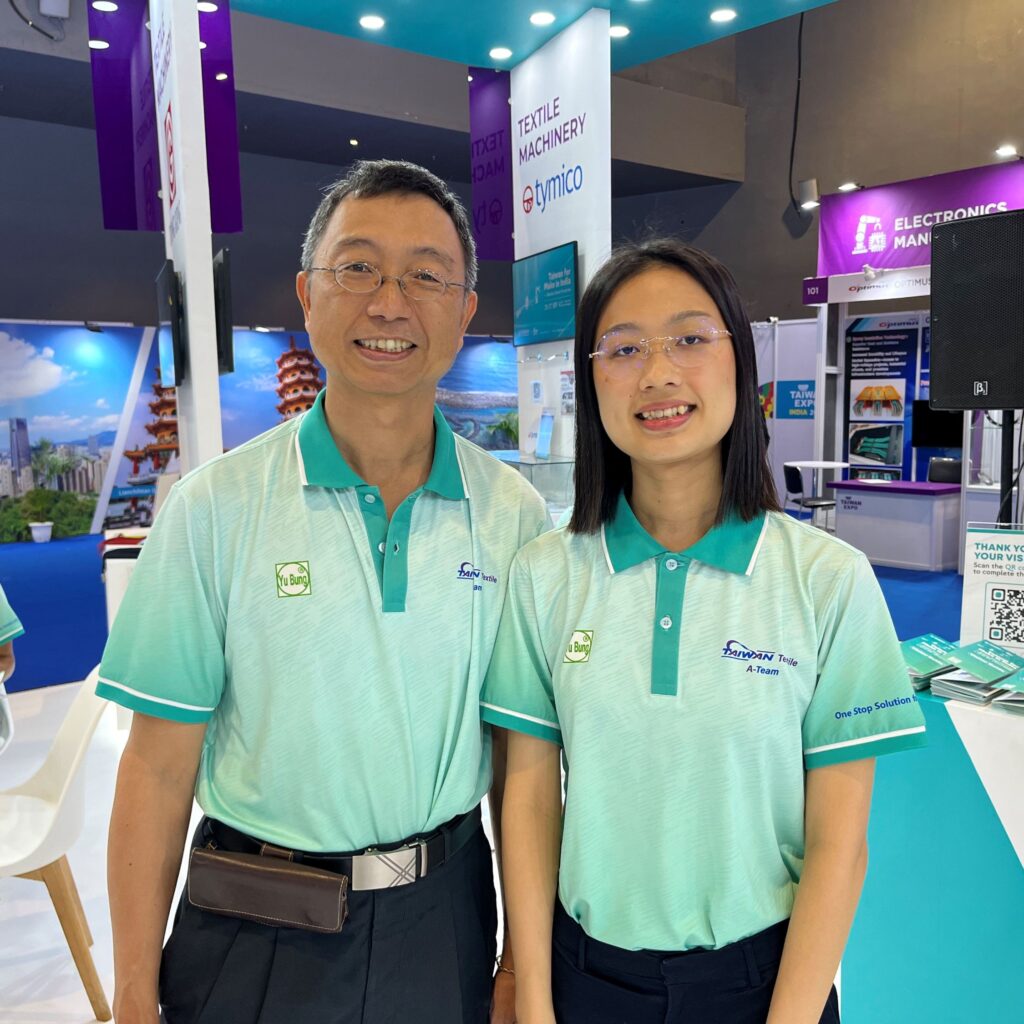
While much of the conversation at the expo revolved around industrial automation, Yu Bung Enterprise Co., Ltd. reminded everyone that even the most established finishing processes can be reinvented.
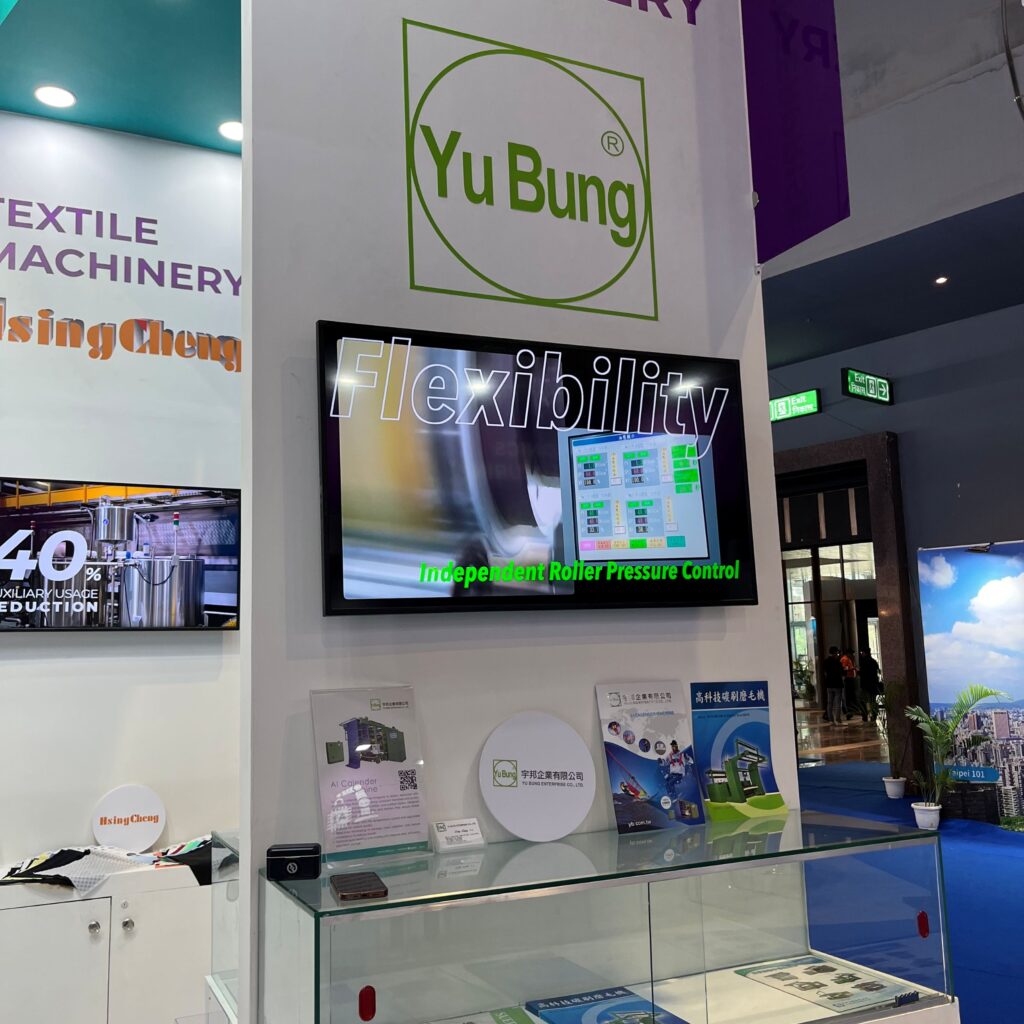
A family-run Taiwanese company, Yu Bung specialises in manufacturing calender machines, weaving looms, sewing machines, and finishing equipment. Their calenders stand out for one critical reason — they replace chemical-heavy finishing with mechanical innovation.
“Our calendar machine… we don’t have to add chemicals, we use heat and pressure… it can reduce glue usage,” said Jenny Fang, who represented the company alongside Toby Fang.
That simple line reflects a breakthrough approach: using pressure and temperature control to impart sheen, compactness and finish to fabrics — without the glue or resin coatings that plague traditional processes.
For India’s small and medium textile units — especially in handloom and home-textile clusters — Yu Bung’s machines offer a realistic route to cleaner finishing without expensive effluent systems. The company’s expansion into India could well be the beginning of a quiet mechanical revolution for smaller manufacturers.
Tung Yang Machine Industry (Tymico) – The Future of Finishing is Intelligent
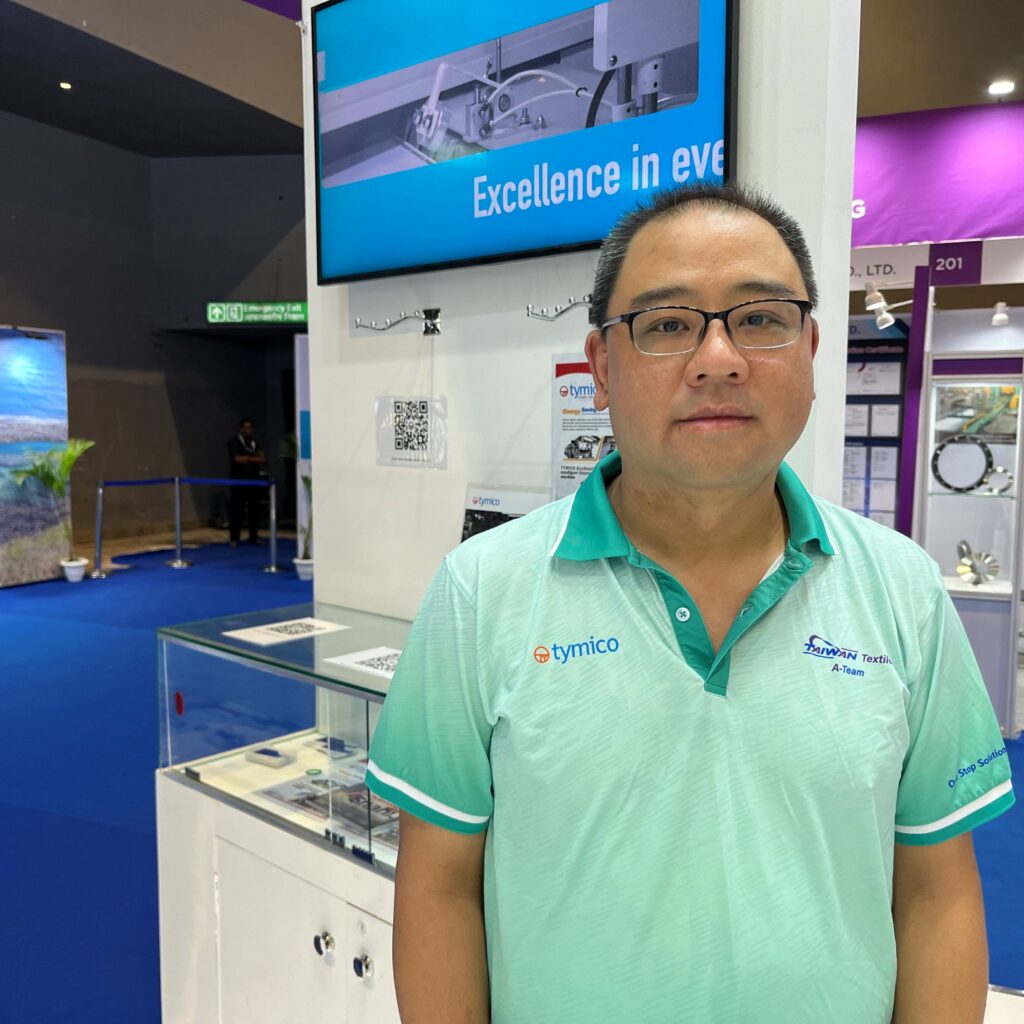
To complete the A-Team’s technological arc, Tung Yang Machine Industry, better known by its international brand Tymico, showcased its next-generation stenters and finishing lines tailored for synthetic fabrics.
“Our machines are specially designed for synthetic fabrics… equipped with the latest automation, Industry 4.0 and artificial intelligence. It can help reduce CO₂ emissions,” said Wei-Chen (Victor) Yin, Marketing Director – Southeast Asia Region.
Founded in the 1970s, Tung Yang has become a powerhouse in finishing technology, exporting to over 40 countries. Its EcoSmart stenters and AI-driven control systems are engineered to optimize fabric width, tension, and heat consumption in real-time.
As Indian mills scale up synthetic and blended production, precision control in finishing lines will determine competitiveness. Tymico’s focus on AI-integrated process control and energy recovery systems addresses two of India’s biggest production pain points: consistency and cost.
If Logic Art represents intelligence at the dyehouse stage, Tymico extends that intelligence right to the final meter of fabric.
A Shared Vision: Taiwan’s Technology Meets India’s Textile Ambition
Together, the Taiwan Textiles A-Team demonstrated something profound — that the next leap in textile manufacturing will come not from individual machines, but from connected ecosystems.
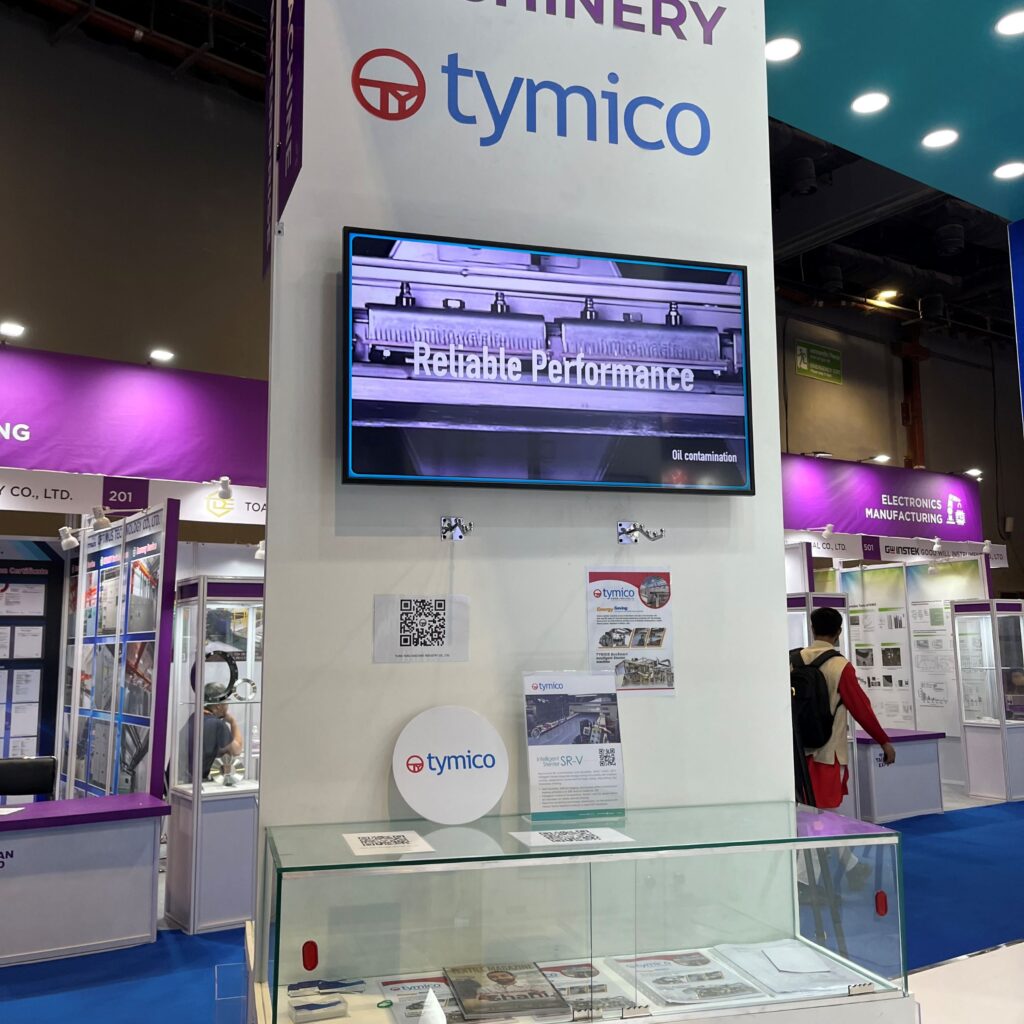
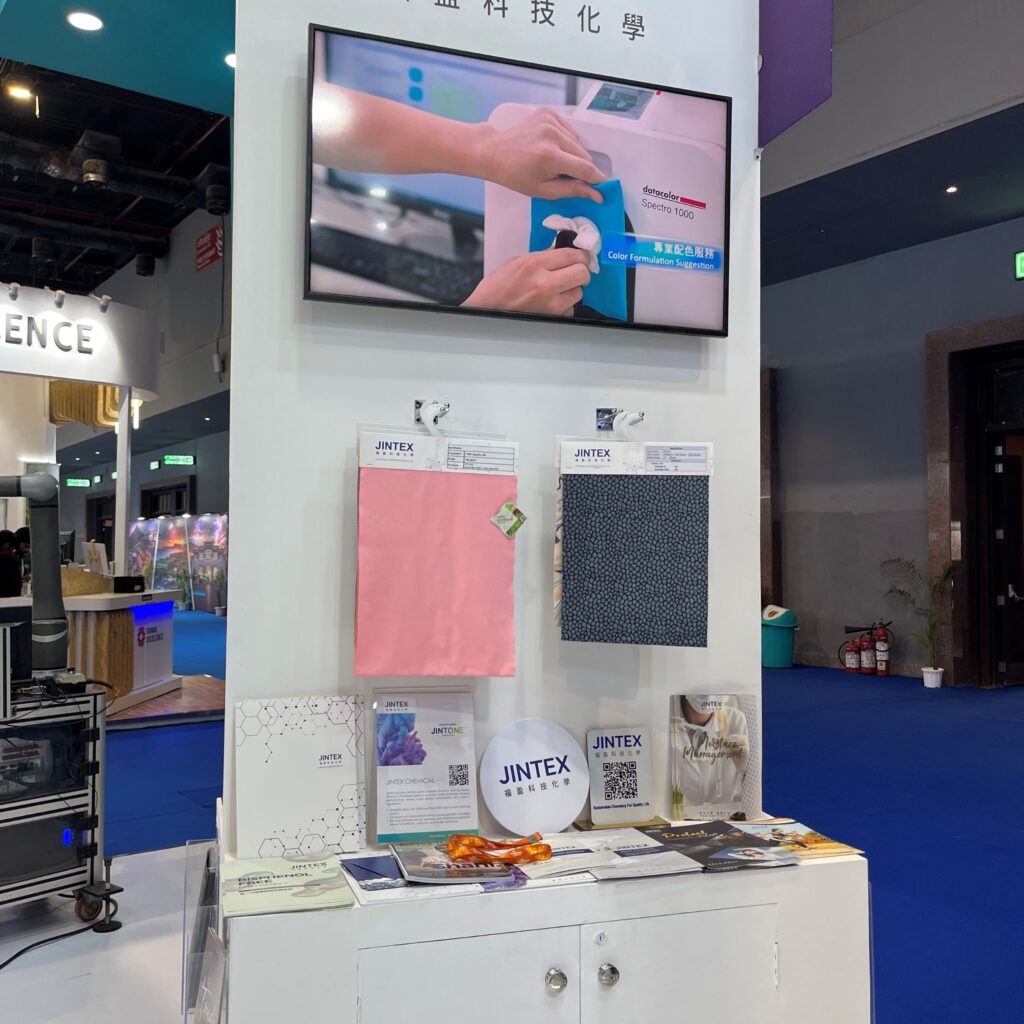
Logic Art’s automation backbone, Hsing Cheng’s pre-treatment precision, Tong Geng’s low-liquor efficiency, JINTEX’s sustainable chemistry, Yu Bung’s clean mechanical finishing, and Tymico’s intelligent stenters — each represents a critical link in a sustainable, high-tech textile chain.
For India’s manufacturers, the timing couldn’t be better. As the country positions itself as a global sourcing hub, investments in automation, digitalisation, and sustainability are not optional — they’re strategic imperatives. And Taiwan, quietly and confidently, has shown that it has both the technology and the intent to be India’s trusted partner in that transformation.
At the Delhi Expo, the message was unmistakable: the future of textiles is not just made — it’s intelligently crafted.


