

As Germany and India deepen their long-standing industrial partnership, the textile machinery sector is entering a new phase shaped by the recently signed India–EU Free Trade Agreement and a shared commitment to sustainable manufacturing. In this evolving landscape, BB Engineering GmbH is reinforcing its role as a strategic technology partner for Indian textile producers, particularly in man-made fibres and recycling solutions. Speaking on the company’s performance and outlook, Klaus Schaefer, Managing Director of BB Engineering GmbH, highlights how advanced German engineering, circular-economy-driven technologies, and closer EU–India trade ties are creating new opportunities for sustainable growth and long-term industrial collaboration.

2025 Market Review: Resilience Amid Global Uncertainty
BB Engineering closed 2025 on a positive note, recording a successful business year despite an unstable global political and economic environment. According to Dr. Schaefer, geopolitical tensions and macroeconomic volatility have made many customers more cautious when it comes to large capital investments.
Even so, three themes clearly dominated customer priorities during the year: automation, digitalisation, and sustainability. These drivers continue to shape demand for textile machinery, as manufacturers look for technologies that improve efficiency, reduce operating risks, and future-proof their operations against regulatory and market changes.
India–EU FTA: A Catalyst for Deeper Industrial Cooperation
The recently signed India–EU Free Trade Agreement is expected to significantly strengthen industrial cooperation between the two regions. From BB Engineering’s perspective, Indian textile producers have long relied on European—particularly German—machinery for quality-critical applications.
With lower tariffs and simplified administrative procedures, the FTA is likely to provide additional incentives for Indian decision-makers to invest in European machinery. At the same time, the agreement is expected to improve overall competitiveness and growth for both sides. While India opens a traditionally protected market to European suppliers, Indian exports such as textiles, footwear, chemicals, and pharmaceuticals will benefit from reduced or zero-duty access to the EU.
Supporting ESG and Sustainability Compliance
European ESG regulations are among the most stringent globally, and BB Engineering designs its machinery to help customers meet these demanding standards. Dr. Schaefer notes that sustainability requirements today are driven not only by regulators, but increasingly by global fashion brands themselves.
All BB Engineering solutions focus on energy efficiency and resource conservation, with a particularly strong emphasis on recycling technologies. These solutions are designed specifically for the textile industry and enable manufacturers to move toward closed-loop production models.
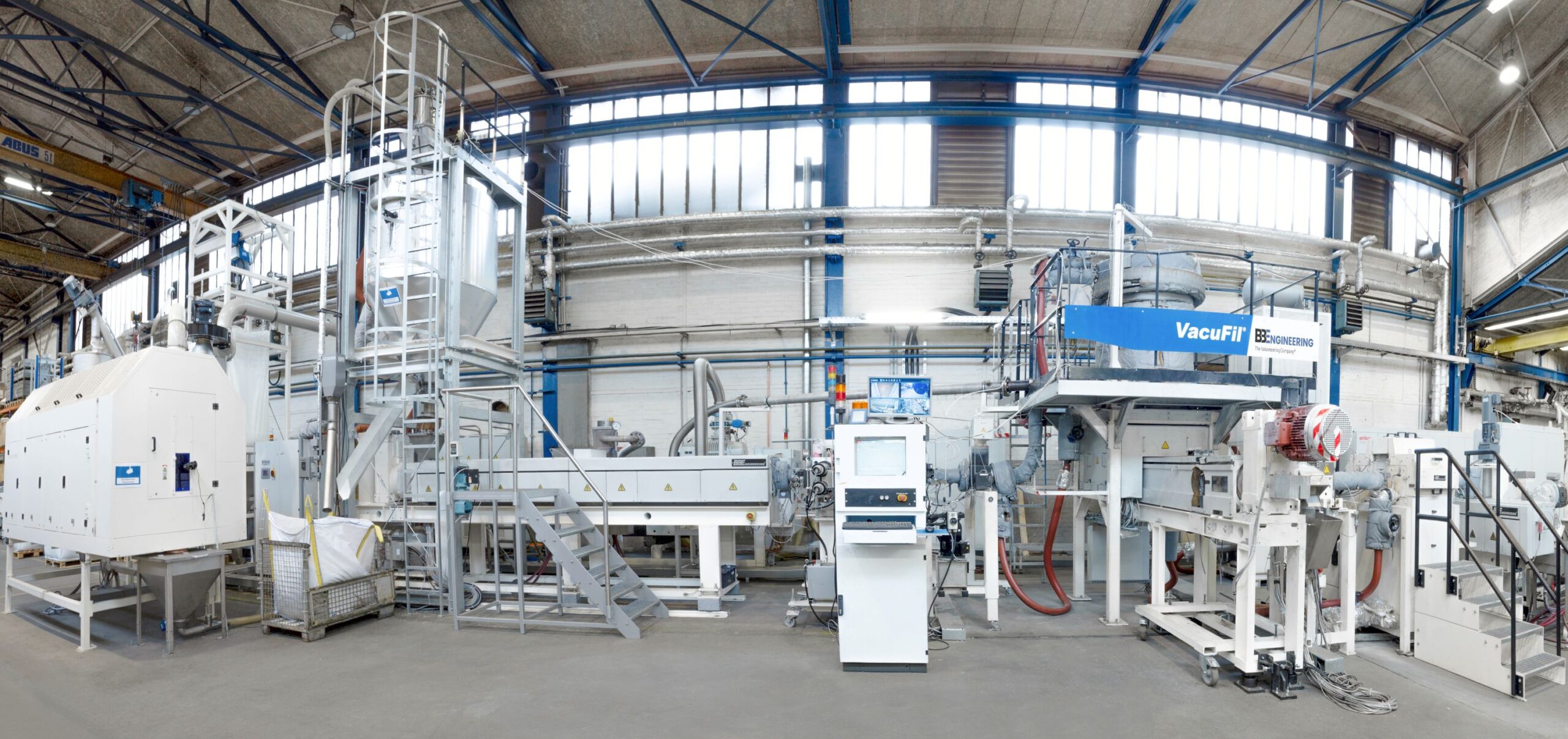
Key recycling systems support energy-efficient fibre-to-fibre recycling of PET waste, producing high-quality recycled polymer melts suitable for yarn production. Spinning solutions capable of processing recycled PET chips or even raw bottle flakes directly into yarns further support compliance with recycling quotas and circular-economy targets.
Why European Machinery Continues to Set the Benchmark
European—and especially German—textile machinery is widely regarded as a benchmark for productivity, quality consistency, and long-term reliability. Dr. Schaefer attributes this to precision engineering, deep process expertise, and continuous investment in research and development.
These strengths result in machines that operate stably at high speeds, deliver repeatable quality, and adapt flexibly to different materials and end-use requirements. For Indian manufacturers looking to scale operations efficiently, such attributes are critical.
Equally important is long-term cost efficiency. High machine durability, low downtime, reduced waste, and energy-efficient operation translate into a low total cost of ownership over the equipment lifecycle—an increasingly important factor in investment decisions.
Priority Segments for India’s Export Growth
To strengthen exports to the EU, Dr. Schaefer believes Indian manufacturers should prioritise high-quality apparel, man-made fibres, technical textiles, and selected home textile segments. While premium apparel continues to command the largest market share, MMF and technical textiles offer higher value addition and reduced price sensitivity.
Home textiles remain a stable complementary segment, particularly in premium and sustainability-driven niches. Advanced machinery plays a central role in enabling this transition by improving automation levels, ensuring consistent quality, and supporting compliance with European environmental and social standards.
Expanding Portfolio and Technology Innovations
Originally founded as a subsidiary of Barmag to supply extruders for spinning lines, BB Engineering has steadily expanded its portfolio. Today, the company offers extruders, melt filters, complete spinning lines for man-made fibres, air-texturising systems, and advanced recycling solutions.
A key differentiator is BB Engineering’s deep roots in the textile industry, which ensure a strong understanding of both product and process quality requirements. Recent developments include advanced recycling lines capable of delivering recycled yarns that compete with virgin materials in performance tests, as well as highly automated, self-cleaning filtration technologies that significantly improve efficiency and service life—particularly important for recycling applications.
India: A Strategic Market for Long-Term Growth
India remains a market of primary strategic importance for BB Engineering. Population growth alone will continue to drive demand, while rising exports are pushing manufacturers toward higher-quality, more sustainable products.
These requirements—quality, performance, and sustainability—often align closely with the strengths of European and German machinery suppliers. Supported by decades-long customer partnerships, BB Engineering sees strong opportunities to expand its footprint in India.
As the global textile industry accelerates its shift toward sustainability, automation, and circular production models, BB Engineering GmbH is well positioned to support this transformation. With a strong focus on recycling technologies, precision German engineering, and long-standing partnerships in India, the company is not only responding to today’s challenges but also helping textile manufacturers build resilient, future-ready operations for the decade ahead.


