

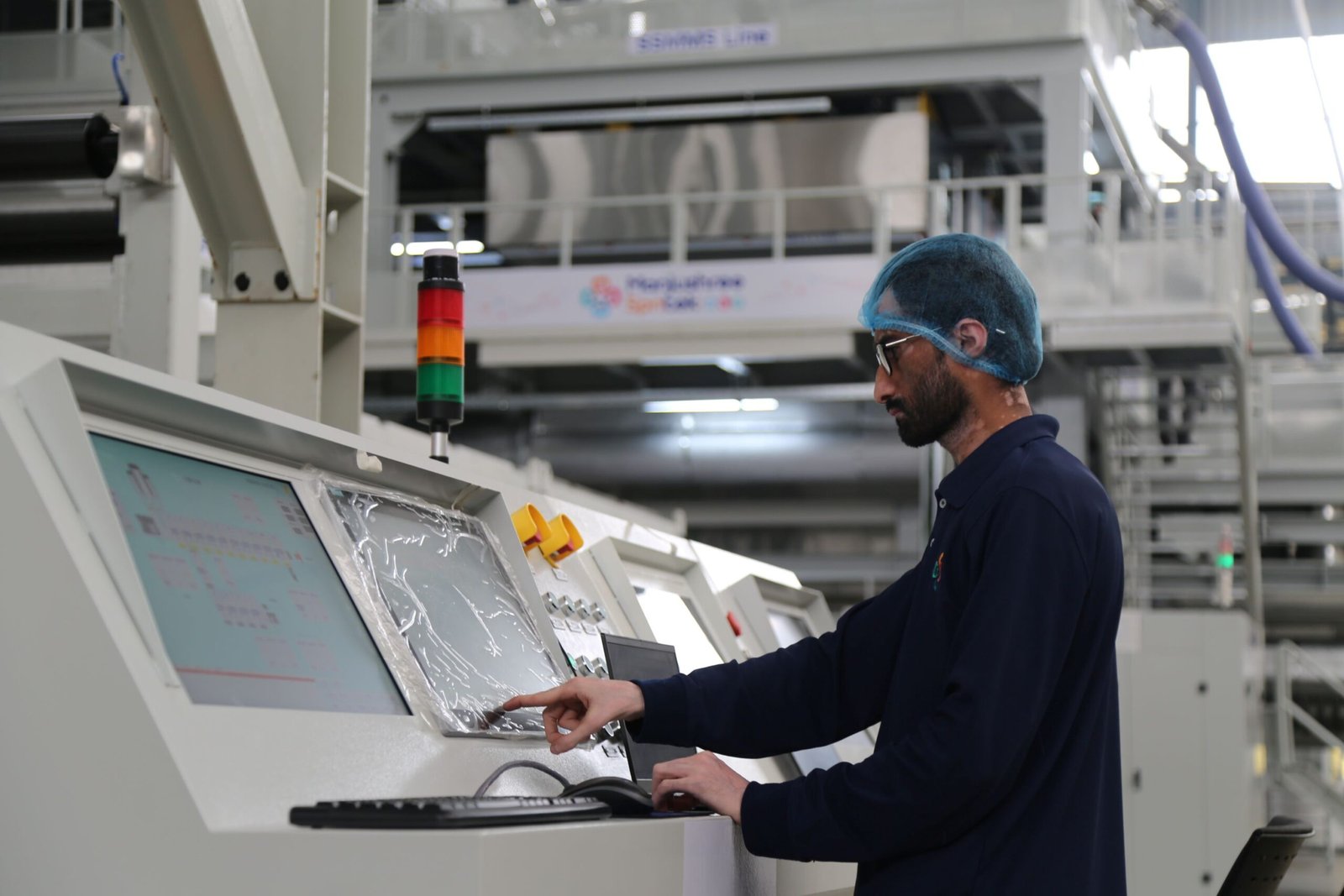
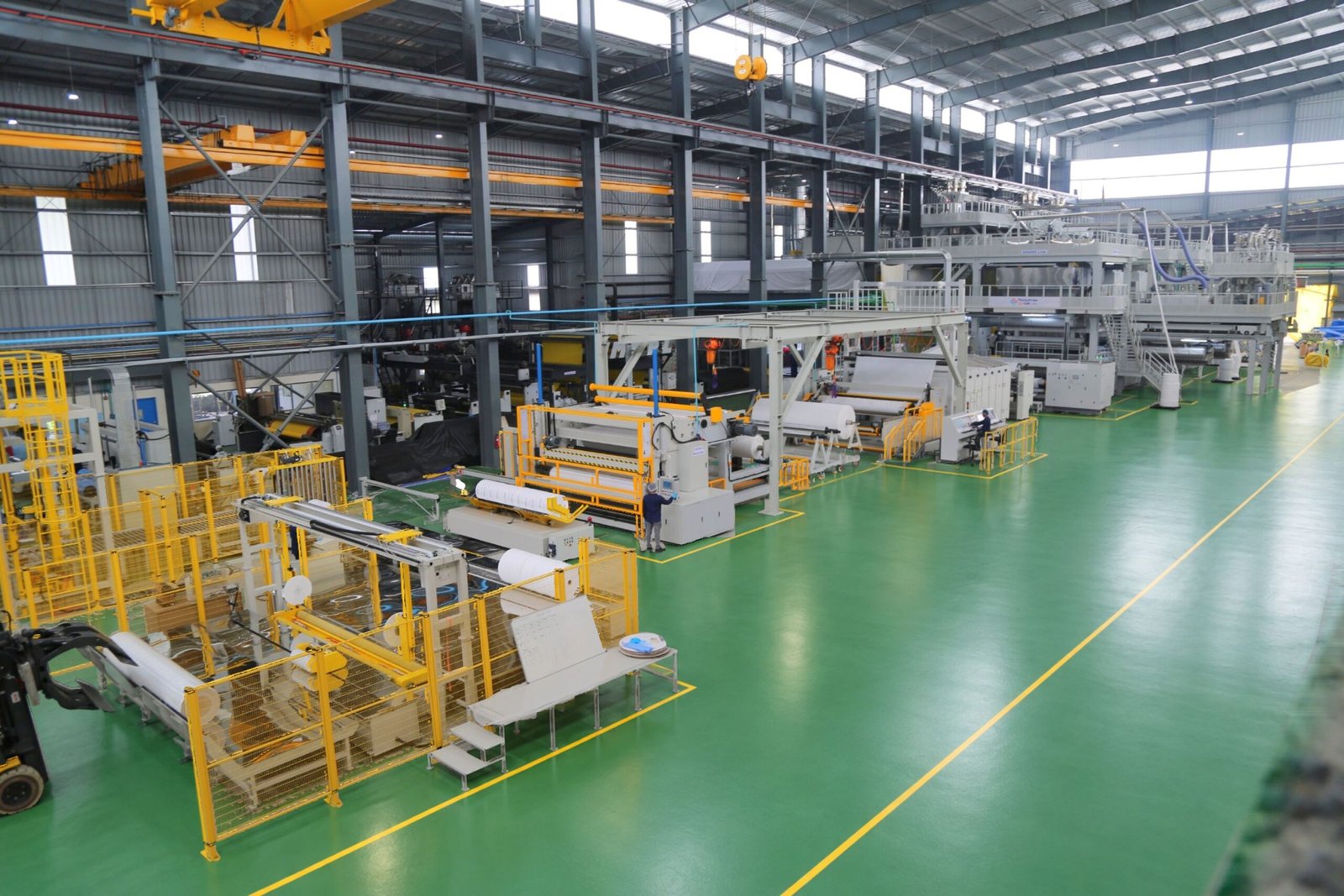
A custom-built 5-beam SSMMS line supports Manjushree Spntek’s plans for lightweight hygiene nonwoven fabrics and high performance specialised fabrics. Behind the installation is a team effort linking customer requirements with detailed engineering, manufacturing experience and product development.
By Nithin Kumar
Forty weeks: the time it takes to bring new life into the world—and the time Manjushree Spntek took to bring its new 5-beam SSMMS line from order to production. Installed within the company’s existing facility in Bidadi Industrial Area near Bengaluru, the line is the result of a finely tuned collaboration between senior management, engineering, production and process teams, QA and NPD, and the machinery supplier. Together, they turned a complex installation into a milestone achievement—one that opens new possibilities in lightweight hygiene fabrics and specialised nonwovens.
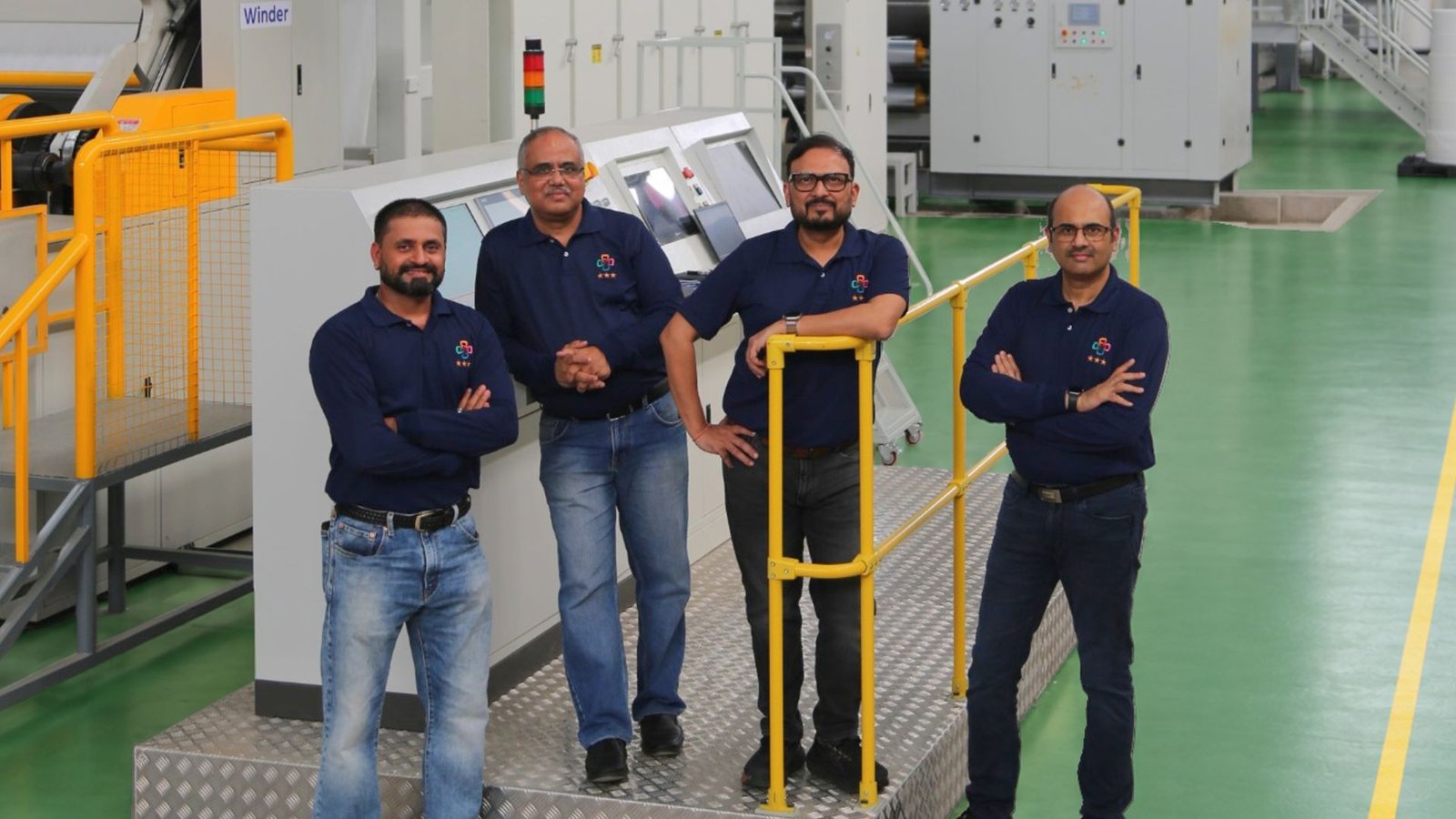
The new line is in response to its customers who ask for more from their input materials. Softer fabrics must still perform reliably, while lighter constructions must retain the strength required by the finished application. Both must be commercially practical. These requirements shaped the decision to invest and build up the specifications for the new line.
For Mr. Rajat Kumar Kedia, Managing Director of Manjushree Spntek, the contribution of the people behind the project is central to its significance. “Our teams across engineering, production, quality and technical functions worked closely throughout the process,” he says. He credits that work with strengthening the company’s internal expertise and deepening its understanding of the machinery and the products it can develop.
There was also a clear commercial reason to expand. According to Mr. Kedia, Manjushree Spntek had sold out its existing capacity of 10,000 MTPA and a capacity expansion is the most natural course of business. Its 4-beam SMMS Reicofil line was serving the medical-fabrics business well – as was intended to be; but the company wanted stronger capabilities in lightweight nonwoven fabrics such as 8 & 10gsm. The new 5-beam SSMMS investment is intended to address that exact requirement while allowing the technical team to develop a broader range of premium soft fabrics with better mechanical properties.
Engineering around the application
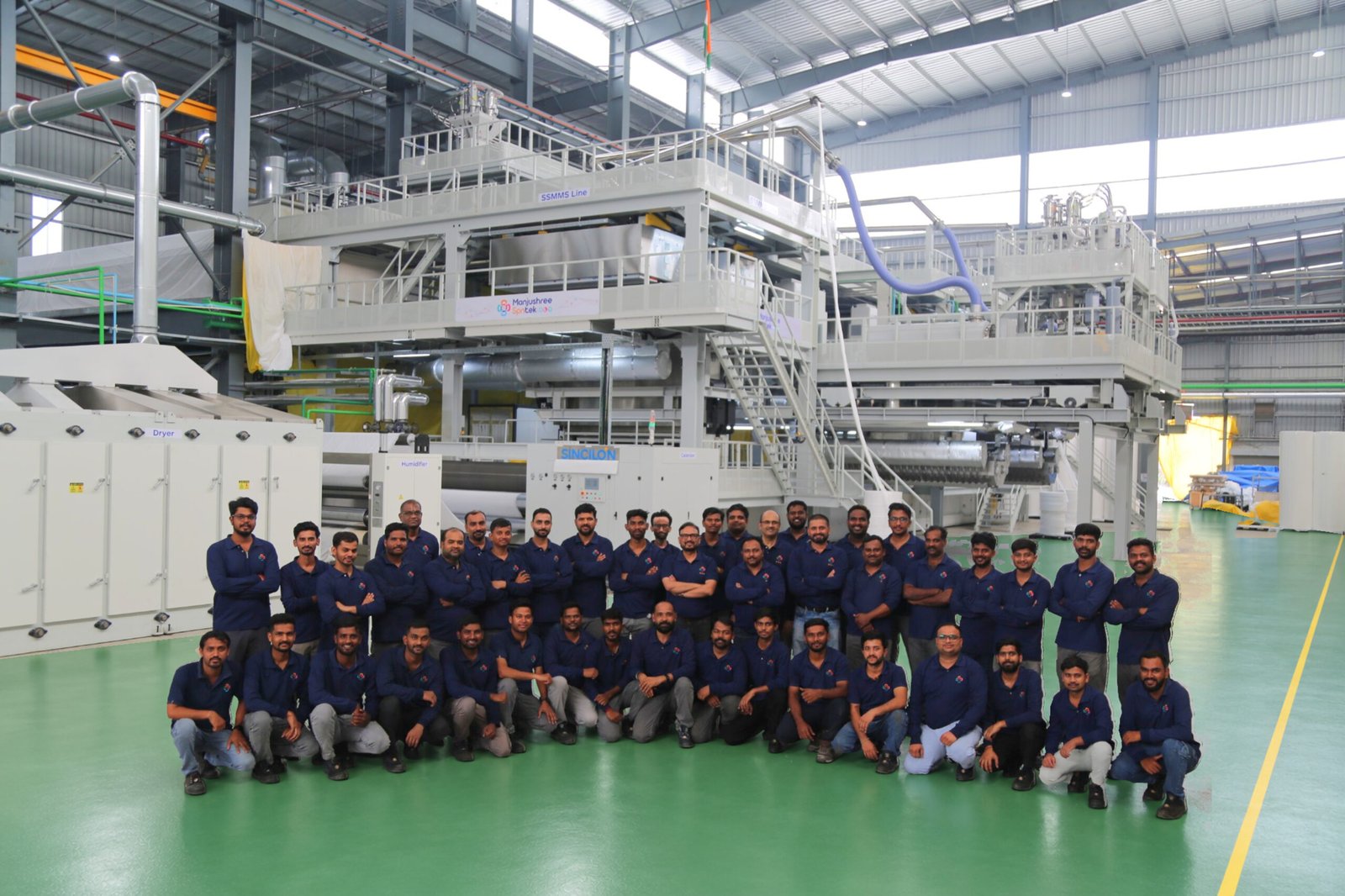
The choice of machinery followed an extensive specification exercise. Mr. Kedia recalls spending over six months working through the details with the technology partner. Discussions extended to individual components and their operating requirements, including motor selection, blower specifications, choice of electronics for most optimum speed and process control. This gave the team an opportunity to apply its manufacturing experience to the design of the new installation.
Mr. Kedia places particular value on the machinery supplier’s willingness to consider the team’s ideas and work through how they could be incorporated into the machine. The company describes a line built to its specifications, with customised control software intended to support the fabric properties its customers require. Flexibility was central to the selection process.
“We wanted a platform that would give our technical teams room to innovate rather than simply add another source of capacity,” Mr. Kedia explains. The company specifies a fabric-weight range of 8–120 gsm for the custom installation, with development priorities spanning a whole range of soft & high loft materials and stronger fabrics for selected industrial applications.
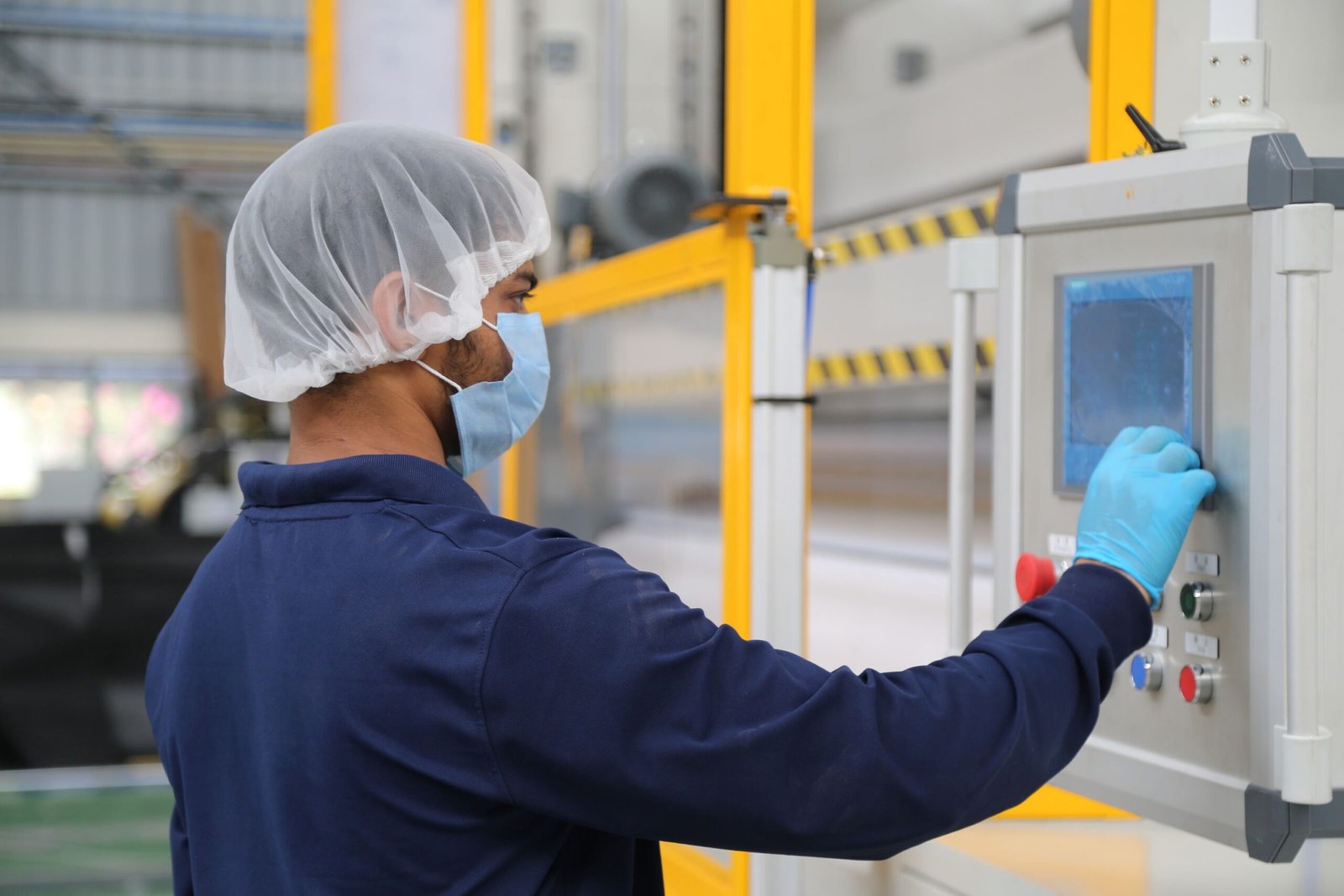
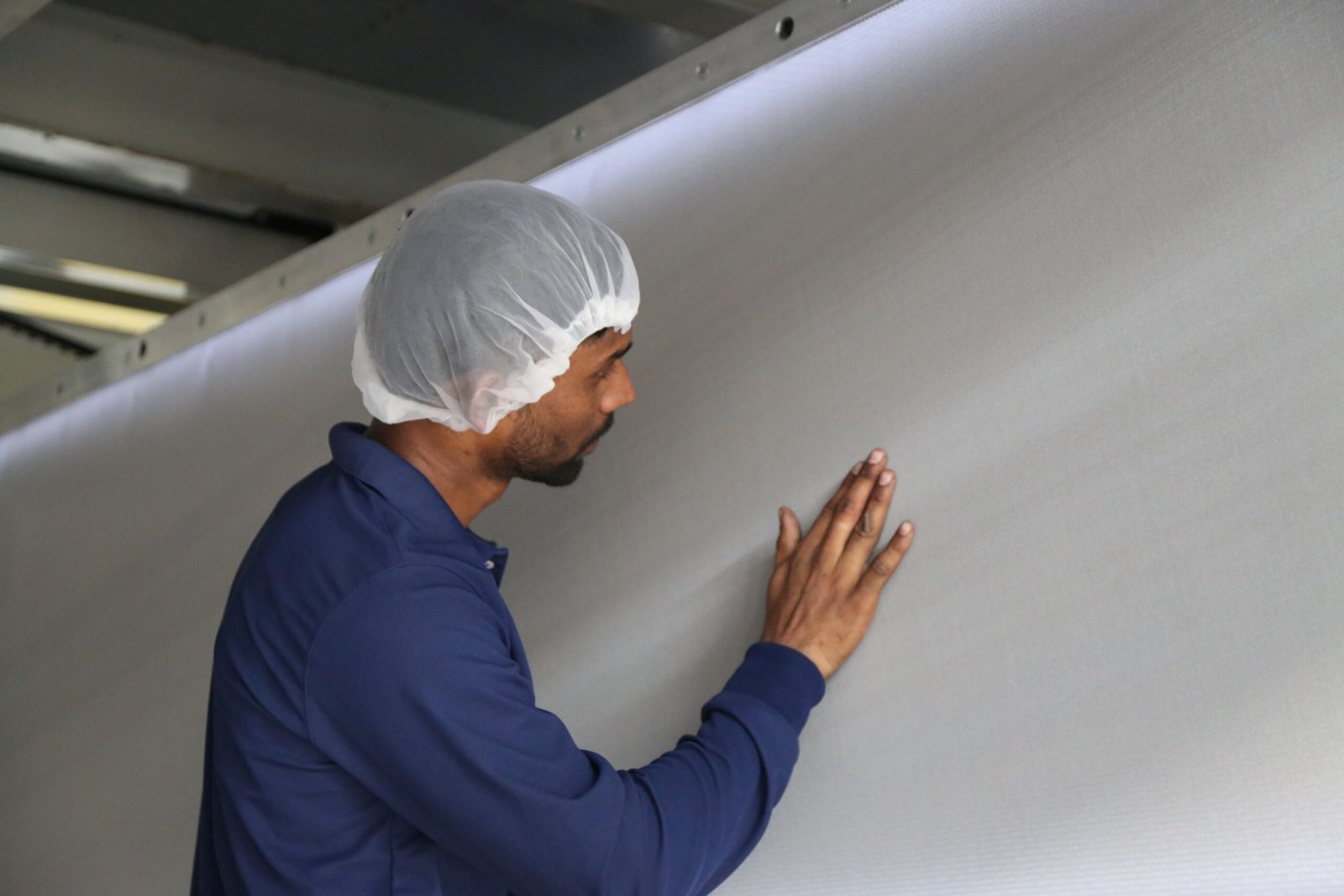
The five-beam SSMMS configuration combines three spunbond beams with two meltblown beams. In these structures, spunbond provides strength and support, while the finer meltblown fibres contribute to barrier and filtration properties. The finished fabric’s performance depends on how its structure is engineered and processed for the intended use. The task for Manjushree Spntek is to turn that flexibility into the combinations of properties its customers need.
A customer brief described by Mr. Kedia illustrates the challenge: an exceptionally soft fabric with tightly controlled breathability and a uniform visual appearance. The customer assesses feel, function and appearance together, while the manufacturer must understand how adjustments to the fabric affect each characteristic. Optimising a single property is only part of the task.
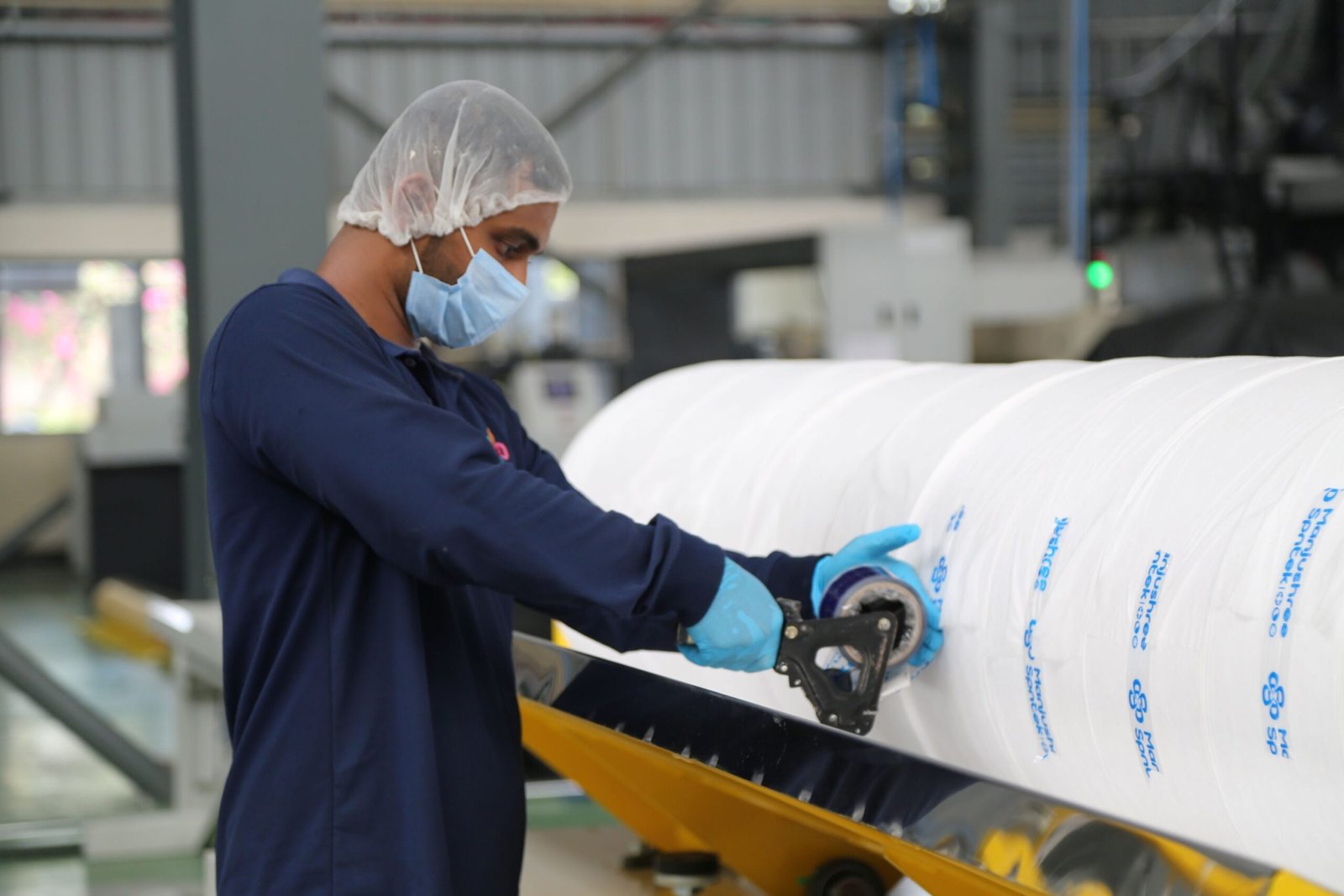
That is particularly relevant to the company’s plans for soft and ultra-soft hygiene materials. Mr. Kedia describes customers who value an improved hand feel but remain sensitive to the additional cost. Finer fibre drawing and greater loft are among the features the company has prioritised to address this balance. Its development work aims to translate them into materials that meet both the performance brief and the customer’s commercial requirements.
Economics also informs the operating brief, which emphasises high-speed production, process control and continuous running. Mr. Kedia identifies electricity use and staffing requirements as further areas in which the company is seeking greater efficiency. The practical value of these choices will depend on the quality and consistency of usable output as well as the volume produced.
From erection to repeatable production
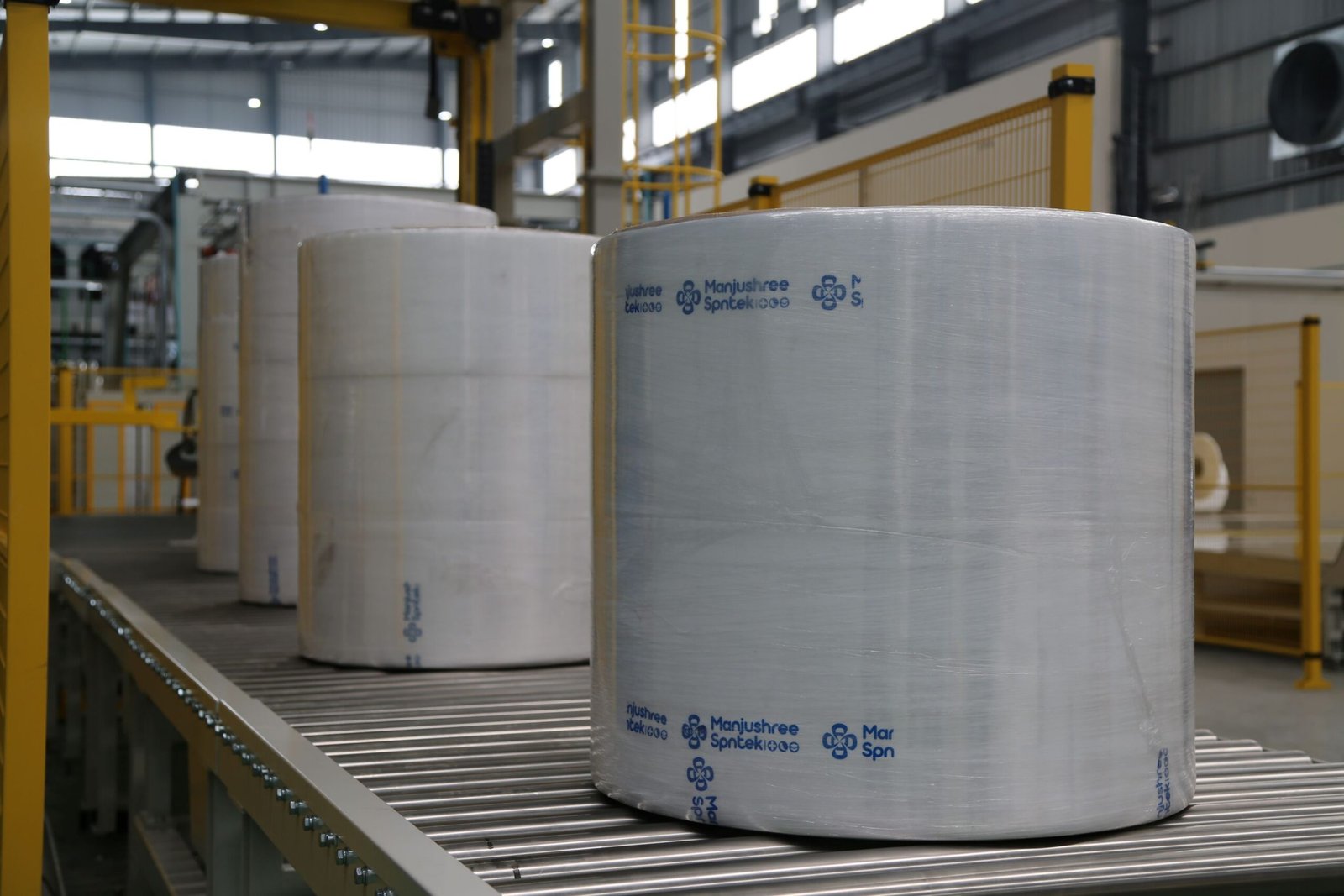
With erection completeattention turns to bringing equipment operation, raw materials and product specifications into a stable production process. At the time of the interview, the team was carrying out equipment trials and preparing for a staged start-up. Establishing suitable operating conditions for different products is a substantial part of the work that follows installation.
The company describes an iterative process of testing, adjustment and optimisation, with technical NPD and quality teams helping to define those conditions. The scope for adjustment built into the machine gives them room to experiment; their task is then to establish settings that deliver the required fabric consistently. This connects the engineering choices made during specification with the practical demands of manufacturing.
“For our customers, consistency is just as important as performance,” Mr. Kedia says. That principle provides a practical measure for the investment. A promising sample has to be reproducible across production runs, and a material that meets its specification must also work effectively in the customer’s process. The company’s focus extends to the converter’s experience and the performance of the eventual product.
Mr. Kedia outlined a planned three-week development programme concentrating on the development of soft and ultra-soft materials and to achieve the most optimumbalance between softness, breathability, strength and weight. Samples brought by customers from international markets are also informing development. They give the teams specific references against which to examine the required properties and how to reproduce them within a commercially workable production process.
Developing the complete material
Medical and Hygiene applications remain Manjushree Spntek’s top priorities. The new line joins an operation with in-house treatment, printing and lamination, allowing the business to consider the complete material construction. Depending on the application, the answer may lie in the base nonwoven, a functional treatment or a combination of substrates.
The team can therefore work backwards from the end use, selecting the fabric structure and subsequent processing together. Mr. Kedia sees this integration as a way to shorten the journey from an idea to a commercial product: materials can be tested, modified and optimised within the same operation. For customers, the intended benefit is a development partner able to discuss the finished application in detail and adapt the material accordingly.
This approach also informs the company’s plans for selected industrial and technical-textile applications. It sees opportunities for two- and three-layer composites that combine a base nonwoven with other substrates. Treatment, printing and lamination extend the range of constructions it can explore, with each development assessed against the properties required in use.
Commercial viability remains part of that assessment. The company considers whether a product can be manufactured consistently and economically, integrated into the customer’s process and scaled. A development may offer value through material optimisation, processing efficiency or improved product performance, but that value must translate into a useful result for the customer.
“We keep our customers in the lead” Mr. Kedia says, returning to the company’s one and only guiding principle. It is a concise description of the responsibility shared across the organisation. Customer conversations form the basis of a development brief; technical teams establish how to meet it; production and quality must sustain the result. The new line gives those teams more options for addressing the requirements together.
Over the next three years, the company wants this work to produce a stronger portfolio of specialised materials, closer customer partnerships and a greater contribution from value-added applications. Its longer-term ambition is to build a globally recognised technical-textiles business through continued investment in technology, people and product development. Mr. Kedia identifies quality, consistency and customer trust as principles that must endure as the business grows.
Their newest installation gives Manjushree Spntek a broader manufacturing base from which to pursue those ambitions. For the team that carried the project from specification to erection, the next measure of progress will be the materials it can establish in customers’ applications. The investment’s lasting value will depend on delivering those materials with the reliability that Mr. Kedia expects: production run after production run, done with the highest consistency and the production of only one quality – TOP QUALITY.


