
By K. Gopalakrishnan
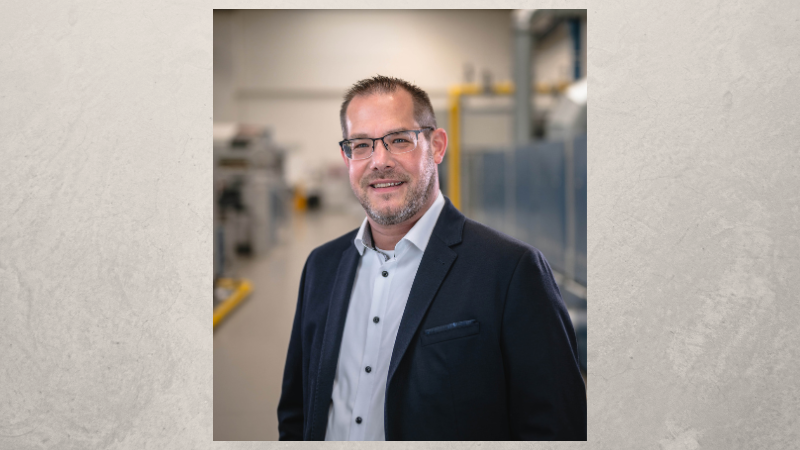
Advanced finishing, coating and dyeing technologies are enabling Indian textile manufacturers to move beyond volume-driven production towards higher-value, specialised and more sustainable fabrics, says Daniel Rütten, Area Sales Manager – Asia, Monforts.
India’s textile industry is entering a phase in which competitiveness will increasingly depend not only on manufacturing scale, but on the ability to produce differentiated, functional and higher-value fabrics with greater efficiency and consistency. For Monforts, one of Germany’s established names in textile finishing technology, this evolution is creating significant opportunities in India, particularly across advanced finishing, coating, dyeing and drying.
With more than six decades of presence in India, Monforts continues to see the country as one of its most important markets. The company is witnessing continued investment in conventional woven and knitted apparel and home-textile applications, while demand is expanding into technical textiles, activewear, sportswear, filtration and automotive fabrics. At the same time, manufacturers are placing greater emphasis on energy, water and chemical consumption, automation and consistent quality.
According to Daniel Rütten, Area Sales Manager – Asia, Monforts, this changing investment landscape is shifting the emphasis from productivity alone towards a broader equation combining productivity, lower operating costs, flexibility and the capability to manufacture increasingly sophisticated products.
The following are excerpts from an exclusive interview with Mr. Daniel Rütten, Area Sales Manager – Asia, Monforts, in which he discusses India’s evolving textile finishing landscape, the growing importance of energy efficiency, automation and coating technologies, and the opportunities emerging in technical textiles and higher-value textile processing.
The Textile Magazine: Monforts has maintained its presence in India for more than six decades. How important is India to Monforts’ global business today, and how has the Indian market evolved in terms of demand for advanced finishing, coating and dyeing technologies?
Daniel Rütten: India remains one of the most important markets for Monforts, not only because of the scale of its textile industry but because of the breadth of its manufacturing base. We continue to see investment in technologies for classic woven and knitted apparel and home textile fabrics, but the market is also becoming much more diverse. There is an increasing interest in higher-value and more specialised fabrics, including technical textiles for activewear, sportswear, filtration and automotive applications.
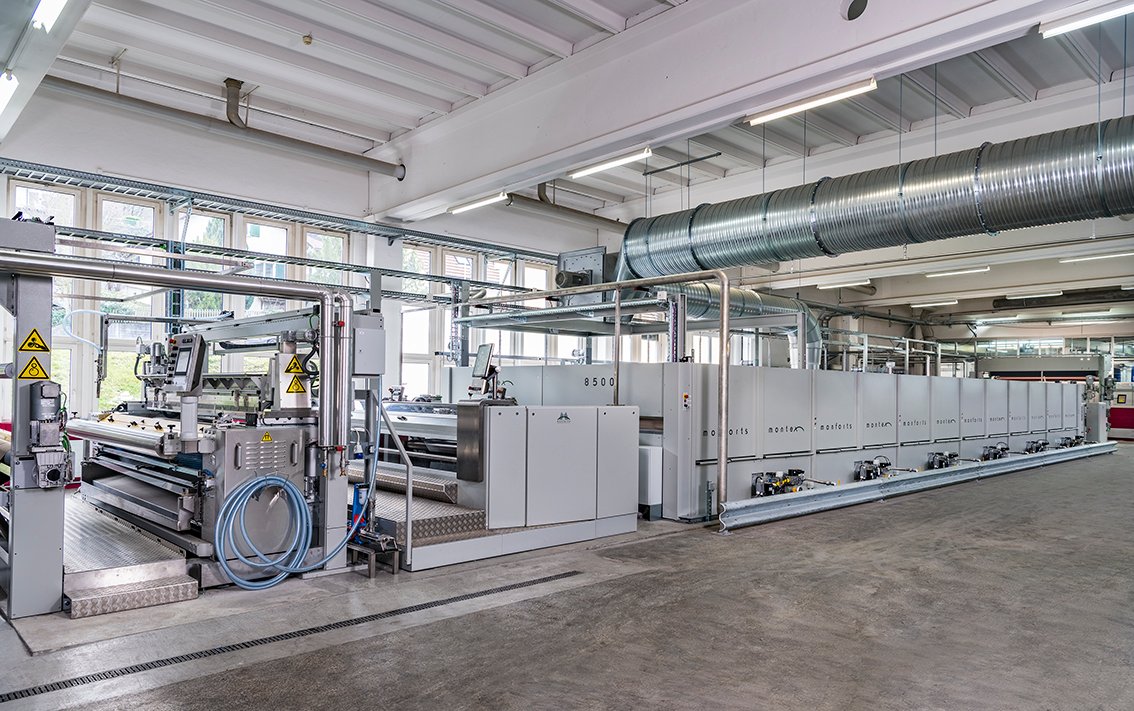
At the same time, Indian manufacturers are looking much more closely at energy, water and chemical consumption and at the level of automation required to achieve consistent quality. This is changing the investment calculation – productivity remains essential, but increasingly has to be combined with lower operating costs, greater flexibility and the ability to manufacture more sophisticated products.
TTM: Monforts’ long-standing partnership with A.T.E. Enterprises has been an important factor in building the company’s presence and customer relationships in India. How do you assess the success of this partnership, and how do A.T.E.’s local market knowledge, sales network and service capabilities strengthen Monforts’ ability to support Indian textile manufacturers and drive further growth in the market?
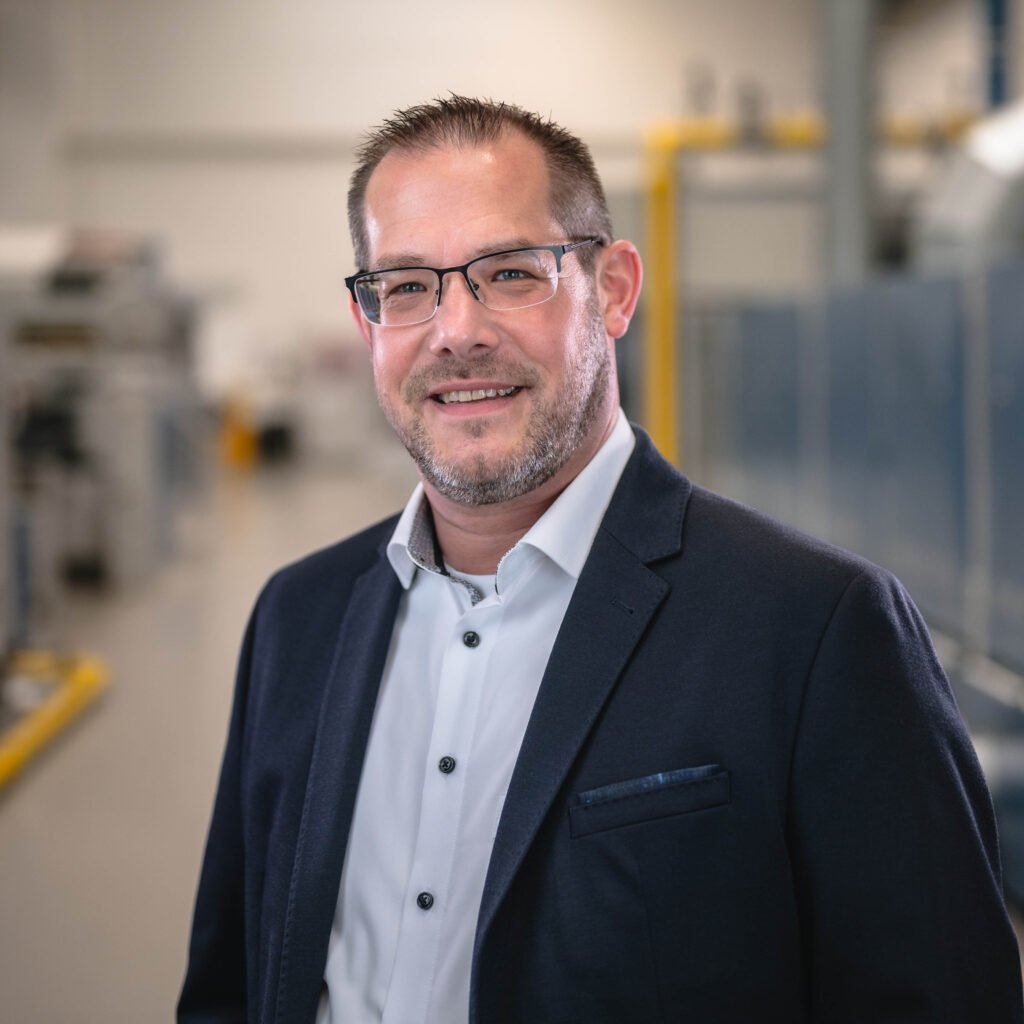
DR: Having previously worked across head office sales and logistics for Monforts since 1998, and more recently out in the field in Latin America, I am now taking over responsibility for India and the wider region from Hans Wroblowski. That combination of international sales experience and an understanding of how projects are coordinated from Germany has given me a good appreciation of just how important strong local partnerships are.
With local business units in all of India’s major textile regions, A.T.E. Enterprises continues to be a highly valued partner for Monforts. Its role extends well beyond establishing initial customer contacts. A.T.E. supports us in planning, logistics, engineering and aftersales services and provides the local knowledge that is essential in such a large and diverse textile market.
This becomes particularly important when you consider the working life of Monforts equipment. A stenter or dyeing line represents a long-term investment, and many Monforts machines remain in production for several decades. Customers therefore require a relationship that continues long after installation, covering service, spare parts, upgrades and increasingly sophisticated modernisation projects. The combination of Monforts engineering and A.T.E.’s presence on the ground has proved very effective in providing this support.
TTM: What are the key technologies and new products that Monforts is bringing to the Indian market, particularly in sustainable finishing, coating and drying? How can solutions such as the Eco Applicator and MontexCoat address the evolving needs of Indian manufacturers?
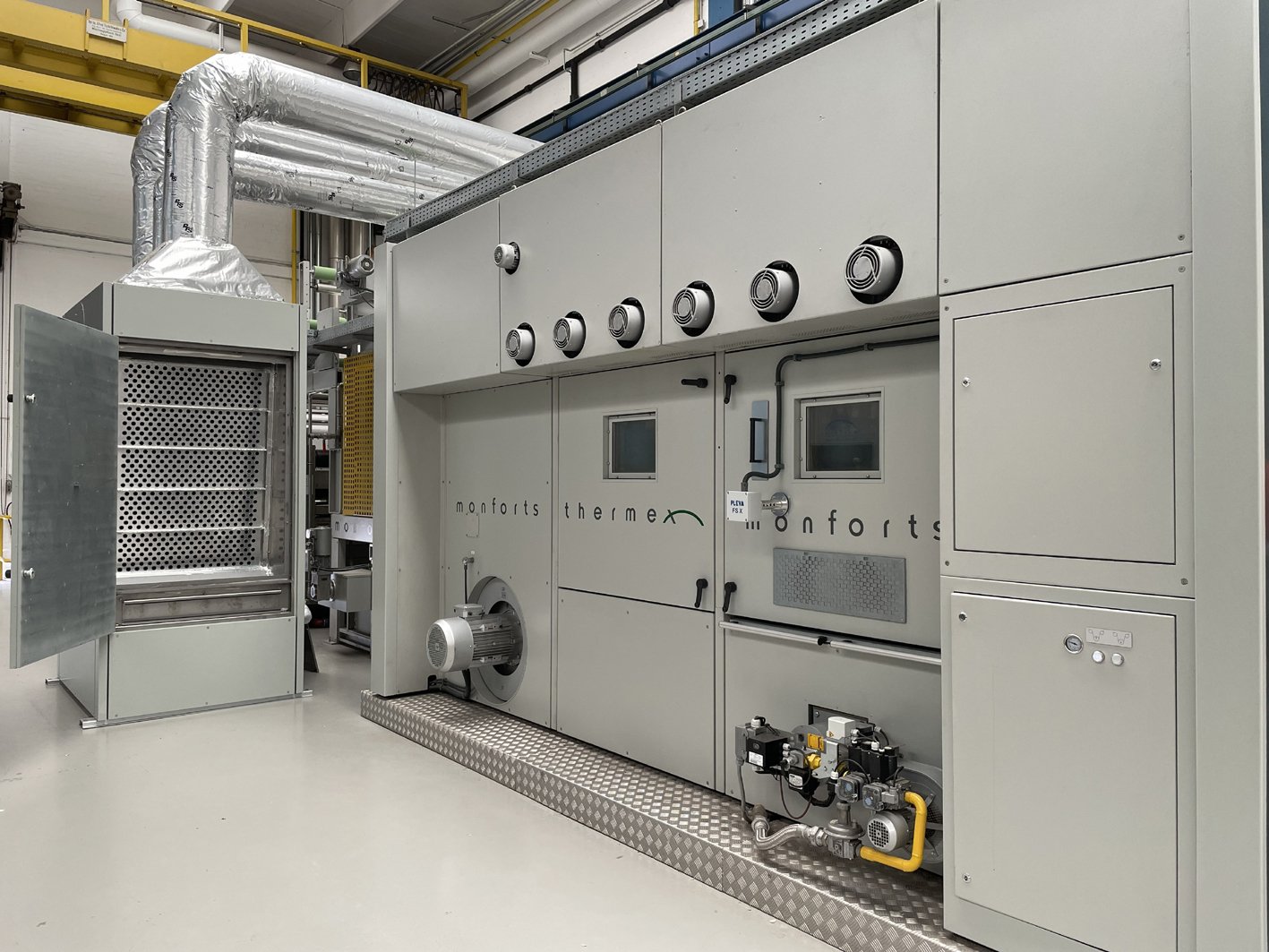
DR: With many thousands of installations around the world, Montex stenters and Thermex dyeing and curing systems continue to evolve in response to feedback from customers working closely with our engineers. The focus is on achieving high and consistent production while continually reducing energy consumption.
This is particularly important in drying, because removing water from fabric is one of the most energy-intensive stages of textile finishing. Technologies that reduce the amount of water that must be evaporated can consequently have a significant impact on operating costs.
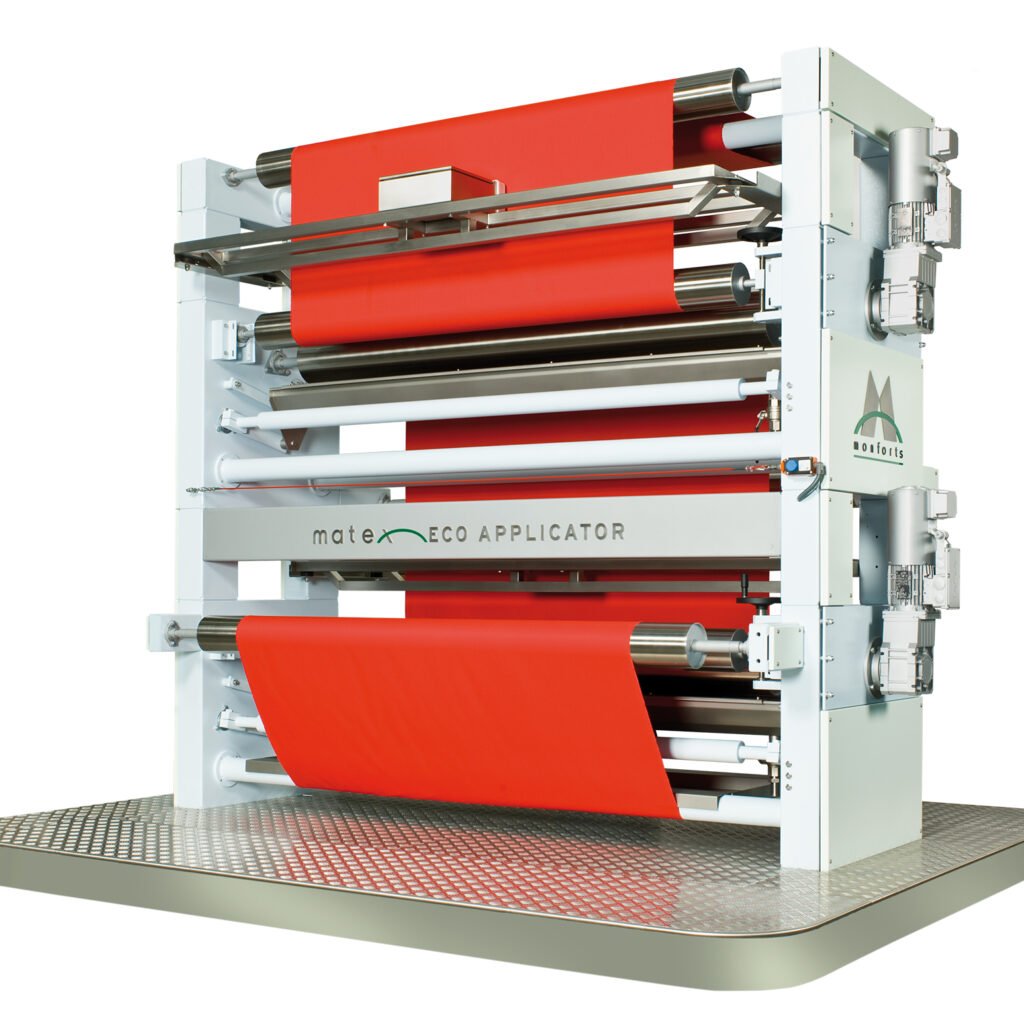
This is the principle behind the Eco Applicator, which enables finishing chemicals to be applied with a minimum amount of liquor rather than unnecessarily saturating the fabric. Less water subsequently must be removed in the drying process, providing potential savings in water, chemicals and energy.
MontexCoat extends this approach into coating and functional finishing, giving manufacturers the flexibility to develop increasingly specialised and higher-value fabrics. For Indian manufacturers seeking to combine competitive production costs with greater product differentiation, these technologies are becoming increasingly relevant.
We also now have a cooperation with BW Converting and a Baldwin TexCoat™ G4 digital spray unit has been installed at our Advanced Technology Center (ATC) in Mönchengladbach, Germany, for making full use of the latest advanced sustainable finishing chemistries supplied by Archroma.
TTM: Technical textiles and value-added textile products are expected to be important growth areas for India. What opportunities do you see for Monforts in these segments, and how is the company adapting its coating, drying and finishing technologies to meet the specific requirements of Indian producers?
DR: Technical textiles represent a significant opportunity because finishing and coating frequently determine the final performance of these products.
MontexCoat has been developed as a multifunctional coating line offering knife coating, magnet roller coating, rotary screen printing and other application techniques. As a fully automatic system, it is aimed particularly at manufacturers requiring the flexibility to process different products and coating formulations on the same line.
Not every producer requires that degree of versatility, however. For companies concentrating primarily on knife coating, Monforts has introduced the more cost-effective coaTTex line which is now also available with a table for special coating technology for activewear.
This gives us the ability to address different levels of investment as India’s technical textile sector develops, from companies entering specialist coating applications to established manufacturers requiring highly flexible production technology.
TTM: Automation, digitalisation, AI and energy efficiency are increasingly influencing machinery investment decisions in India. How is Monforts integrating these technologies into its solutions, and what level of digital adoption are you currently seeing among Indian textile mills?
DR: We are firmly in the digital age and Monforts continues to invest in digital technologies for precise process control, quality assurance and energy monitoring.
What we are seeing increasingly is that digitalisation must deliver measurable manufacturing benefits. Mills want greater visibility of energy consumption, more repeatable production, better recipe and process control and less dependence on manual intervention.
One reason so many Monforts stenters remain in production after more than three decades is that they were designed not simply to be durable, but to evolve rather than become obsolete.
Consequently, our activities are not restricted to supplying new machines. We increasingly retrofit existing installations with new controls, drives, monitoring and other technologies. These modernisation projects go far beyond the basic replacement of spare parts and can significantly improve the performance, efficiency and useful life of an existing line. This is particularly relevant in India, with its very large installed base of textile machinery.
TTM: Monforts will participate in India ITME 2026. What will be the company’s key focus at the exhibition, and what technologies or solutions do you expect to generate the greatest interest among Indian visitors?
DR: Our key message for visitors to ITME 2026 is that finishing has become one of the stages at which textile manufacturers can most effectively differentiate themselves. Basic fabric production is increasingly competitive and commoditised, but finishing is where much of a fabric’s appearance, handle, functionality and ultimately its value are created.
Indian processors are simultaneously being asked to achieve higher quality, lower energy consumption, greater flexibility and shorter production runs. Montex stenters and Thermex dyeing and curing lines have been continuously developed around precisely these requirements.
We also expect considerable interest in coating and minimal application technologies as Indian manufacturers move into more specialised products. The opportunity is not simply to produce more fabric, but to extract greater value from every metre produced.
TTM: With the India–EU FTA expected to create greater opportunities for trade and technology cooperation, how do you see the agreement influencing investment in modern textile machinery in India? What further steps are required to make advanced European technologies more accessible and commercially attractive to Indian manufacturers?
DR: The India-EU FTA has the potential to strengthen an already important relationship between Indian textile manufacturers and European machinery suppliers.
Any reduction in tariffs, administrative barriers and other costs associated with technology investment can improve the economics of installing advanced machinery. The important consideration, however, is not simply the initial purchase price of a machine but its total operating cost over what can be several decades of production.
Energy efficiency, productivity, maintenance, reliability and the ability to modernise equipment therefore all must be taken into account when assessing an investment.
There is also considerable potential for greater technical cooperation between European and Indian scientists, researchers and engineers.
One area of particular potential for future cooperation is the development of alternative energy sources for textile finishing. Monforts has already carried out work on adapting its heating technology to the use of green hydrogen as a substitute for natural gas in processes such as drying and heat treatment. This is especially relevant because stenters require large amounts of thermal energy and direct electrification is not necessarily practical for every mill or location. India’s rapidly developing renewable energy and green hydrogen sectors could therefore make this an interesting area for future cooperation between Indian textile producers, energy specialists and European machinery engineers.
TTM: Looking ahead over the next five to ten years, what is your outlook for Monforts’ growth in India? More broadly, what factors, such as exports, domestic consumption, technical textiles, sustainability, modernisation and new manufacturing investments, will determine the next phase of growth for India’s textile industry and its demand for advanced finishing technology?
DR: We see considerable long-term potential in India because several developments are taking place simultaneously. Domestic textile consumption continues to develop, exporters are competing in increasingly demanding international markets, technical textiles are expanding and mills are modernising existing capacity as well as investing in new production.
Energy will remain a major consideration. Textile finishing requires substantial amounts of thermal energy and our engineers are continually looking for ways to reduce consumption while maintaining production speeds and consistent quality.
Sustainability is also no longer an optional extra. It is increasingly becoming a commercial requirement, particularly for manufacturers supplying international brands and export markets. Our approach is therefore to help customers reduce energy, water and chemical consumption without compromising fabric quality or productivity.
Over the next decade, volume alone will not define competitiveness. Indian manufacturers have an opportunity to move further into specialised, higher-value fabrics, but doing so will require increasingly precise and flexible finishing technology.
The manufacturers best positioned for this next phase will be those able to combine competitive production costs with consistent quality, efficient use of resources and the flexibility to respond quickly to changing markets. That is where we see the strongest opportunities for Monforts in India.